Category Archives: Techniques

I’m Ease-y

When you are getting ready to start knitting a new pattern, you might come across phrases like “Meant to be worn with positive ease” or “Designed to have 1 inch of negative ease” or even “Zero ease.”  What the heck is ease?

Ease is a really easy (sorry, I had to) way for a pattern designer to tell you how fitted (or not) a garment is meant to be.  A garment with positive ease (like this sweater) is meant to be worn loosely.OLYMPUS DIGITAL CAMERA

A garment with negative ease (like these socks) are knit slightly smaller than my feet, so they end up nice and snug.OLYMPUS DIGITAL CAMERA

A garment with zero ease (like this hat) has exactly the same dimensions as my head, so the hat is neither too tight nor too loose.OLYMPUS DIGITAL CAMERA

Ease is measured in inches (or centimeters, if you’re not in America).   To calculate the ease, you measure both the garment, and the person who will wear it.  Then you subtract the person’s measurement from the garment’s measurement.

For example, if a sweater has a bust line of 40 inches, and the person who is meant to wear it has an actual bust line of 36 inches, the ease for the sweater is +4 inches.  (40-36=4)

If a different sweater has a bust line of 35 inches, and if the same person wears it, the ease of this sweater is -1 inch.  (35-36=-1)

Got it?

Ease makes a huge difference in how a finished garment looks.  You wouldn’t want a fitted, structured sweater with positive ease- it would look baggy and too big.  And, you wouldn’t want a slouchy, cozy sweater with negative ease- it would look like you were trying to wear your little sister’s clothes.  And the last thing you want to do is knit up an entire sweater, only to have it look like you pulled it from the by-the-pound bin at Goodwill.  Ew.

Don’t ever stop knitting: Joining part 4

We’ve been talking about joins for a while now, and we’ve already got a bunch of options.  But, because you can never have too many options (or skeins of yarn), I’ve got one more for you.  It’s at the upper end of fiddly-ness scale, but in specific instances, it’s totally worth it.

Check it out:

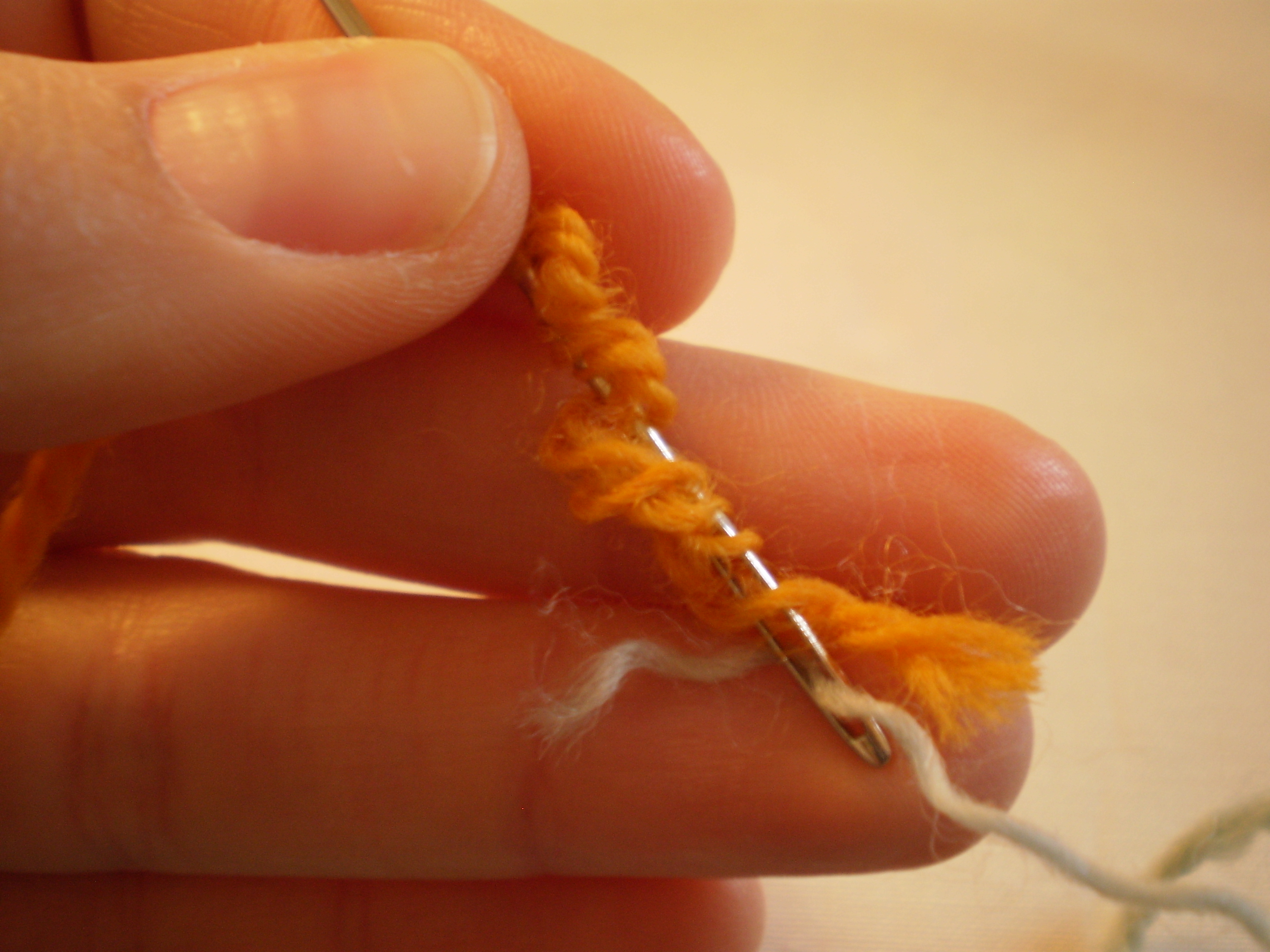
OLYMPUS DIGITAL CAMERAUnravel three or four inches of the end of your old yarn.  (This works best with multi-plied yarn, rather than single-ply.)  Separate the plies out.  Leave the new yarn intact.

OLYMPUS DIGITAL CAMERATake a thin tapestry needle and carefully sew each of the plies one at a time into the end of the new yarn.  OLYMPUS DIGITAL CAMERATry to sew the plies into the new yarn along different paths, weaving them together to form a nice, sturdy join.  Be patient with yourself; this can be tricky to do. OLYMPUS DIGITAL CAMERAPros: This join results in an invisible transition (no ends to weave in!) that doesn’t rely on getting spit everywhere.  This join also works really well with non-feltable yarns (like acrylic and cotton).

Cons: Probably the most complicated and tricky join we’ve talked about.  It doesn’t work super well with single-ply yarn (but you can make a bitchin’ spit join with single-ply wool).

Don’t ever stop knitting: Joining part 3

The last two times we talked about joining, we kept it pretty simple.  We stayed nice and clean.  Easy.  This time we’re going to get our hands dirty.  It’ll be a little messy, a little icky, a little slimy.  But, boy, the finished product is going to be so worth it.  (Can you tell that this is my favorite join?)  Today we’re going to talk about (drum roll, please):

The Spit Join!

OLYMPUS DIGITAL CAMERAStart out by totally destroying the ends of your old yarn and your new yarn.  Unravel at least two inches of both ends.  Rip them up, make them messy.  The messier the better.

OLYMPUS DIGITAL CAMERAThen interleave the unraveled ends together.  It doesn’t have to be perfect, but the more contact you have between old and new yarn, the better.

OLYMPUS DIGITAL CAMERAThen (and this is the gross/awesome part), lick your yarn (or spit on it, or if you’re super squeamish, dribble a few drops of warm water on it).  Carefully take your damp yarn between your palms, making sure to keep the unraveled ends interleaved, and roll it back and forth.  Really put some elbow grease into it, and get some friction going.  The heat from the friction, plus the damp will actually felt the wool together, making a single, long piece of yarn.

OLYMPUS DIGITAL CAMERAWhen you knit up the finished yarn, the spit join totally disappears.  No ends to be seen!

Pros: Totally invisible!  No tails to weave in at the end. No worry about wrangling more than one piece of yarn while you’re knitting.  Great for double-sided knitting (like scarves), where you don’t want ends showing up anywhere.

Cons: Since this join is based on felting, it only works on felt-able fibers (wool, alpaca etc).  It’s also a little futz-y to do, and frankly, a little gross.   Probably not one to do in public, unless you’re like me and have no shame.

Don’t ever stop knitting: Joining part 1

From the first time you make a project bigger than a washcloth, you realize that yarn is finite (which is sad).  When you get to the end of your yarn, you have to join another skein to keep knitting.  It’s annoying, and if you don’t do it right, it will ruin your beautiful scarf/hat/sweater/sock.

Some people just tie the old yarn to the new yarn.  I think that looks terrible.  And, it leaves you with a icky bumpy knot in the middle of your knitting.  No bueno.

Yes, tying on a new ball of yarn is easy, but there are such better options. So, over the next couple weeks I’m going to do a series of posts about joining, with pros, cons, and how-tos.

Let’s jump right in and get started!  Here’s one of my favorite super basic joining techniques.  I’ll call it Holding the Yarn Double, because I don’t think it actually has a name.  That’s how basic it is.

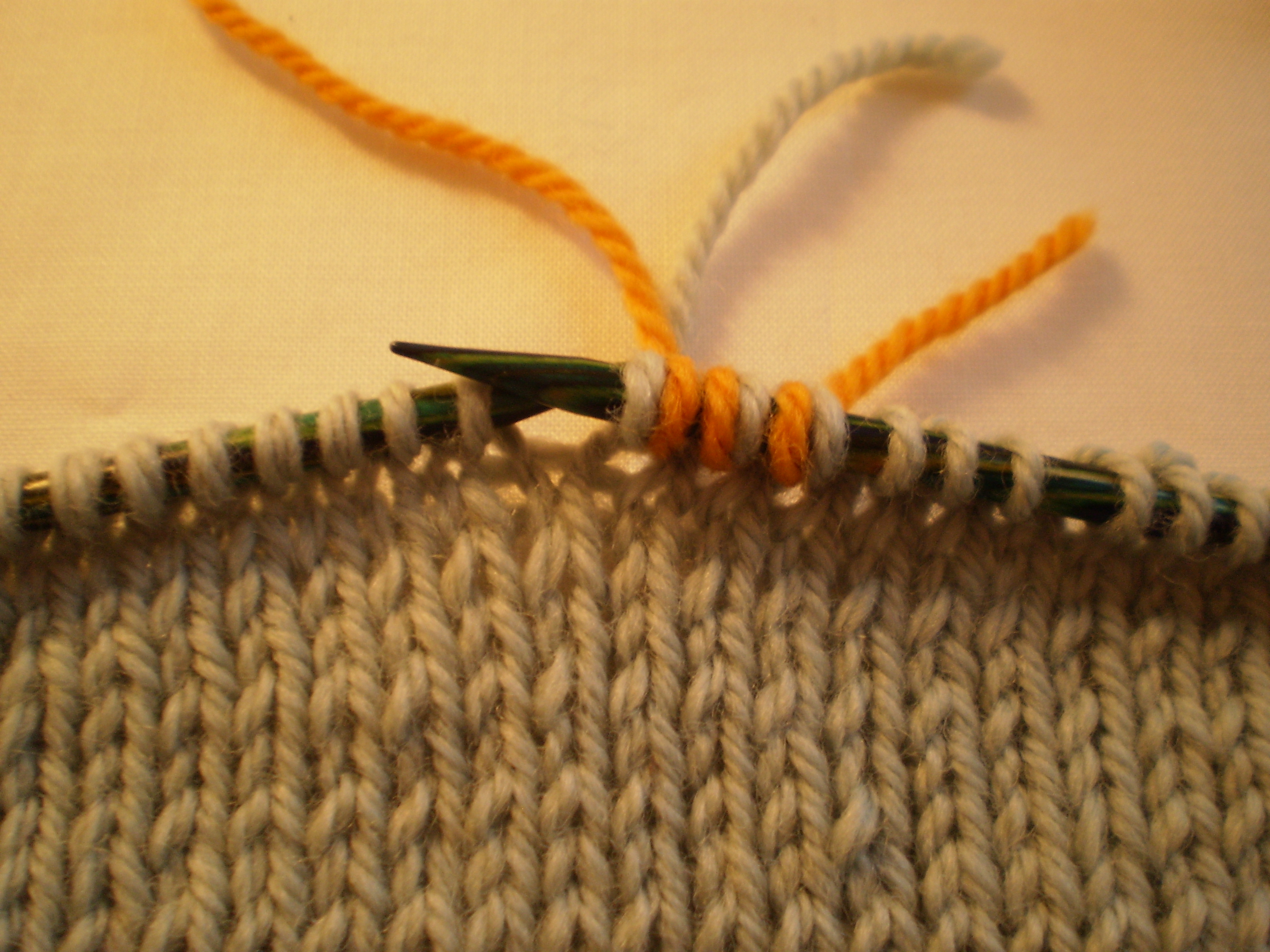
OLYMPUS DIGITAL CAMERAAll you do is hold the new yarn (orange in this picture, but usually you’d just use the same color yarn.  I’m using two colors here so you can see what I’m doing) next to the the old yarn (gray).  Then, using both strands, you’ll knit a few stitches (three or four is usually plenty).

OLYMPUS DIGITAL CAMERALeave an inch or two of tail from both the new and the old yarn.  Once you’ve knit a couple stitches with both strands, drop the old yarn and continue knitting like normal with the new yarn.

OLYMPUS DIGITAL CAMERAPros: Super easy.  Almost invisible (especially in stockinet and ribbing).  No weaving in of ends when you’re done with your project (just trim the ends to 1-1.5 inches when you’re done).

Cons: The joining stitches are thicker than your regular stitches, so if you’re doing any sort of openwork it can slightly mess up the look of your project (but only on a couple stitches, so as long as you put the join in a hidden spot, like an armpit or close to an edge, you won’t really notice it).  You are left with ends peeking out the back side of the project.  If you’re doing something which has two public sides (like a scarf), this might not be the joining technique for you.  If you’re making something with an obvious back side (like a sweater), this isn’t a problem.

Dying Yarn: Ombre

Ombre is a fancy-pants fashion word for a color that changes from dark to light as you go up or down a garment.  You know what I’m talking about , even if my description doesn’t make sense.  Ombre looks like this:

ombre[1]

If you want to make an ombre project, like socks or a scarf, you can knit your project out of plain white wool yarn, then dye the finished projects.

(Or, you can start with a “Sock Blank.”  You can buy these from specialty yarn suppliers like Knitpicks.  A sock blank is a piece of stockinet knitting that is worked up with yarn held double.  It’s designed to be dyed, unraveled, and then knit into socks.  If you want to make your own, you totally can.  Just buy a skein of undyed wool sock yarn, hold the ends together, and knit up the whole thing.  Use super big needles so that the process goes quickly, and the fabric is nice and loose (if it’s too tight, the dye won’t take evenly). I’m using a sock blank, but that’s just because it’s what I had on hand.)

OK, so you have your knitted up fabric and your dye in your pot, just like normal.  Soak your knitted item in warm water and heat up your dye.  We’re ready to start dying.

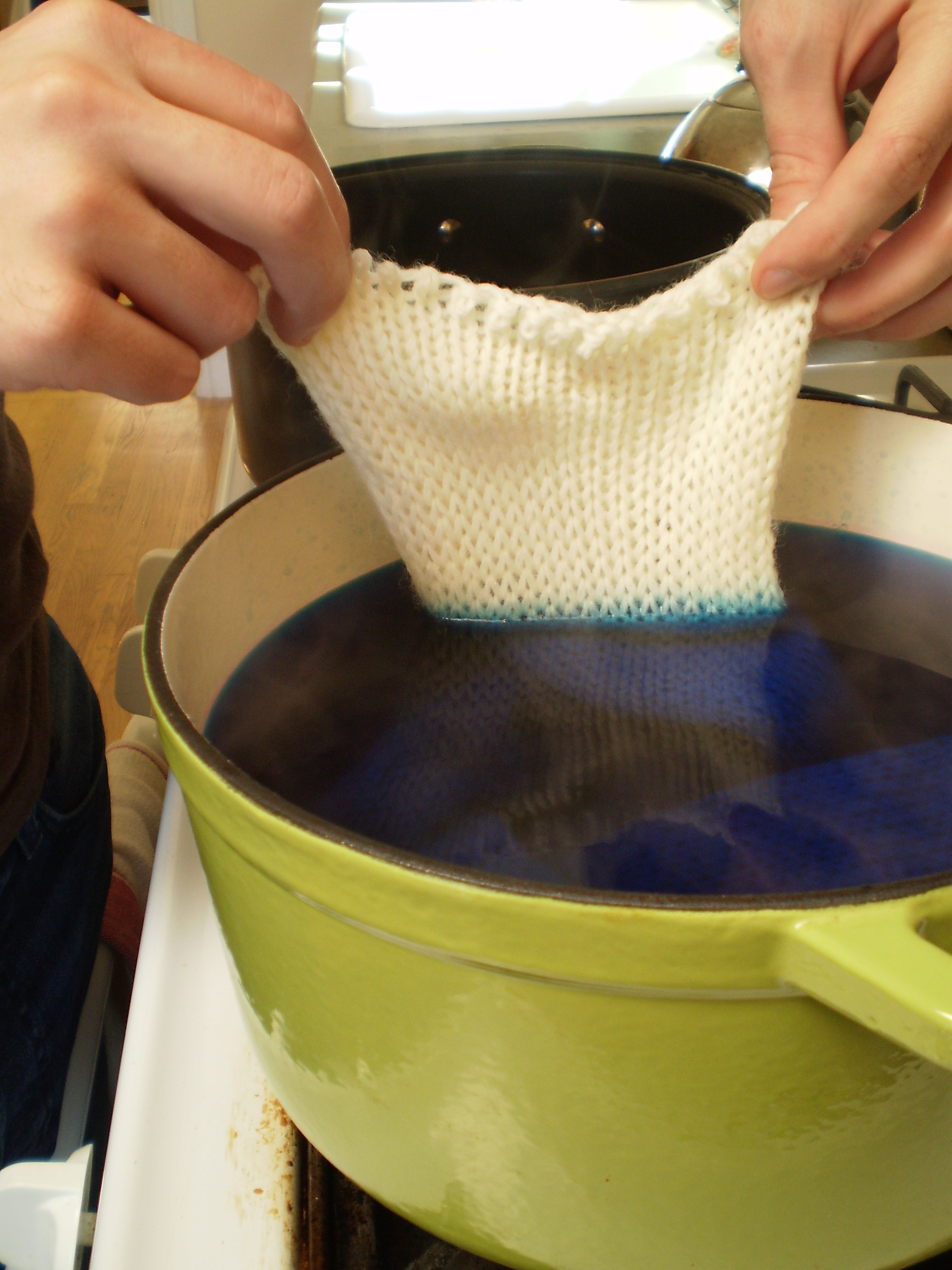
Slooooooowwwwwly lower your sock blank into your dye.

OLYMPUS DIGITAL CAMERA

I’m talking tortoise slow, glacier slow, slower than the bus when you’re late for an important meeting.  S.L.O.W.

OLYMPUS DIGITAL CAMERA

Lower the project into the dye inch…by…inch.  It should take you several minutes to put the whole thing in the pot.  This gives the bottom of the fabric time to soak up more dye (and become darker), while the top part has less time in the dye (and stays lighter).

OLYMPUS DIGITAL CAMERA

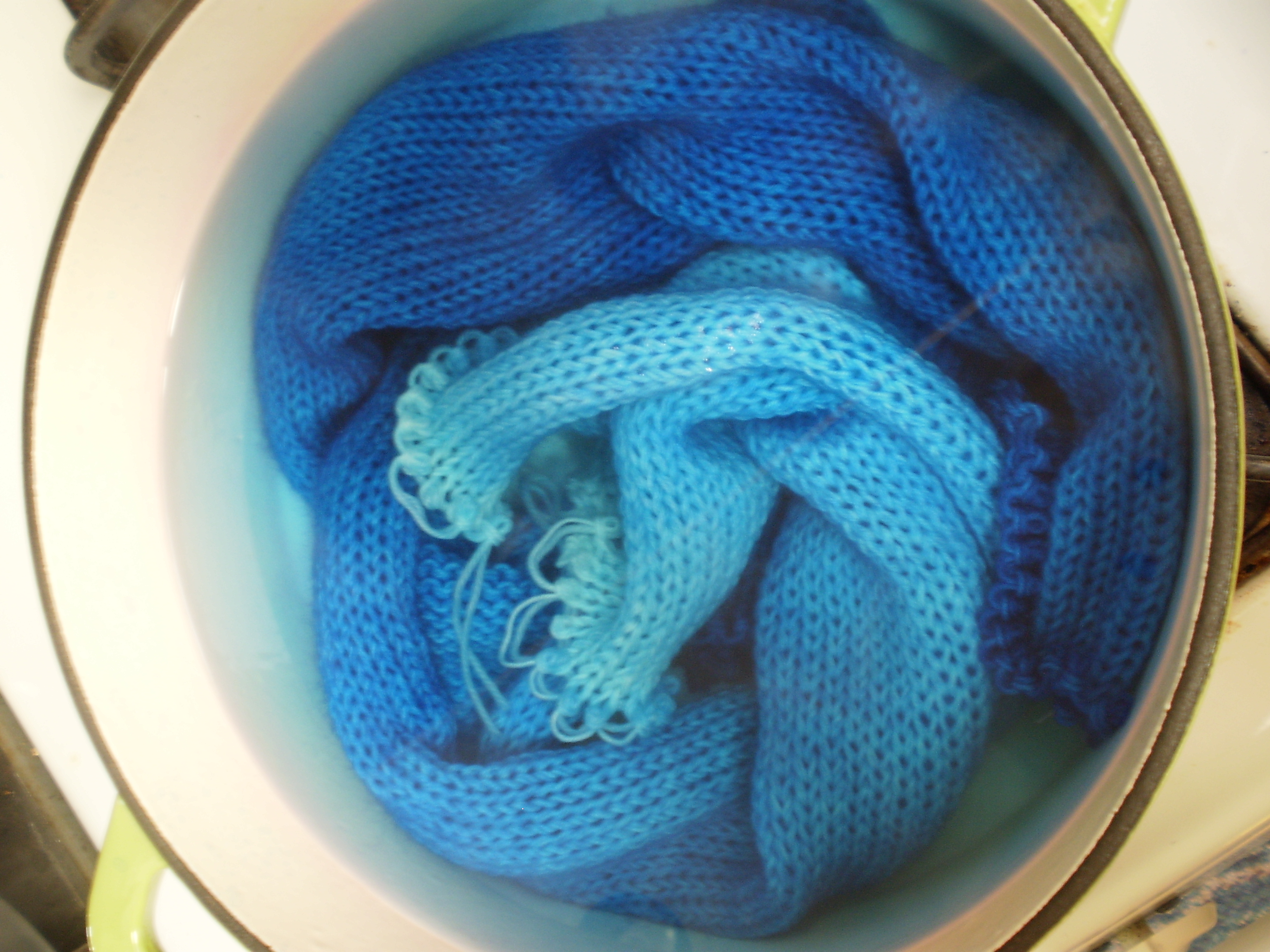
Once the whole thing is in the pot, let it hang out in the hot acidic water for a few minutes to set the dye.

OLYMPUS DIGITAL CAMERA

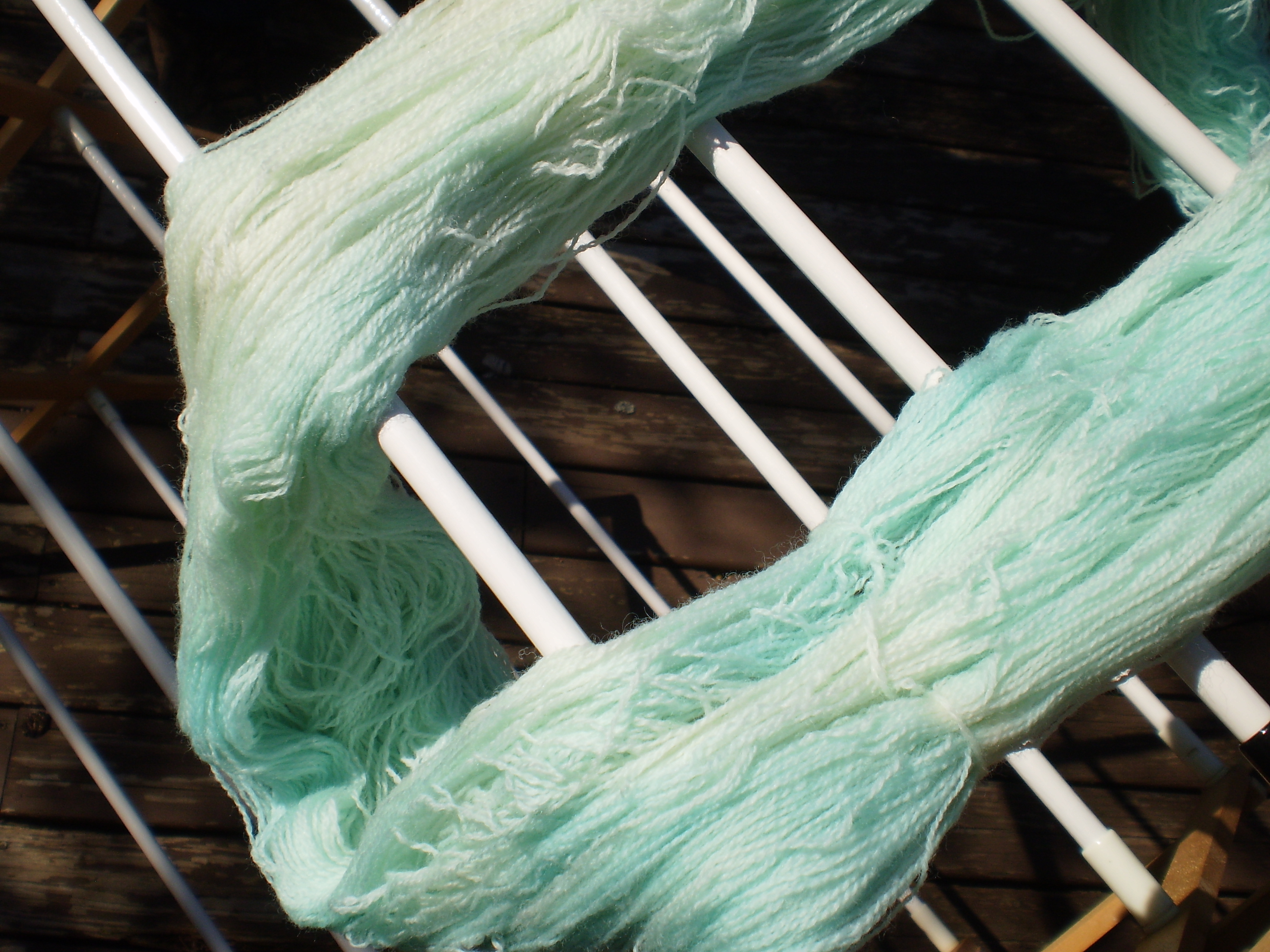
Rinse it in fresh warm water and let it hang dry.  (Then, if you’re using a sock blank, unravel it and wrap into two balls of yarn.  Use these two identically dyed balls of yarn to knit up some kickass ombre socks.)

OLYMPUS DIGITAL CAMERA

You spin me right ’round

I love stripes, and I adore knitting stripes especially.  The whole “knitting with two colors at the same time” is pretty much the best.  But I do not love weaving in all the ends at the end of a project.  It’s like the world’s worst knitting practical joke.  “Oh, you think your sweater’s done?  HAHA NO!  You get to spend the next six hours weaving in ends. Sucker!”  Not fun.

So, here’s a trick that I like to use when I want to make something in the round with itty bitty stripes.  Essentially, I’m working both colors at the same time, spiraling them together.  This way, it looks like I have perfect jogless stripes, AND I don’t have to worry about a million little ends to weave in at the end.  (Also, despite my poor description, it’s actually quite easy.)

Please forgive the messy drawings… I’m still figuring out the whole “graphics” thing.

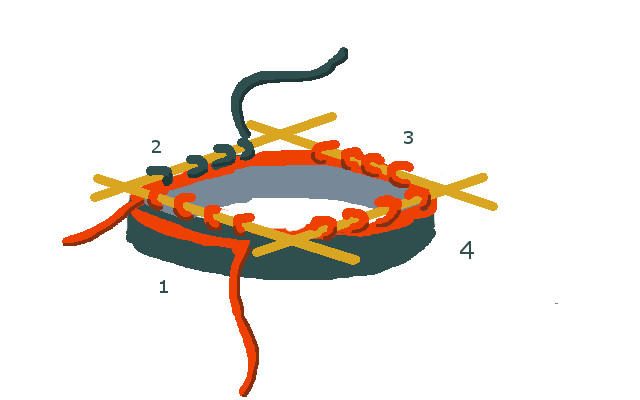
1.  Cast on with your first color, and join in the round using a set of 5 dpns (4 to hold your knitting, and one to use).  Knit a few rows (it can get too fiddly if you don’t have a good solid base before adding the second color).

Swirl 12. At the beginning of the round, start knitting with the second color, but don’t cut the first color.  Knit needles 1, 2, and 3 with the second color.

Swirl 23. Stop knitting with the second color, but don’t cut the yarn.  Pick up the first color and start knitting where you left off.  This time, only knit two needles (needles 1 and 2).

Swirl 3

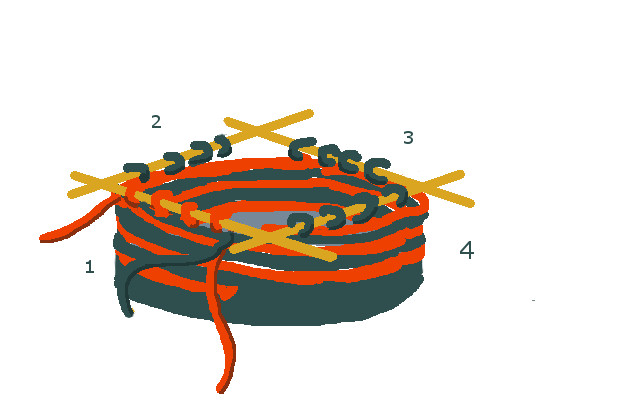
4.  Pick up the second color again, and knit two needles (in this case, needles 4 and 1)

Swirl 45.  Keep going in pattern, picking up the first color and knitting two needles (needles 3 and 4).

Swirl 56. See how the pattern is going?  You knit two needles of the first color, then two needles of the second color.  This way you keep building up a spiral of stripes, until you end up with a great big long spirally/striped scarf/hat/mitten etc.

Swirl 6When your project gets long enough, knit until your secondary color is back at the beginning of the row, then cut it.  Do a couple more rows in the first color, and bind of as usual.

Easy!

Oh Yeah! Dying With Kool-Aid

IMG_5541_edited-1

Dying is super fun and rewarding (and surprisingly easy).   It’s a great way to play with yarn when it’s too hot to sit around with a big pile of sweater on your lap.

There are a million ways to dye yarn, but this is the easiest one I’ve found.    You probably have everything that you need in your kitchen right now. I’ll do further yarn dying posts about more complicated dying processes later, but this should get you started (and you end up with a whole bunch of fruity-smelling yarn).

Please note, this will only work with wool or animal fibers (cashmere, angora, silk, etc.).  Dying other fibers (cotton, linen, anything synthetic etc.) takes a lot more effort as well as some fairly toxic chemicals, so I don’t bother with that.  But doing this is super easy and fun.  It’s a little like making magic potions, and you can do it with kids, if you’ve got some around that want to help.

You’ll only need a couple things to dye your wool:

  • Wool.  Duh.  You can use a wool blend, but know that the wool fibers and the acrylic (or whatever) fibers will take up the dye differently, which can give you a heathered look.  Superwash wool works well, and you won’t have to worry about your yarn getting felted in the process.  You can dye colored yarn or white yarn, just know that if you start with dark yarn, you’ll never dye it so that it ends up lighter.  If you’re trying to get bright or pastel colors, start with white.
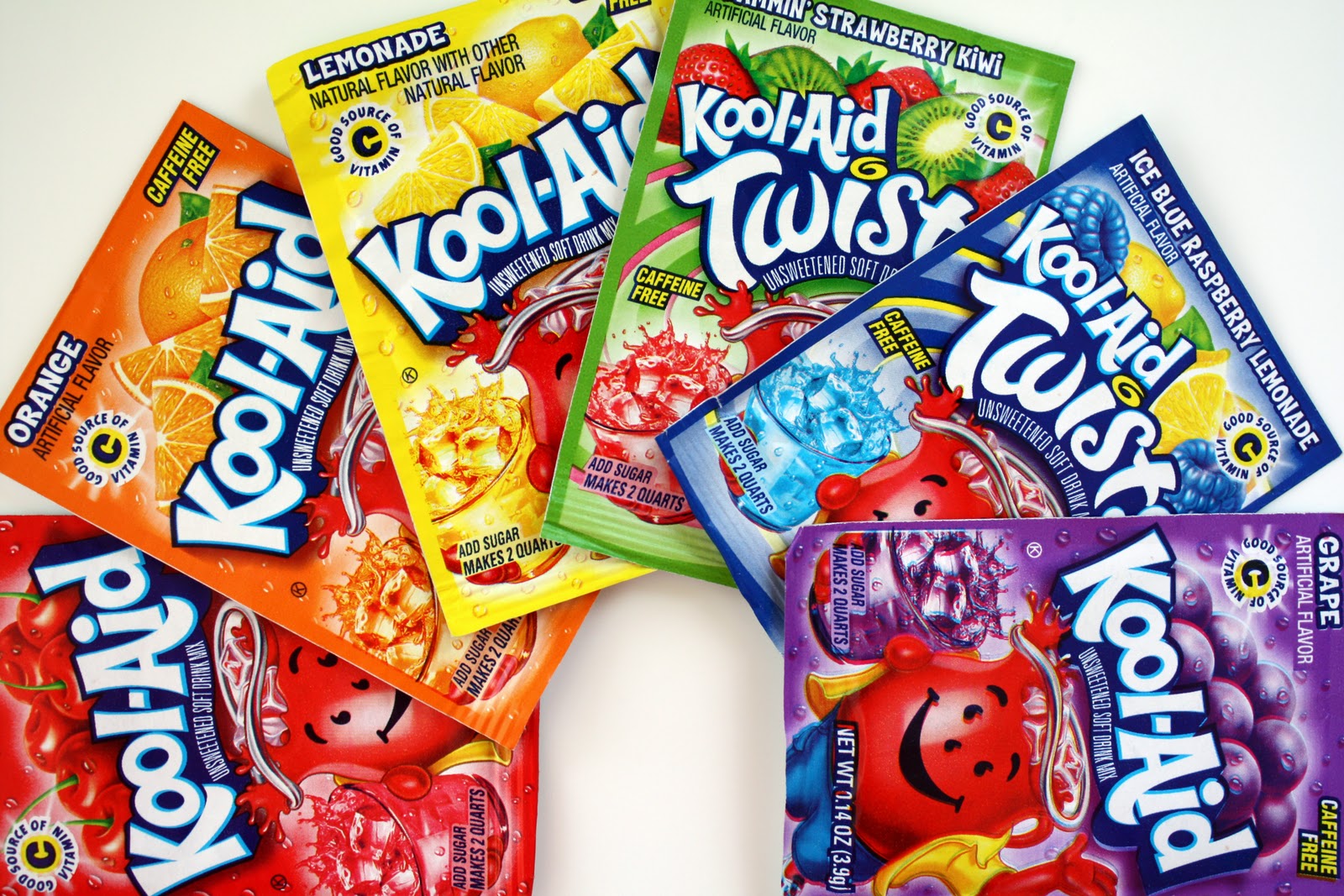
  • Kool-Aid (in the color of your choice) I’m using “Ice Blue Raspberry Lemonade”.  Get the kind in packets, not the kind in the big tubs with sugar pre-added.
  •  Water-From the tap.  Nothing fancy.
  • A non-reactive pot in which to do your dying. A stainless steel, enamel or non-stick pot works well if you’re trying to get a solid (or mostly solid) color.  Copper or cast iron pots can cause weirdness when you try to dye in them.

So how do you do it?

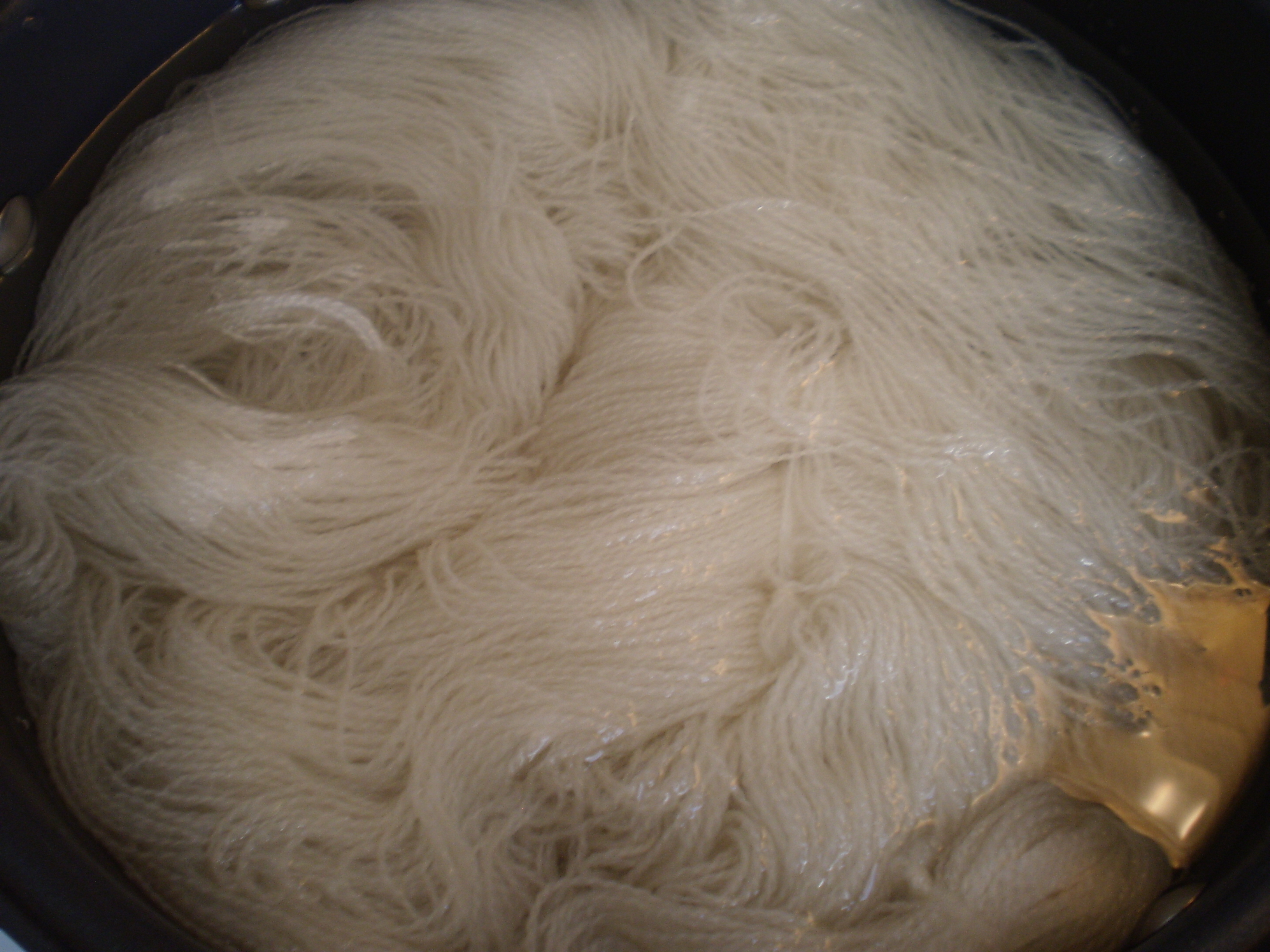
  1. Soak your yarn in warm water.  Make sure it’s nice and wet through.  If the yarn is wet to start with, it will take up color more evenly.OLYMPUS DIGITAL CAMERA
  2. Mix up your dye.  Just add a packet or two (or three or four) of Kool-Aid to a pot full of water.   It’s better to err on the too light side than the too dark side, since you can always add more color, but you can’t remove it.  I’m going for a pastel blue color, so I’m going with just one packet of color.  Heat up your dye until you just barely start to see little bubbles.  Don’t actually boil the water, but get it close.OLYMPUS DIGITAL CAMERA
  3. When your dye is steaming hot, and just about to start simmering, turn the heat way down and throw in your yarn.  Submerge all your yarn at once, and poke it around a little bit, so that each strand of yarn gets plenty of exposure to the dye.
  4. Set the color.  Keep your dyepot nice and hot, until the color transfers from the dye water to the yarn.  You know you’re done when the water is no longer colored.  Adjust the temperature to make sure that the dye stays nice and hot, but make sure not to burn or boil the yarn.  (Most Kool-Aid flavors will end up turning totally clear.  I picked one of their lemonade flavors, which they put something in to turn the water cloudy.  You’ll never get lemonade colors totally clear, but as long as the water turns white instead of blue (or yellow or whatever), you’re good to go.)OLYMPUS DIGITAL CAMERA
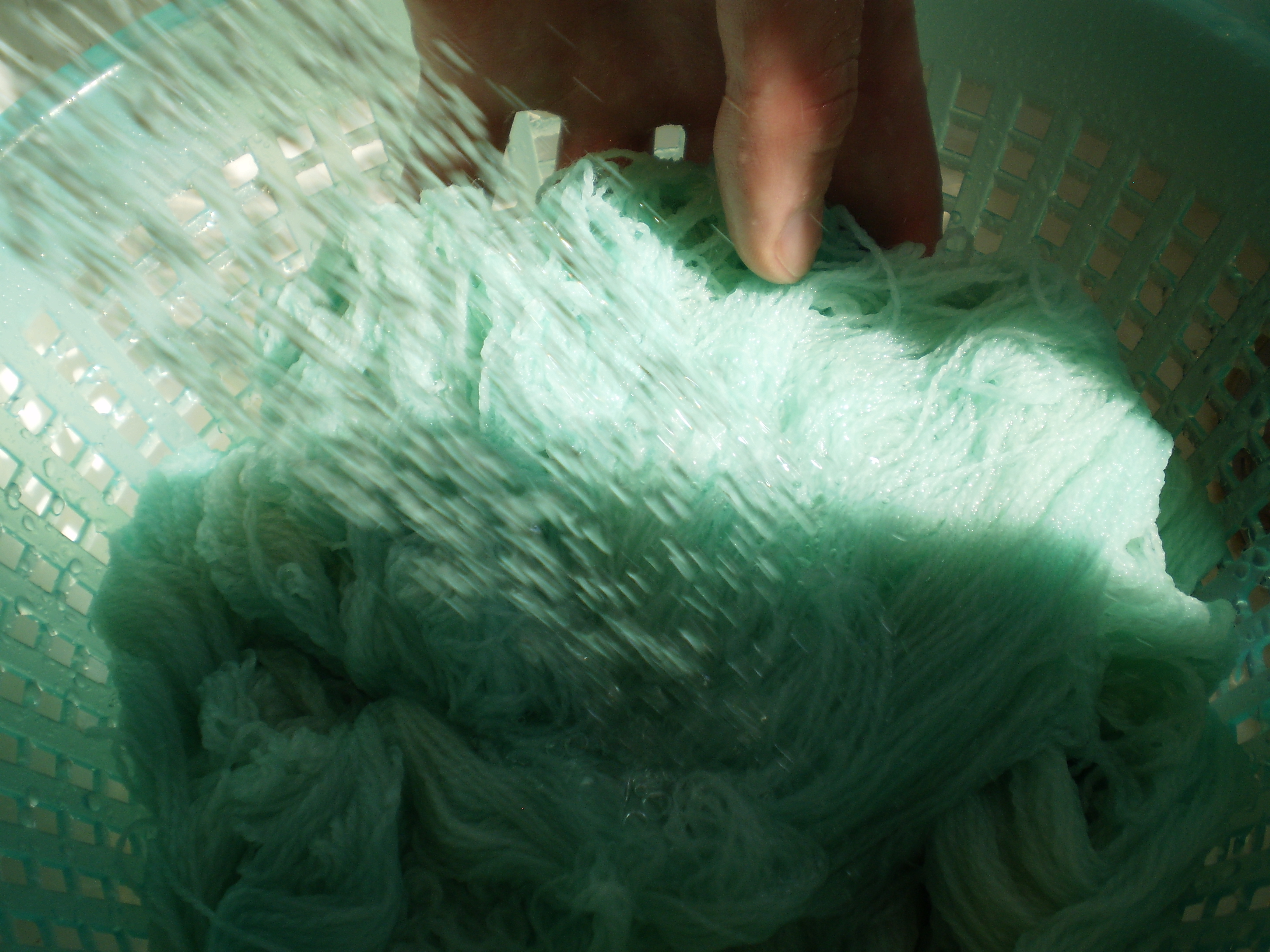
  5. Carefully (without burning yourself) move the yarn to a colander, and rinse the yarn under hot water from the tap.  Slowly lower the temperature of the rinse water until you can touch it without burning yourself.  Don’t immediately shock the yarn with cold water, because it can damage the yarn and cause felting.  Once you can touch the yarn without screaming in pain, keep rinsing out the yarn, gently flipping and turning it until no more color rinses out of the yarn.OLYMPUS DIGITAL CAMERA
  6. If you are happy with your color, hang up the yarn to dry.  If you want to add more color (this is called over-dying) go through the steps again with more dye.
  7. Knit something fabulous with your new hand-dyed yarn.OLYMPUS DIGITAL CAMERA

I’m So Lazy…

I’m totally lazy.  I love trying to find  shortcuts and easy ways to do things.  Unfortunately with knitting, there often isn’t an easy way.  (There’s no shortcut for knitting the acres of stockinet for a sweater… you just have to do it.)

Sure, knitting is an effort-heavy process, but don’t lose all hope!  I’ve got a great little trick for making color work super easy.  Let’s imagine that you want to put a nice little fair isle border on the cuffs of your new sweater, or maybe knitting an intarsia heart on a little girl’s hat.  Your project would end up really cute, but it would be a total pain to do.  I don’t know about you, but I like just making plain old stockinet stitch garments (easy!).  So, what’s a girl to do?

That’s where the duplicate stitch comes in.  The duplicate stitch is technically an embroidery technique that you can use to decorate knitted fabric after it has already been knitted so that it looks as if the decorative pattern was worked as the project was knit up.  I like using it for projects that have only a little bit of fair isle (which can be a pain to do for only a row or two at a time), or any pattern that wants you to do intarsia in the round (which is almost impossible).

And, I’ve even made a video for you.  Enjoy, and let me know if you have questions!

It’s too pretty out for a real post

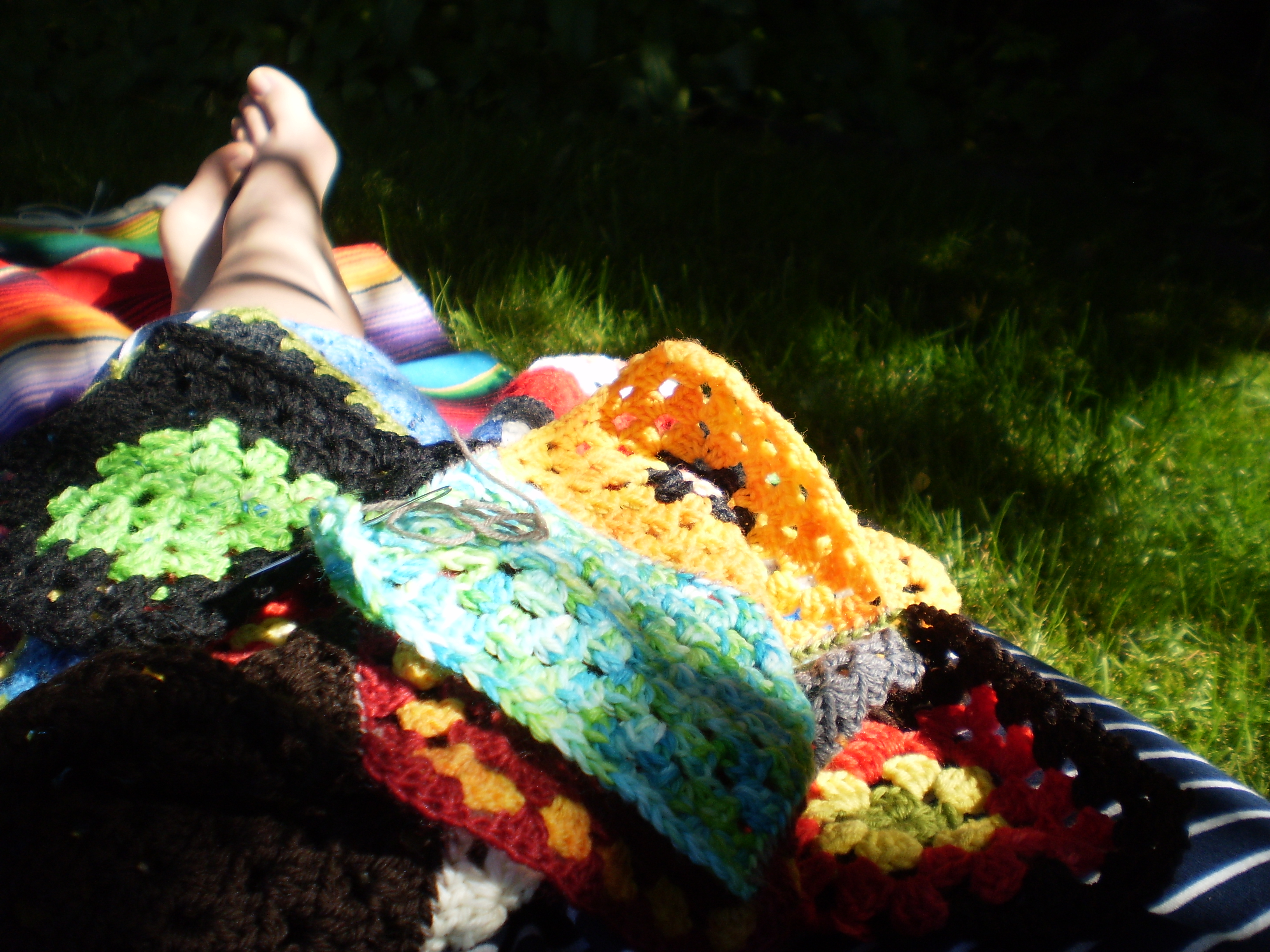
If the sun’s out in Seattle, you’re pretty much required by law to spend your day outside.  So, I decided to sit out in the yard with a nice iced coffee and a pile of granny squares and sew them together.  Not a bad afternoon.OLYMPUS DIGITAL CAMERA

After an hour or two of work and a few chapters of my most recent audiobook…

OLYMPUS DIGITAL CAMERA

And I’ve whip-stitched my squares together:

OLYMPUS DIGITAL CAMERA

They’re nowhere near an entire blanket yet, but they’re a start.  It’s going to end up being possibly the tackiest blanket ever (since I’m using up all my sock leftovers from over the years, and I tend to knit brightly colored socks), but I’m kind of OK with that.  It’ll be a nice project to work on a little at a time, whenever my bowl of sock yarn leftovers gets too full.

Eyeballs

Maybe you’re not too good with a needle and thread… Maybe you prefer your knit toys to have big old buggy eyes… Maybe you just aren’t a fan of how embroidered faces look.  No sweat.  Try safety eyes!

They’re super easy to use, and (in my opinion) the most professional-looking than buttons or beads.  Technically they are safe (hence the name) for younger children, but I’d still be careful if you give them to itty bitty kids  who like to chew on things.

They come in two parts: the eye, and the backing.


Figure out where you want your eye, and push the eye shaft through your knitting.  (Make sure you do this before you close up and stuff your critter.)

OLYMPUS DIGITAL CAMERA


Slide the backing on to the post, and use your muscles to push it all the way down.  They’re sometimes hard to get all the way on, but they’ll go eventually.  Be really really sure that you like where your eyes are placed before putting on the backing, because they are almost impossible to remove once they are attached.

OLYMPUS DIGITAL CAMERA

OLYMPUS DIGITAL CAMERA

OLYMPUS DIGITAL CAMERA


Safety eyes are carried at most chain craft stores, but you can find a more extensive selection on Etsy and other online retailers.

OLYMPUS DIGITAL CAMERA


Now, go fourth and give things eyeballs.  I don’t know about you, but I feel like I’m being watched or something.  Eep!

OLYMPUS DIGITAL CAMERA