Tag Archives: tutorial

Tutorial: Shawl Pins

I’ve got shawls on the brain. When I wear a shawl, especially if it’s a particularly oddly-shaped one, I like to break out a shawl pin.  You can find super fancy ones, but basically a shawl pin is a stick of some kind that you use to hold knitwear in place (I’ve been known to use pencils, chopsticks and knitting needles in a pinch). There are as many kinds of shawl pins as there are shawls, all gorgeous, most expensive.

So, in the name of DIY Cheapskate-y-ness, let’s make some functional, fashionable, and simple shawl pins.  An accessory for your accessory… what’s not to love?

Here’s what you’ll need:

  • A ¼-inch dowel
  • Small hacksaw (or other dowel-cutting implement)
  • Pencil sharpener
  • Sandpaper (I used 120-grit)
  • Acrylic paint
  • Paintbrush

OLYMPUS DIGITAL CAMERAStart by cutting your dowel into pieces. I made my pins about 5 inches long, but you could go longer or shorter, depending on what you like.

OLYMPUS DIGITAL CAMERAThen, sharpen one end of each pin with the pencil sharpener.

OLYMPUS DIGITAL CAMERAGrab a piece of sand paper and sand your shawl pin until it’s nice and smooth (get rid of anything that could catch on your shawl and make a hole. No bueno). Sand the point down a little bit so that it isn’t dangerously pointy, and don’t forget to smooth out any corners on the other end, too.

OLYMPUS DIGITAL CAMERABrush off any sawdust, and break out the acrylic paints. I like how they look when they’re mostly wood with just a pop of color on the end, but feel free to experiment. How about stripes? Polka dots? Let the paint dry, and you’re ready to go.

OLYMPUS DIGITAL CAMERAGrab a shawl (or scarf, or cardigan) and pin away.

OLYMPUS DIGITAL CAMERA

DIY DPN Holder

Here’s a neat idea from blogger the Good Weekly.  DIY felt DPN (double-pointed needle) cases.  How cute are they?  If I had a million hours to do all the cute stuff I found online, I would be a happy camper.  But this project… I might just do, even though I don’t have a million hours.

holder_group-810x537[1]Go visit the Good Weekly to see their super simple tutorial.

knit_holder[1]

Pattern: the n00b Hat

OLYMPUS DIGITAL CAMERAThanks for playing along with me and my hat-making shenanigans!  I’ve compiled the last month’s-worth of n00b hat-ness into one easy-to-find .pdf pattern.  Feel free to download it, use it, or share it, whatever you like.  Maybe your friend/mom/dad/kid sister/weird guy down the street wants to learn how to knit.  I’d be delighted if folks started using this pattern more and more.  And I’d love to see everyone’s first n00b hats!  That would totally make my day!

The nOOb Hat


n00b Hat, Part 5: Finishing

You’re so close to finishing your hat, I can smell it.  (Or maybe that’s the spiced apple cider heating up on my stove…mmm, I love fall.) In fact, you are totally done with your knitting, and all that’s left is to do your finishing.  In this case, that means sewing up the seam along the back of the hat, so that it ends up… well… hat-shaped.

Start out by cutting your working yarn, leaving a good 18-inch tail on your project.  Thread this tail onto your tapestry needle.

OLYMPUS DIGITAL CAMERAThen, turn your hat over, so that you can see the purl side facing up.  Carefully use your tapestry needle to thread your tail from the left, through  the 8 remaining stitches.

OLYMPUS DIGITAL CAMERAOnce you have your last stitches safely contained on your tail, you can remove your knitting needle (So long, knitting needle!) and pull the tail snug.  This makes a nice little rosette-dealy at the top of your hat. See?

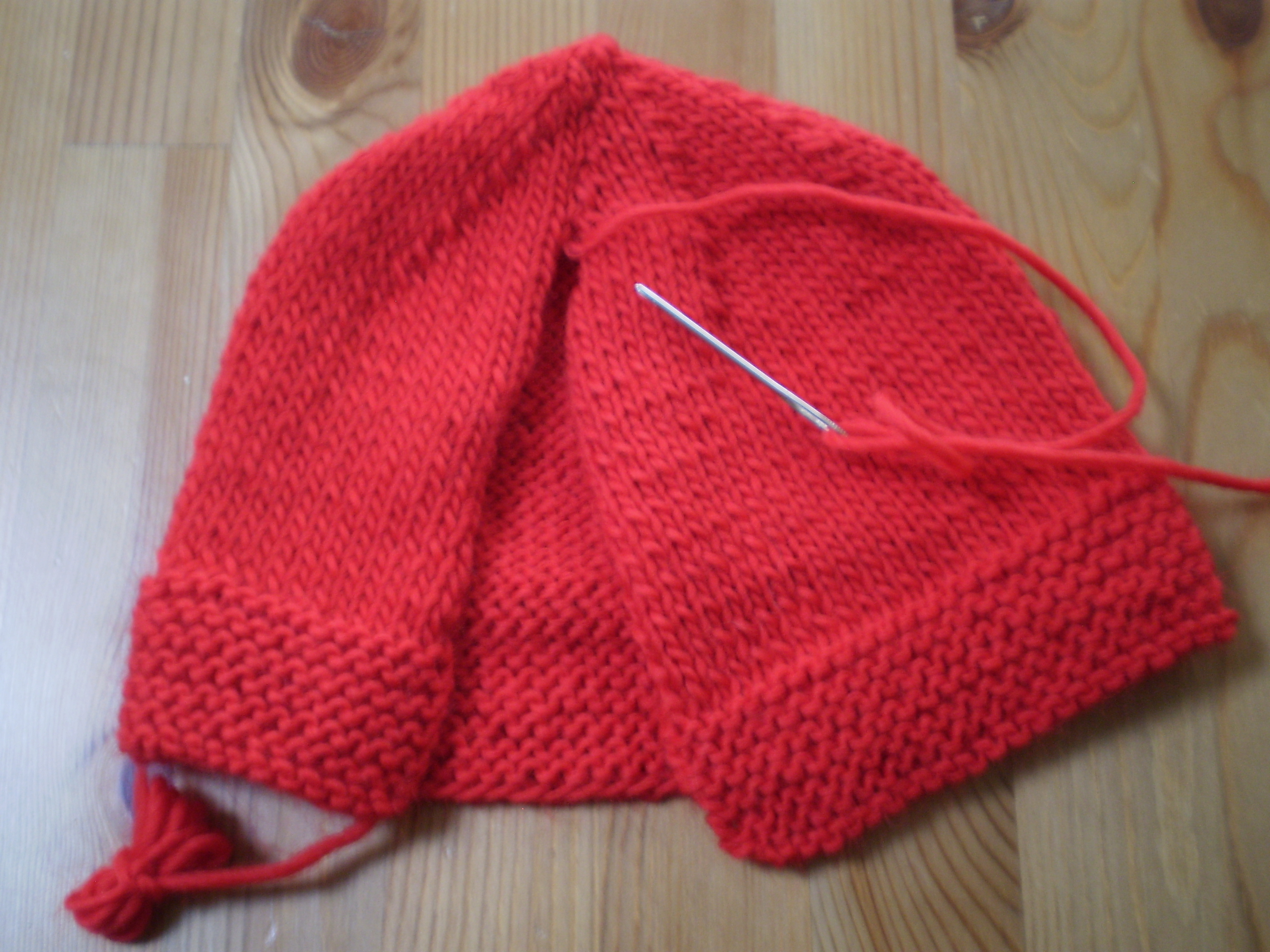
OLYMPUS DIGITAL CAMERANow, sew the two edges of your knitting together, using your yarn tail.  I like to use a mattress stitch, but feel free to use whatever you are most comfortable with (whip stitch will also work well).  Try to make your seam as neat as possible, but don’t worry too much (since the seam is worked with the same yarn as the rest of the hat, even messy stitching won’t show up too much).

OLYMPUS DIGITAL CAMERAWhen you’ve finished sewing up the hat, it should look like this.  Very hat-like.  (Hattish? Hat-esque?)

OLYMPUS DIGITAL CAMERASee how you still have those two pesky ends?  We have to do something with them (unless you like big hunks of yarn hanging down off your hat, I suppose).  So, turn your hat inside-out.  See the seam allowance that you made by sewing the two sides of your hat together?  Sew your yarn up through that for a couple inches.  (Throw in a knot or a securing stitch, if you want.) Then, cut your tails, leaving a 1-2 inches dangling inside the hat.

OLYMPUS DIGITAL CAMERAAnd that’s it!  You’re done!  You have a great knitted cap!  Congratulations!

If you have questions, please let me know, and I’ll be happy to help!

n00b Hat, Part 4: Decreasing

How’s your hat going?  Mine’s looking pretty good, and I bet yours it too.

OLYMPUS DIGITAL CAMERABut, you’ve probably noticed, that this hat is a big flatty-flat piece of knitting.  And, I don’t know about you, but my head is not flat.  It is big and round, like a melon.

So, we probably need to make our hats a little more head-shaped.  We’ll do that by adding some “shaping” to our knitting.  Shaping is a generic term for using special stitches to give your knitting a 3D shape.  I’ll show you how to do a simple knit two together decrease (which is usually shortened to ‘k2tog’).

We’re going to do 8 k2togs across each knit row of the hat for the rest of the project.  Make sure you are working on a knit row, and start following along.

Knit 8 stitches regularly.  Then, get ready for a k2tog.

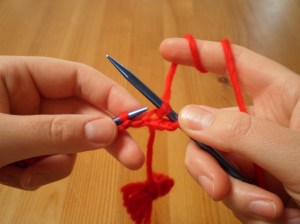
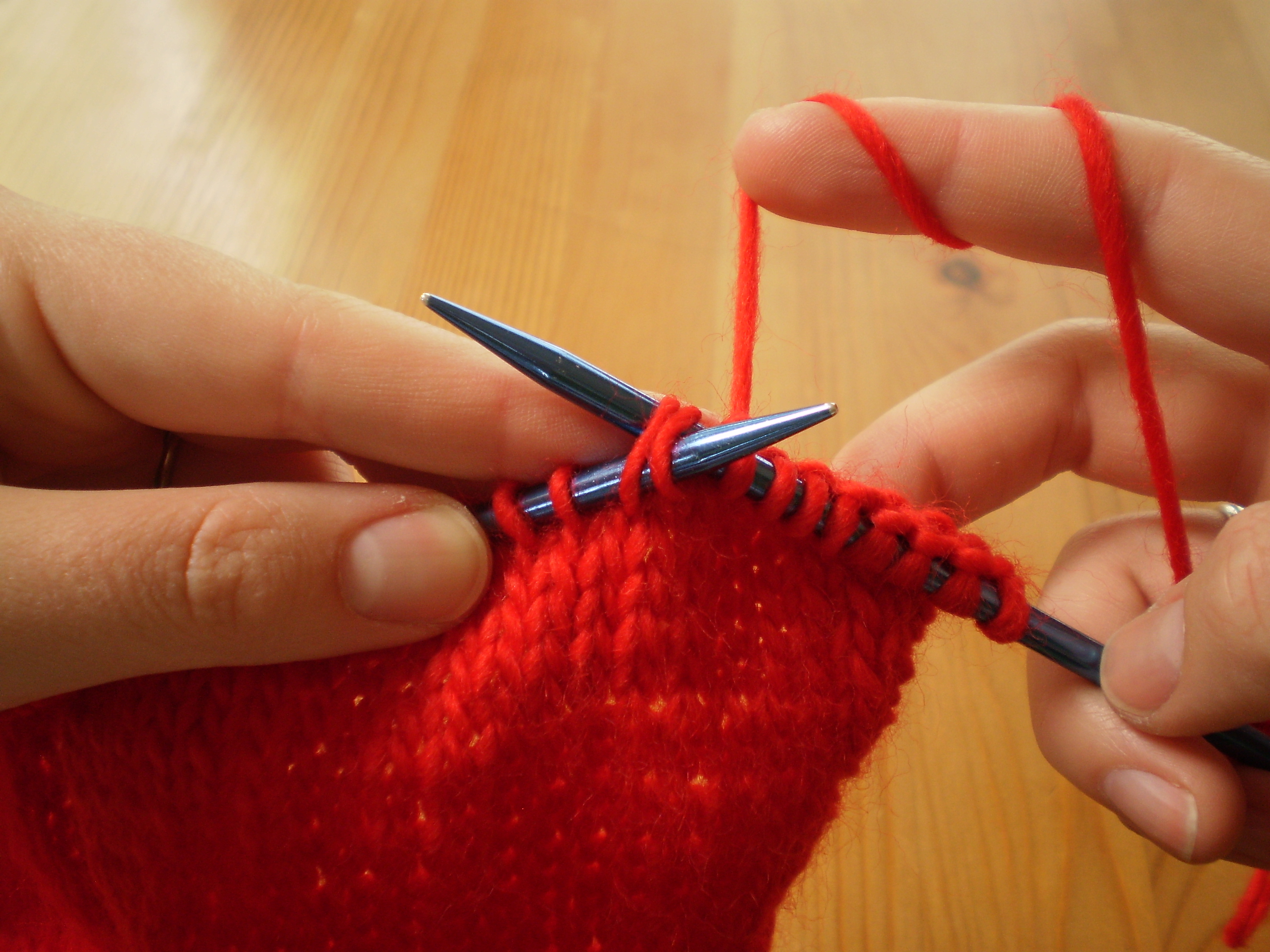
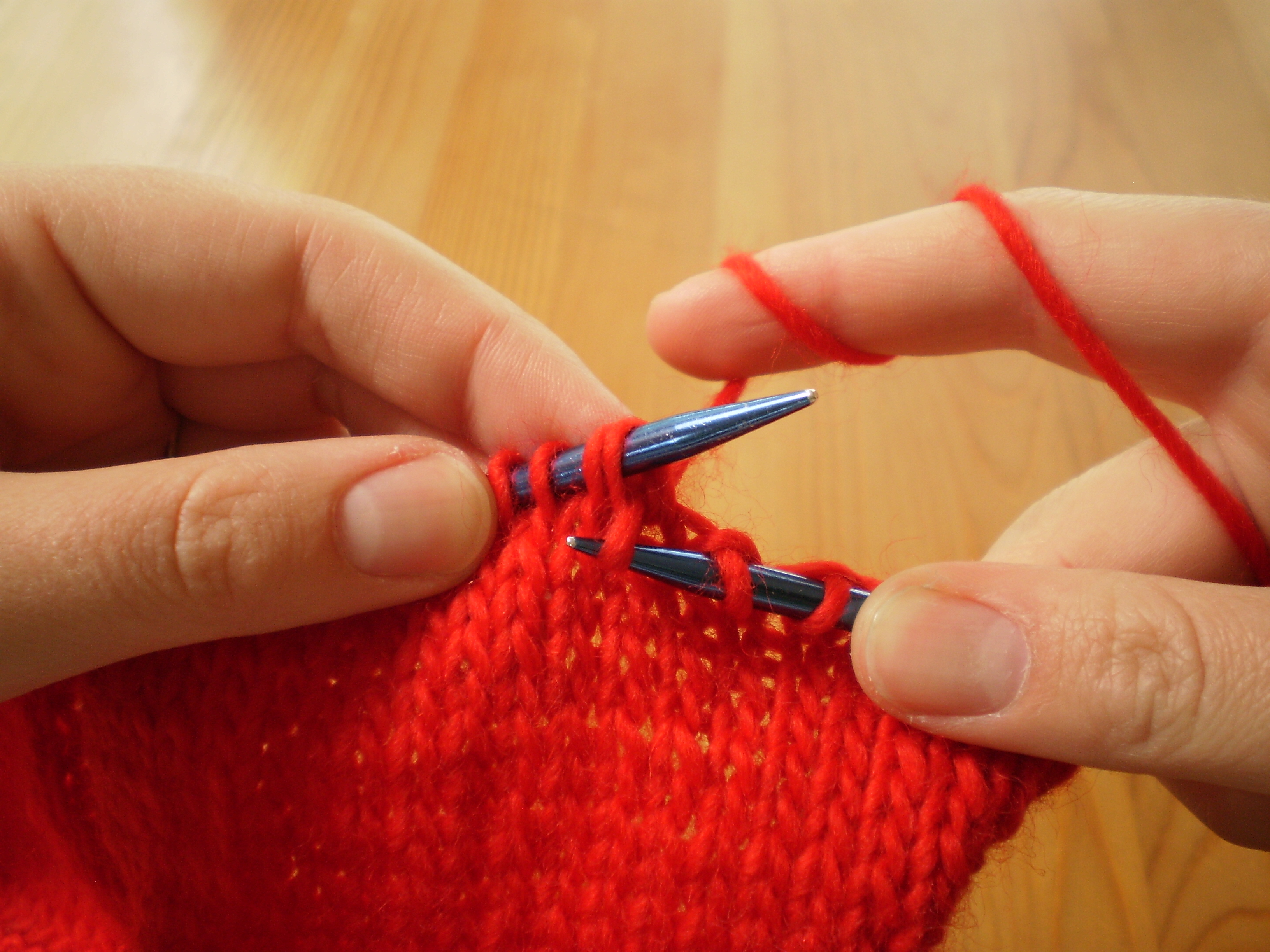
OLYMPUS DIGITAL CAMERAk2togs are super easy to do.  It’s exactly like doing a knit, but instead of poking your right needle through a single stitch, you poke it through two stitches.  Like this:

OLYMPUS DIGITAL CAMERAThen, wrap your yarn around the tip of your needle.

OLYMPUS DIGITAL CAMERAAnd pull your new stitch through both old stitches.

OLYMPUS DIGITAL CAMERAThen drop the old stitches off your left-hand needle.  See how you’ve decreased the number of stitches by one?  (2 old stitches = 1 new stitch)

OLYMPUS DIGITAL CAMERAKeep working in the established pattern: Knit 8 stitches, then k2tog. Knit 8, k2tog, knit 8, k2tog, over and over.  You should end the row with a k2tog.

The next row is a purl row, so purl all stitches (don’t do any decreases).

The next row is a knit row, so you’ll do decreases again.  This time, knit 7 stitches, k2tog, knit 7 stitches, k2tog, etc.

Then purl a row.

Then work a knit/decrease row.  Knit 6, k2tog, knit 6, k2tog, etc.

Then purl a row.

Then do another knit/decrease row.  Knit 5, k2tog, knit 5, k2tog, etc.

Then purl a row.

See how the pattern goes?  All purl rows are worked like normal.  All knit rows include decreases.  Each time you do a decrease row, you knit 1 fewer stitch between each decrease.  (If you find yourself getting confused, make notes on a post-it to help you keep track of where you are.) If you keep working in this pattern, your decreases will end up lining up nicely.  Kind of pretty, right?

OLYMPUS DIGITAL CAMERAKeep going until you only have 8 stitches left on your needle, finishing with a knit row.   See how it actually kind of looks like a hat now?  Exciting!

OLYMPUS DIGITAL CAMERANext week, Finishing your hat!

n00b Hat, Part 3: the Purl Stitch

Have you got your garter stitch brim done?  Awesome!  Send me a photo, if you like.  I’d love to actually see it, instead of just pretending to see it.

So, your hat should look something like this:

OLYMPUS DIGITAL CAMERAIf it’s a little longer or shorter, no worries.  If it’s a little lumpier, also no worries.

Today we’re going to start working on the middle part of the hat, which we’ll work in stockinet stitch.  Stockinet stitch is a simple knitting pattern where you alternate knitting one row, and purling one row.  When you imagine a basic knit sweater, the smooth-looking parts are stockinet stitch.

You already know how to do knit stitches, so I guess it’s time to learn how to do purl stitches.  The purl stitch is worked very similarly to the knit stitch, except that it’s mirrored (don’t worry… it sounds worse than it is).

Just like before, you’re going to start with your knitting on your left side and your empty needle on your right.  Take the tip of your right-hand needle, and poke it through the back of the first stitch.  Keep your yarn in front of your knitting.  (See how it’s backwards from working a knit stitch?)

OLYMPUS DIGITAL CAMERAThen, wrap your yarn around the tip of your right-hand needle.

OLYMPUS DIGITAL CAMERAAnd pull the new stitch through the old stitch, from front to back.

OLYMPUS DIGITAL CAMERAOLYMPUS DIGITAL CAMERAAnd, just like before, you slip the old stitch off the left needle.

OLYMPUS DIGITAL CAMERA

Does that make sense?  Let’s try it again.

Keep your yarn in front of your knitting.  Insert the tip of your needle into the back of the stitch. Wrap your yarn around the tip of your needle, and pull the new stitch through.  Drop your old stitch off the left-hand needle.

OLYMPUS DIGITAL CAMERAOLYMPUS DIGITAL CAMERAOLYMPUS DIGITAL CAMERAOLYMPUS DIGITAL CAMERAKeep going!  Purl the whole row.

Now that you’ve purled a whole row, do you see how knitting and purling are very similar?  For both, you insert your right-hand needle, wrap your yarn around, pull the new stitch through, then drop the old stitch off.  Here’s a quick summary of the differences between knitting and purling:

Knitting: Insert your needle into the front of the stitch, keeping your yarn behind the knitting.  Wrap your yarn around the needle tip, and pull the new stitch through from back to front.

Purling: Insert your needle into the back of the stitch, keeping your yarn in front of the knitting.  Wrap your yarn around the needle tip, and pull the new stitch through from front to back.

OK, so, since we’re doing the stockinet stitch pattern, it’s time for another knit row.  (Remember, knit one row, purl one row.)  So, turn your knitting around and knit back.

Then purl a row.

Then knit a row.

Then purl a row.

Simple!

But, what if you have to (I don’t know) sleep or something?  How will you remember what to do next?  Easy; just “read” your knitting.  “Reading” your knitting means that you look at the stitches you’ve already worked to figure out what to do next.

After a few rows of stockinette stitch, you’ll see that your hat has two different textures.  The bumpy and squishy garter stitch at the bottom, and the smooth stockinet at the top.

OLYMPUS DIGITAL CAMERAStockinet has two different sides.  The “right side” is the side with the little V-shaped stitches.  When you see this side facing you, it’s time to knit.

OLYMPUS DIGITAL CAMERAThe “wrong side” is the side with little bumps.  When you see this side, it’s time to purl.  (You can think of the bumps as “pearls,” if that helps.  Get it? Pearls=purl.  Clever clever.)

OLYMPUS DIGITAL CAMERAKeep going, knitting one row and purling one row until your whole hat measures about 5 inches from the cast-on edge.  If you have a smaller head, you can make your hat a little shorter, if you have a bigger head (or lots of hair) you can make your hat a little longer.  I like to err on the too long side, since you can always roll up the brim, if it’s too big.

OLYMPUS DIGITAL CAMERANext week, we’ll make the crown of the hat, and I’ll show you how to do decreases.

n00b Hat, Part 2: Casting on and the knit stitch

Are you as excited as I am about this project? Doubtful.  Possible, but doubtful.  I am very excited.  One of my favorite things to do is teaching people how to knit, so this is totally up my alley.

So, let’s jump right in and start casting on.  Knitted fabric is made of a whole series of loops that all interlock in a very specific way.  These loops give the finished fabric stretch, which is what makes knitting so awesome for making sweaters, socks, and hats.  The first row of loops is created by casting on.  We’ll be doing a long-tail cast on, since it’s the most versatile way to do a cast on.  (I use it on 90% of all my projects).

Start by measuring out a long tail (duh) that is about 4 times as long as your finished project.  (Since this is a hat, you can wrap your yarn around your head 4 times to estimate your length.)  Then, make a slip knot at the point that you measured.  In this case, you’ll have your ball of yarn on one side of the slip knot, and about 6 or 7 feet of yarn on the other end.  Slip the slip knot on your needle and tighten the loop so that it won’t fall off the needle.

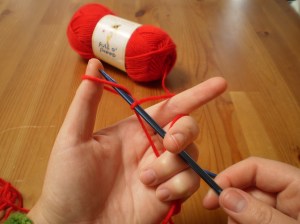
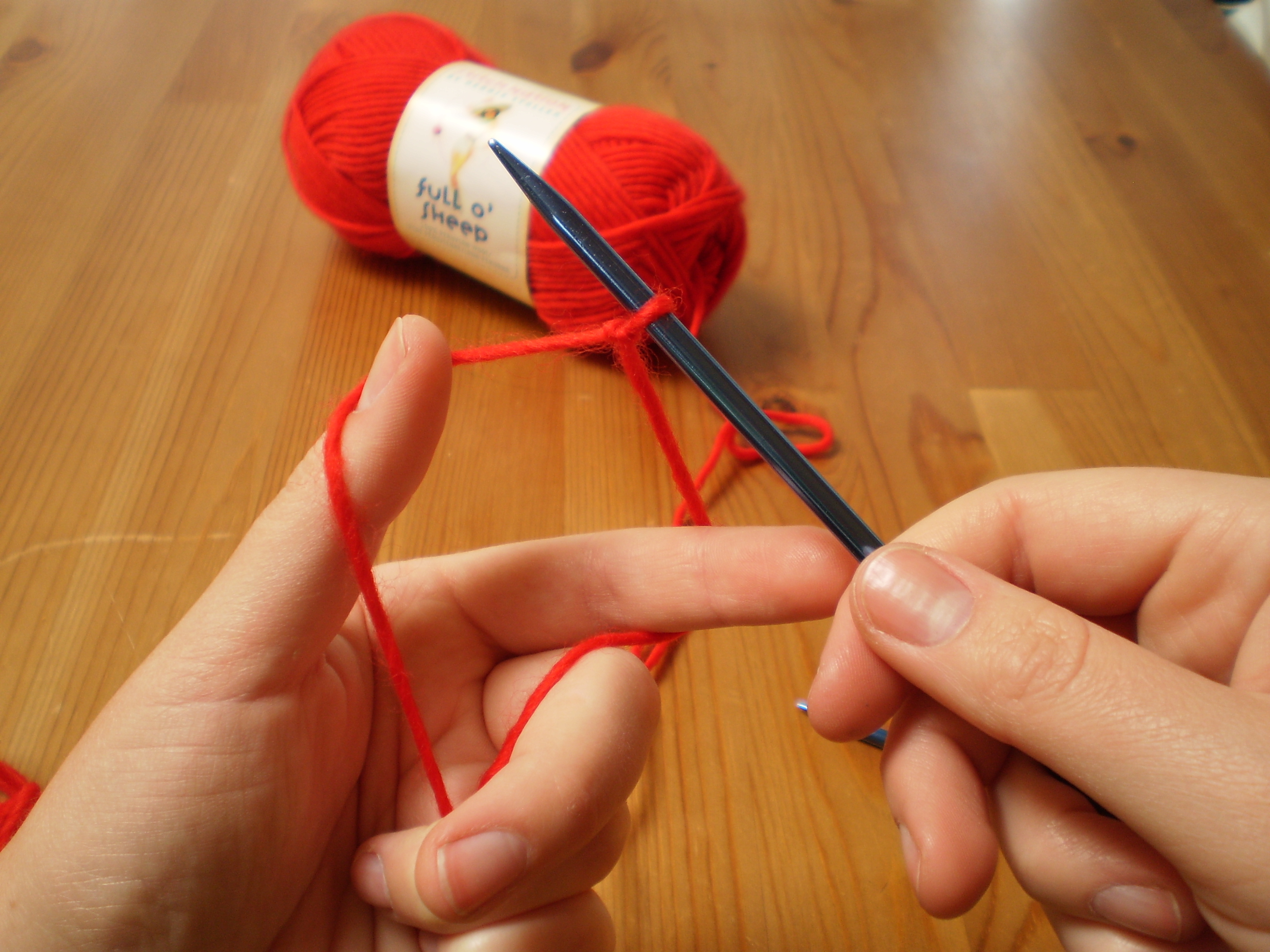
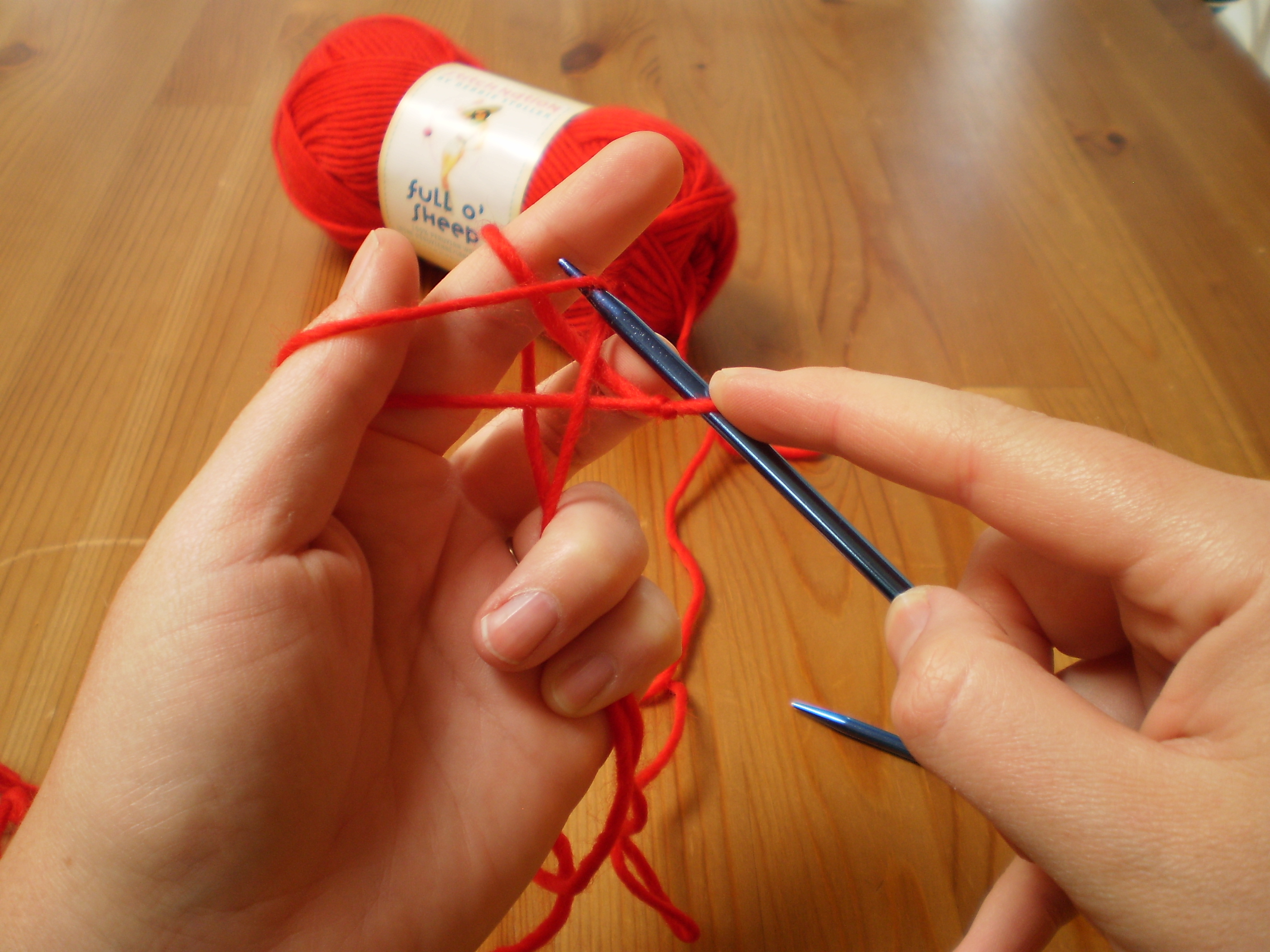
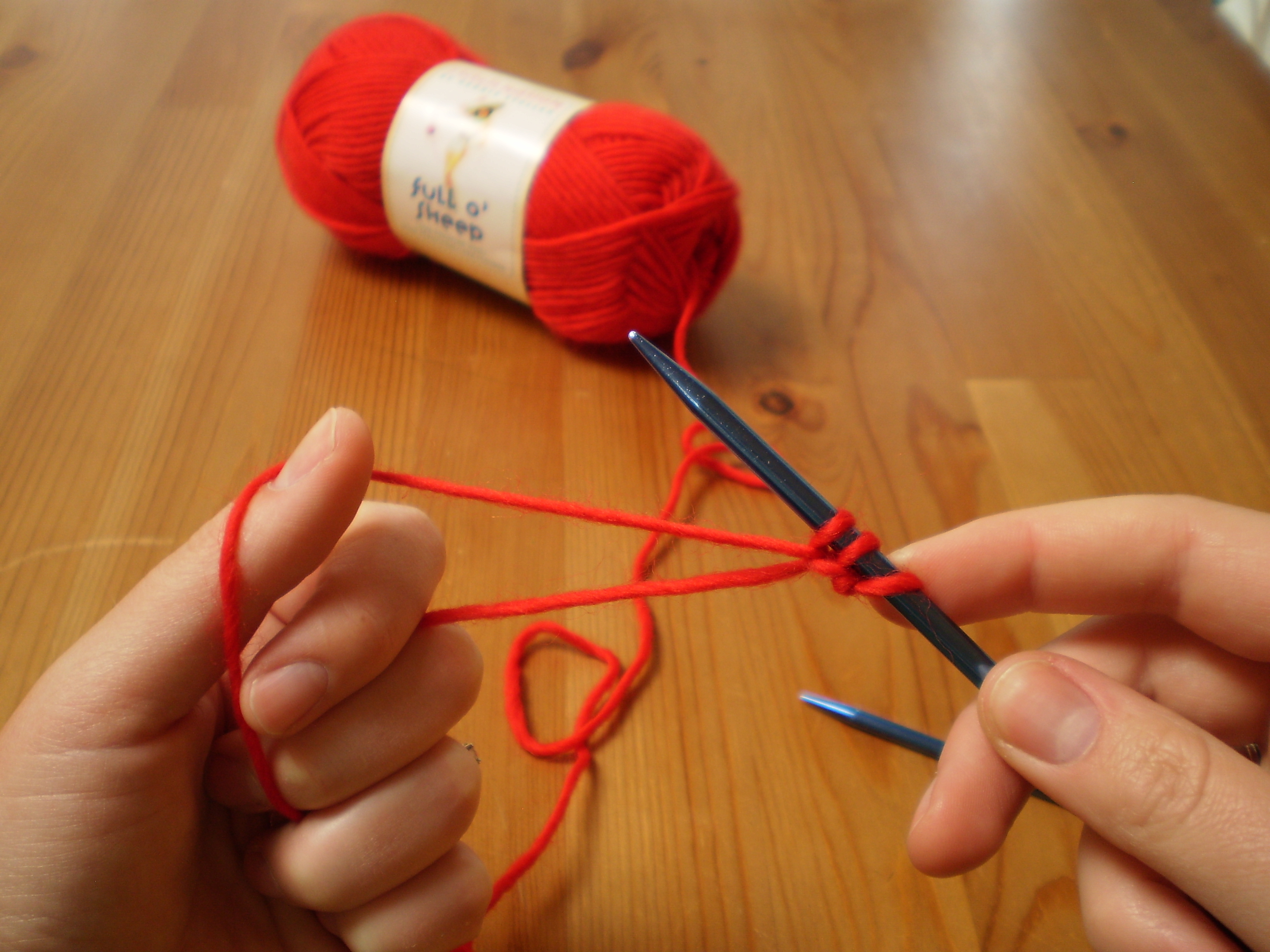
OLYMPUS DIGITAL CAMERANow, with your non-dominant hand, grab both the ball yarn and the tail yarn with your pinky and ring finger.  Then, slip your thumb and index finger between the two ends of yarn.  Make sure that the tail yarn is the one wrapped around your thumb.

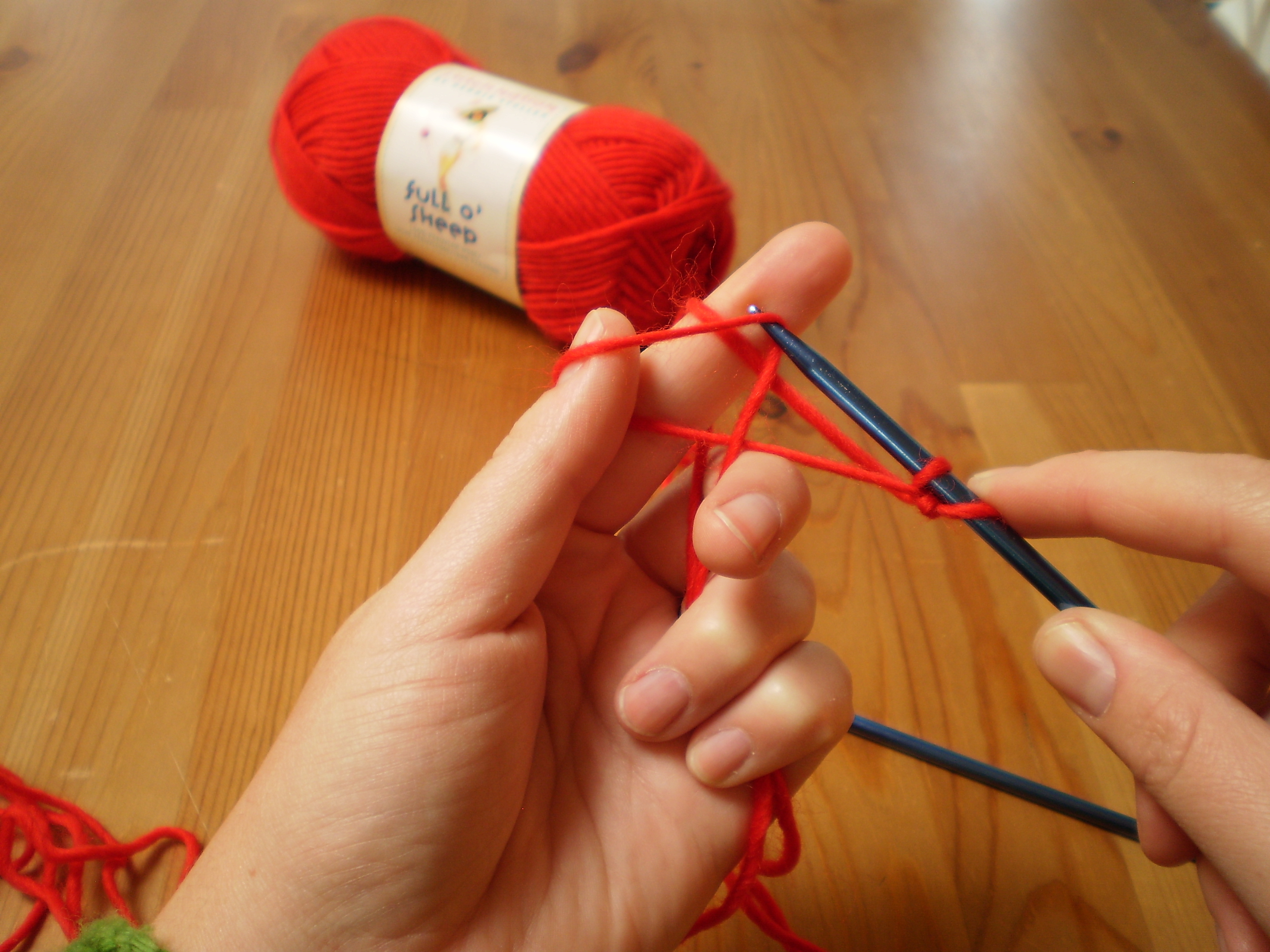
OLYMPUS DIGITAL CAMERAUse the point of the needle to slide from the bottom of your thumb to the top, picking up a loop of yarn.  Don’t let the yarn slip off your thumb.  Your pinky and ring fingers should keep tension on your yarn, which can help this.

OLYMPUS DIGITAL CAMERAOLYMPUS DIGITAL CAMERAThen, move the point of the needle over to the tip of your index finger.

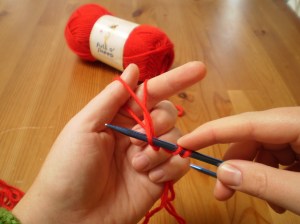
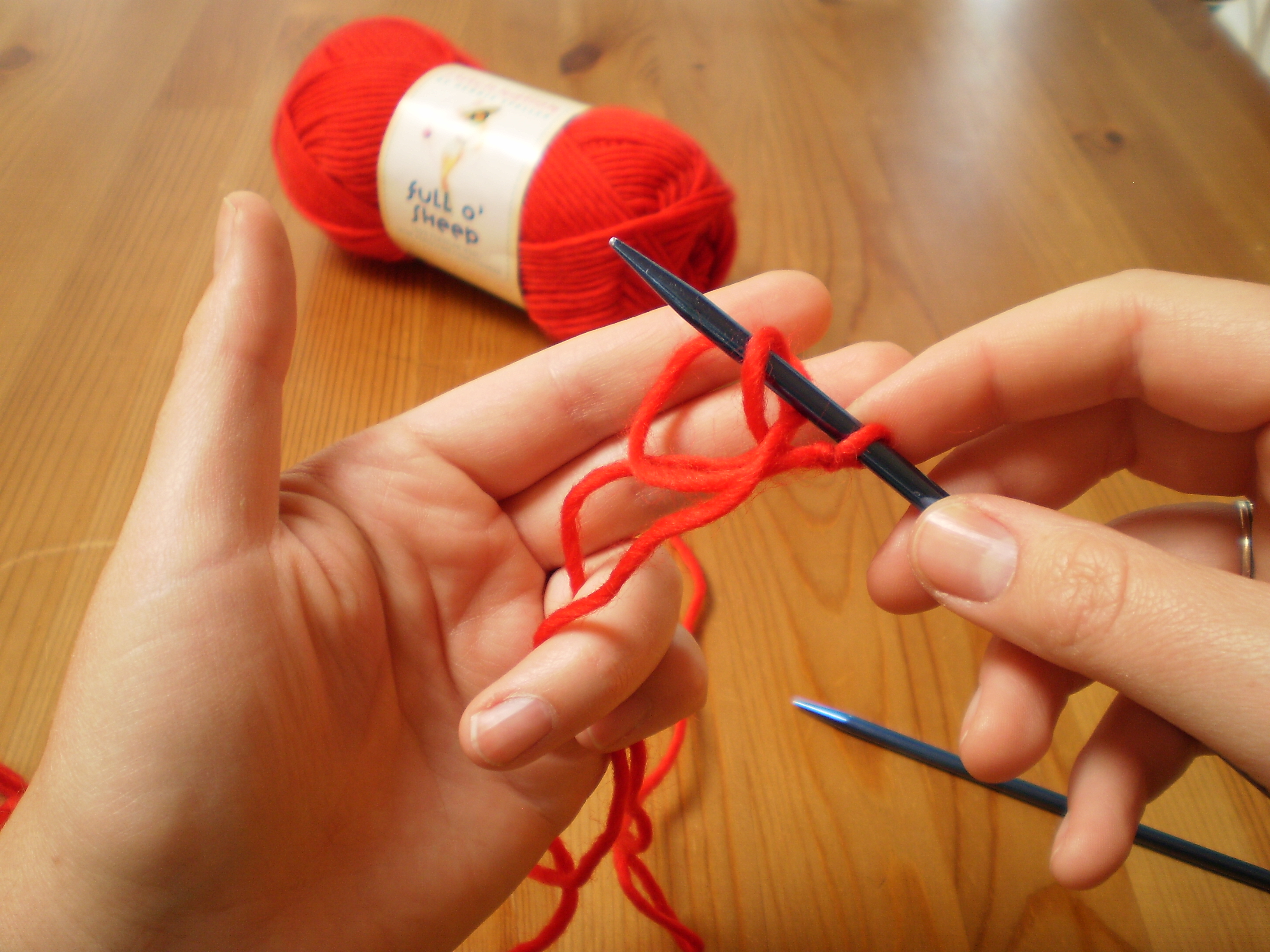
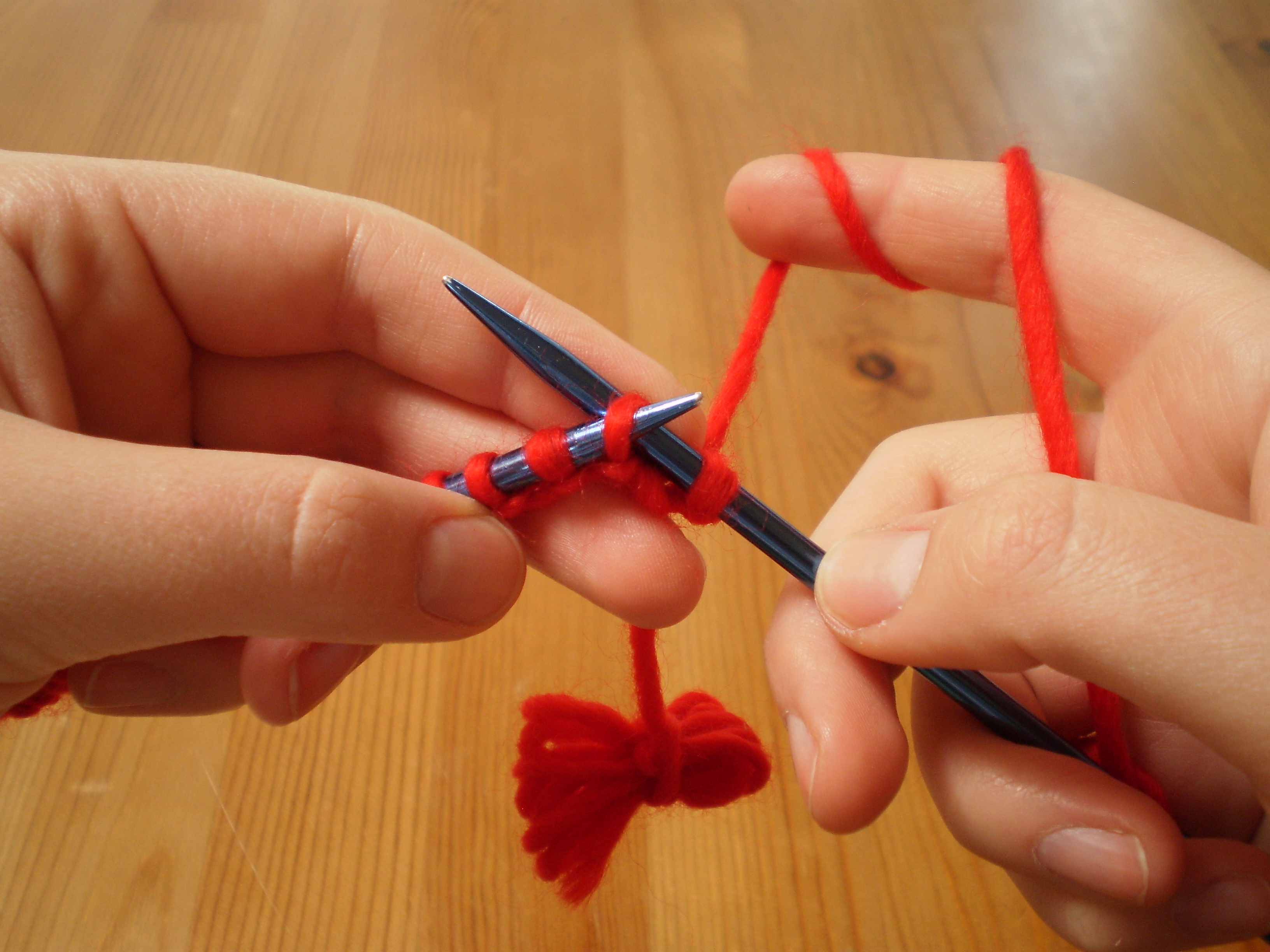
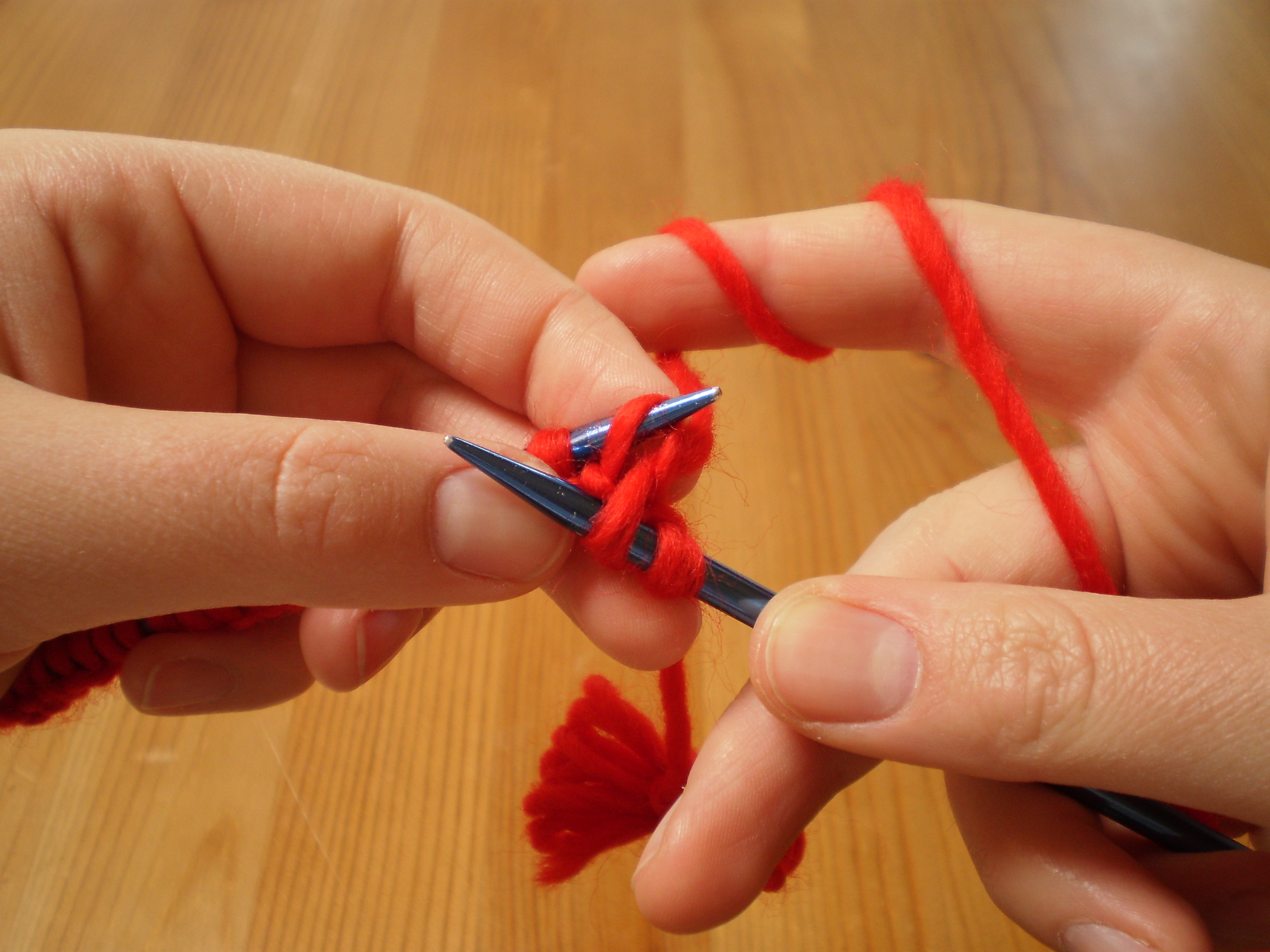
OLYMPUS DIGITAL CAMERASlide the point of the needle down your index finger, then down your thumb, too.  This will hook the loop of yarn from your index finger, and pull it through the thumb loop.
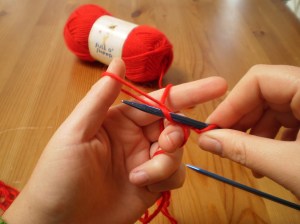
OLYMPUS DIGITAL CAMERANow, here’s the scary part.  Drop the yarn from your left hand.  I promise you won’t loose your work.OLYMPUS DIGITAL CAMERAPull on the yarn tails to snug up your new stitch.  Now you have two stitches!  Huzzah!
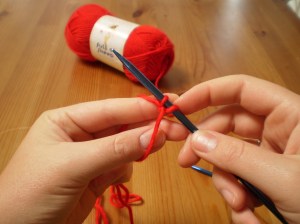
OLYMPUS DIGITAL CAMERAAnd now, you keep going.  Grab the yarn again in your non-dominant hand, with your thumb and index finger between the tail and the ball yarn.  Use the tip of the needle to slide up your thumb, over to your index finger, and back down your thumb, pulling the index finger loop through the thumb loop.
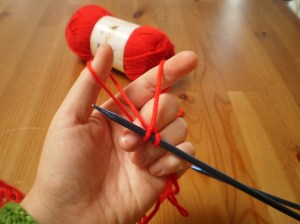
OLYMPUS DIGITAL CAMERAOLYMPUS DIGITAL CAMERAOLYMPUS DIGITAL CAMERAThen, drop the yarn, and tighten up your third stitch.
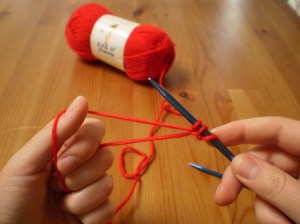
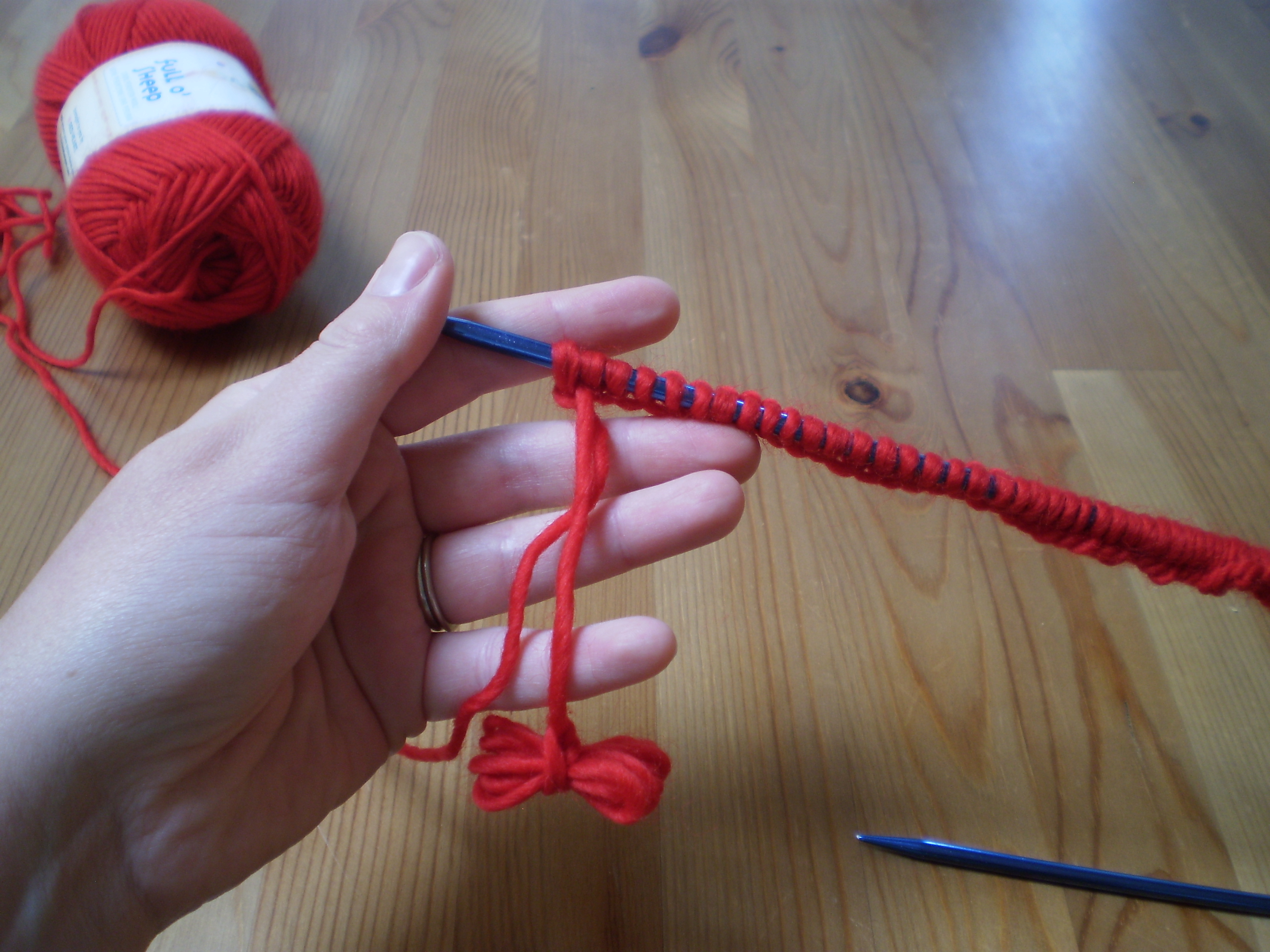
OLYMPUS DIGITAL CAMERAKeep on going, repeating these steps until you end up with 80 stitches on your needle.  (I know it seems like a lot, but practice makes perfect.  You’ll be burning through them before you know it.)  When you get all 80 stitches, tie up any remaining tail yarn into a little bundle to keep it out of your way.   You won’t do anything else with the tail until you’re done with all the knitting on this project.

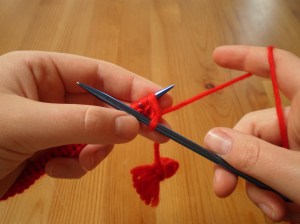
OLYMPUS DIGITAL CAMERADid you get your 80 stitches all cast on?  Awesome!  Now it’s time to really start knitting.  Whenever you knit, you’re going to have the “old” stitches on your left-hand needle, and you will make the new stitches on your right-hand needle. So, that’s how we’re going to start.  Hold your needle with the stitches in your left hand, and your empty needle in your right hand.  Keep your ball of yarn on your right side.

OLYMPUS DIGITAL CAMERAAre you ready to start your first knit stitch?  Yes!

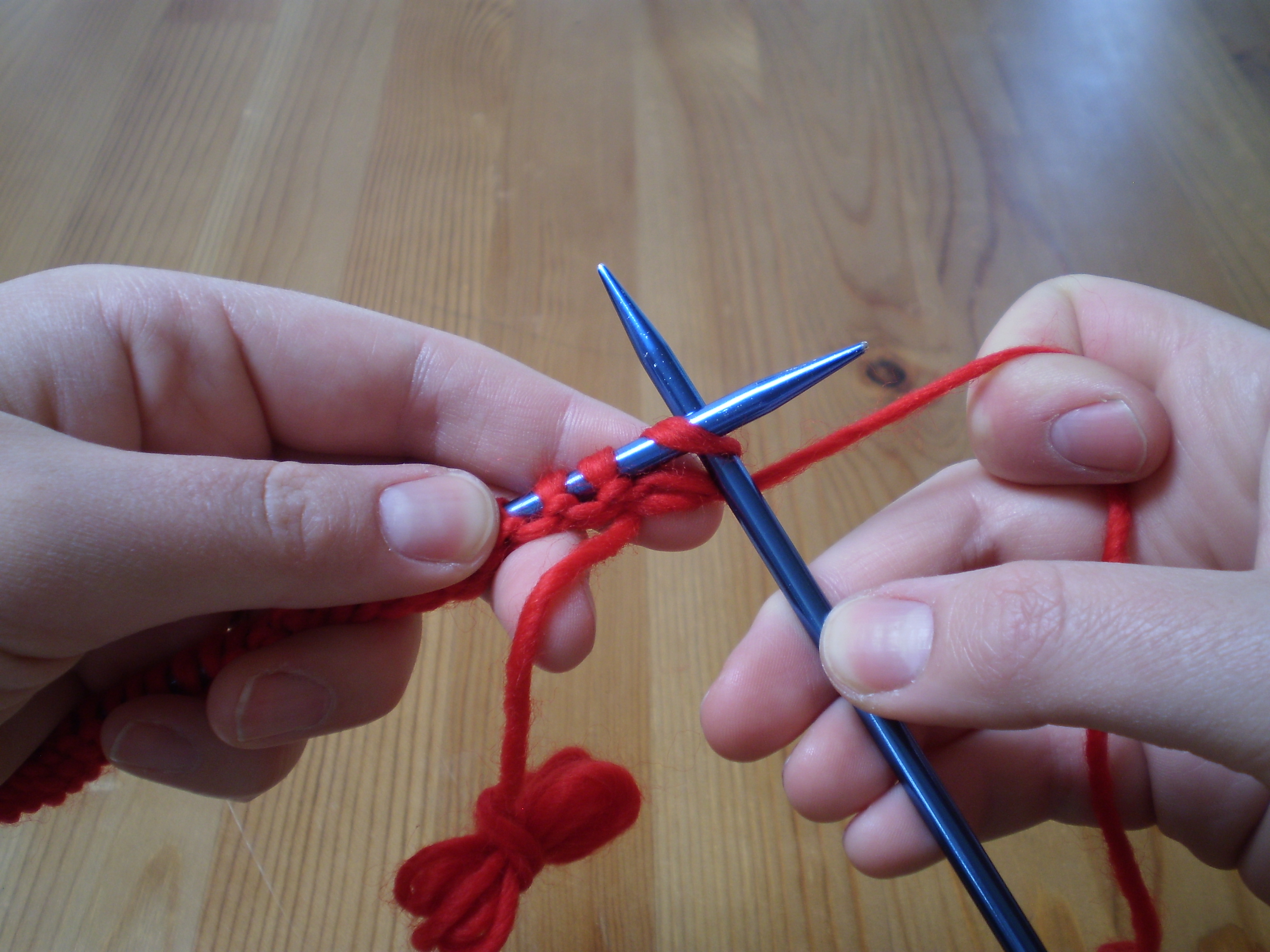
Insert the point of your right needle into the front of the first stitch, with your yarn held behind your knitting.  (The “front” of your knitting is the side that faces you as you work on it.  The “back” of your knitting is the side that faces away from you.) It should look like this:  OLYMPUS DIGITAL CAMERAThen, wrap the yarn around the tip of the right-hand needle.
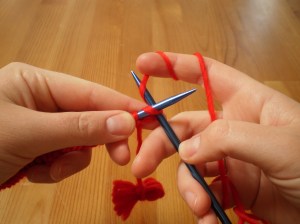
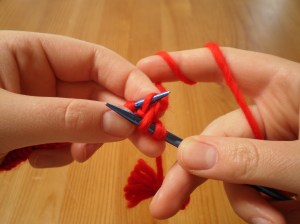
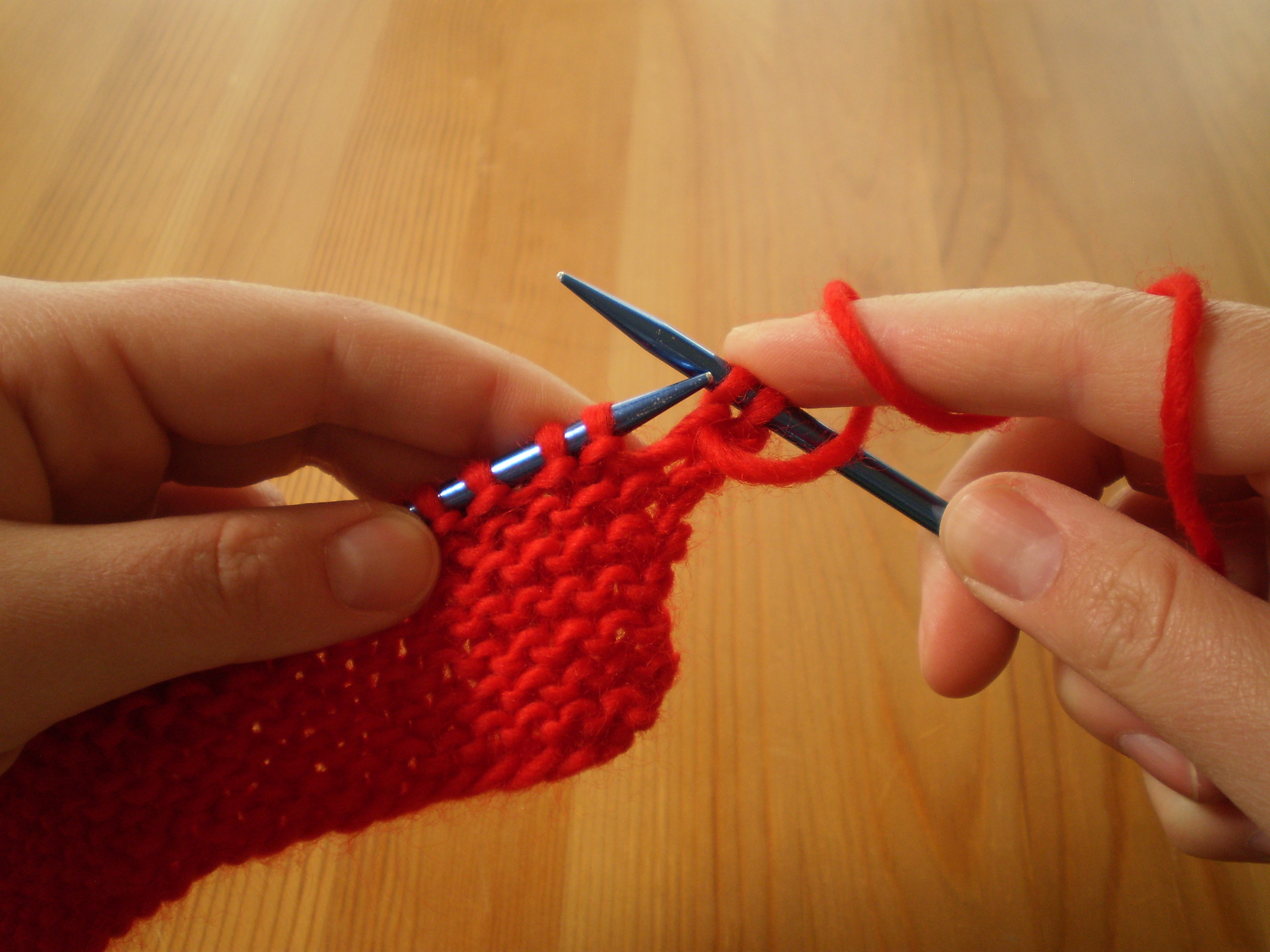
OLYMPUS DIGITAL CAMERAPull that new loop carefully through the old stitch.  This is tricky at first, so keep trying.  If you keep a little tension on your yarn, it makes it easier.  I like to wrap the yarn around my index finger to help keep tension, but if you don’t like that, try holding the yarn between your index an thumb, or wrapping it around your whole hand.  Every knitter holds their yarn a little differently. Find what feels good to you.

OLYMPUS DIGITAL CAMERAOLYMPUS DIGITAL CAMERAYou’ve made your new stitch (the loop you just made on your right-hand needle).  Now it’s time to get rid of your old stitch.  To do this, simply slip it off the end of the left-hand needle. Easy.
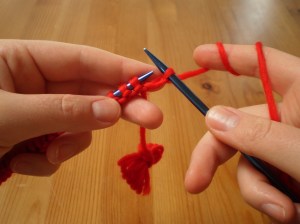
OLYMPUS DIGITAL CAMERAYou’ve finished your first stitch!  Congrats!  Now you just need to make approximately 1 billion more.  (Not really.  Although sometimes I wonder about how many stitches there are in a hat, or a sweater or something.  I’ve never actually sat down to do the math.  That would be crazy.)

Knit your second stitch:  Insert your right-hand needle into the front of the next stitch, wrap your yarn around the tip of the needle, pull the new stitch through, and then drop the old stitch off the end of the left-hand needle.
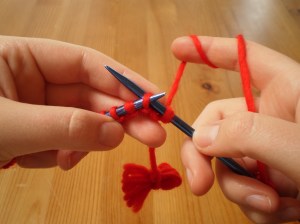
OLYMPUS DIGITAL CAMERAOLYMPUS DIGITAL CAMERAOLYMPUS DIGITAL CAMERAOLYMPUS DIGITAL CAMERATwo stitches done!  Keep going like this until you reach the end of the row.
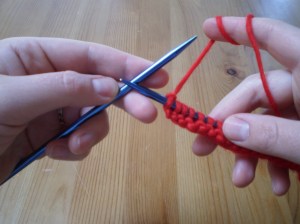
OLYMPUS DIGITAL CAMERAWhen you get to the end, swap your needles, so that your empty needle is in your right hand, and your needle with stitches on it is in your left hand.  Then, keep knitting away!
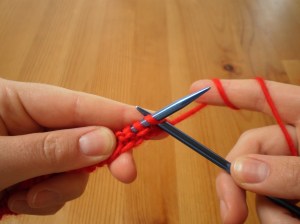
OLYMPUS DIGITAL CAMERAKeep knitting, switching your needles around at the end of each row, and soon enough you’ll see some awesome squishy fabric start growing off your needles.  (If your stitches aren’t as even as mine, that’s OK.  It adds character!  And, if you think it’s too bad to actually wear, you could frame the finished hat as a piece of modern art or something.)

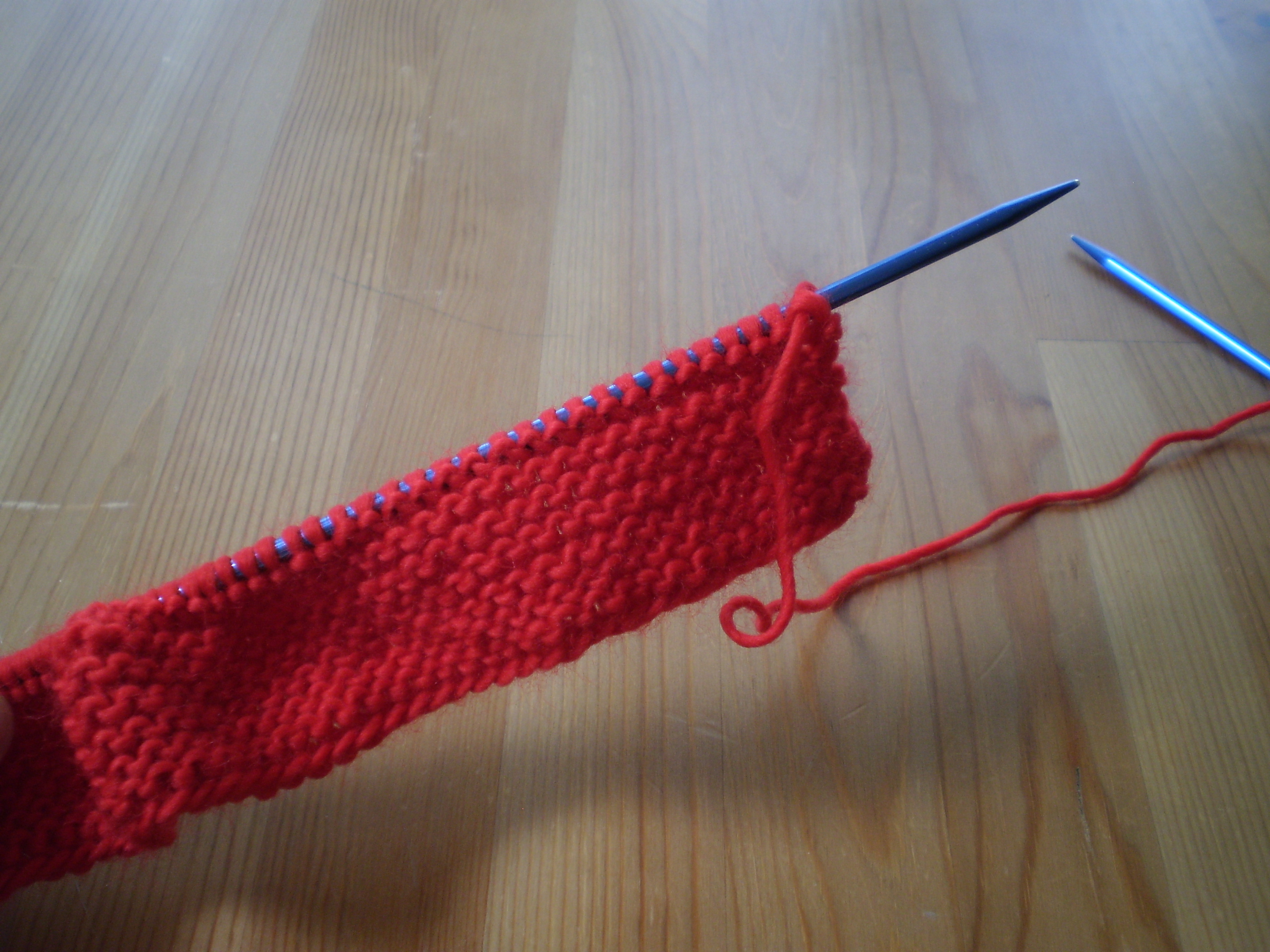
OLYMPUS DIGITAL CAMERAThis pattern is called “Garter Stitch.”  It’s made when you knit every single row.  This is the brim of the hat we’re working on.  I worked my garter stitch for about 2 inches.  You can make your garter stitch brim wider or narrower by knitting more or fewer rows.

Next week, we’ll make the body of the hat, and I’ll show you how to work the purl stitch.  Happy knitting!

n00b Hat, or Learning to Knit: Part 1

So, I heard that some of you don’t know how to knit (yet).  If you’re interested, let’s fix that.

This is a pattern I created years and years ago.  I was part of my college club the “Knitting Illini” (at the University of Illinois, hence the “Illini”).  We had to teach a new crop of people how to knit every year, and we didn’t want to scare them off with great big scarves, or boring washcloths.  I thought a hat was a fun, useful, and small enough project for new knitters.  And, you end up with a hat at the end of a couple of weeks. Win-win.

OLYMPUS DIGITAL CAMERA

It’s a basic beanie with a garter stitch brim.  It’s knit flat and seamed up the back.  It’s pretty much one size fits all, and is super cozy.  I have a couple I’ve made over the years and I wear them all the time.

I’m going to be posting small chunks of the project every Friday for the next couple weeks.  That way you can play along at home.  As you work on the hat you’ll learn how to cast on, knit, purl, decrease and finish a project, skills that constitute about 90% of all knitting.  And, if you keep up, you should end up with a pretty nifty hat by the time truly cold weather kicks in.

“Yes!” you say.  “I want to do this!  What do I need?”

Well, dear reader, you don’t need much:

OLYMPUS DIGITAL CAMERA-1 skein of worsted weight yarn.  You can go luxurious or cheap, or somewhere in between.  If you want to go the cheap route, Red Heart SuperSaver costs about two bucks and can be found literally everywhere.  If you want to go the luxurious route, find an independent yarn store and ask the clerk to get you something fancy for a worsted weight hat.  May I recommend Malibrigo?

-1 pair of size 8 knitting needles.  Whatever kind you like.  I recommend straight needles for ultra beginners.  Wood or metal, doesn’t matter.

-1 tapestry needle.  I forgot to take a picture of this.  It’s a big sewing needle.  Sometimes they are metal, sometimes they are plastic.  You’ll use this at the very end to finish your hat.

-1 pair of scissors (or really strong teeth, I suppose).  You won’t need these until the very end.

OLYMPUS DIGITAL CAMERA

Dying With Food Coloring, Part 2

Let’s start at the beginning, and make us some semi-solid yarn.  I’m going to try to make some black yarn.  Now, when you shoot for black yarn, you usually end up with really really really really dark purple or blue, but I’m OK with that.

The process is really similar to dying yarn with Kool-Aid, with a few small differences.

OLYMPUS DIGITAL CAMERA

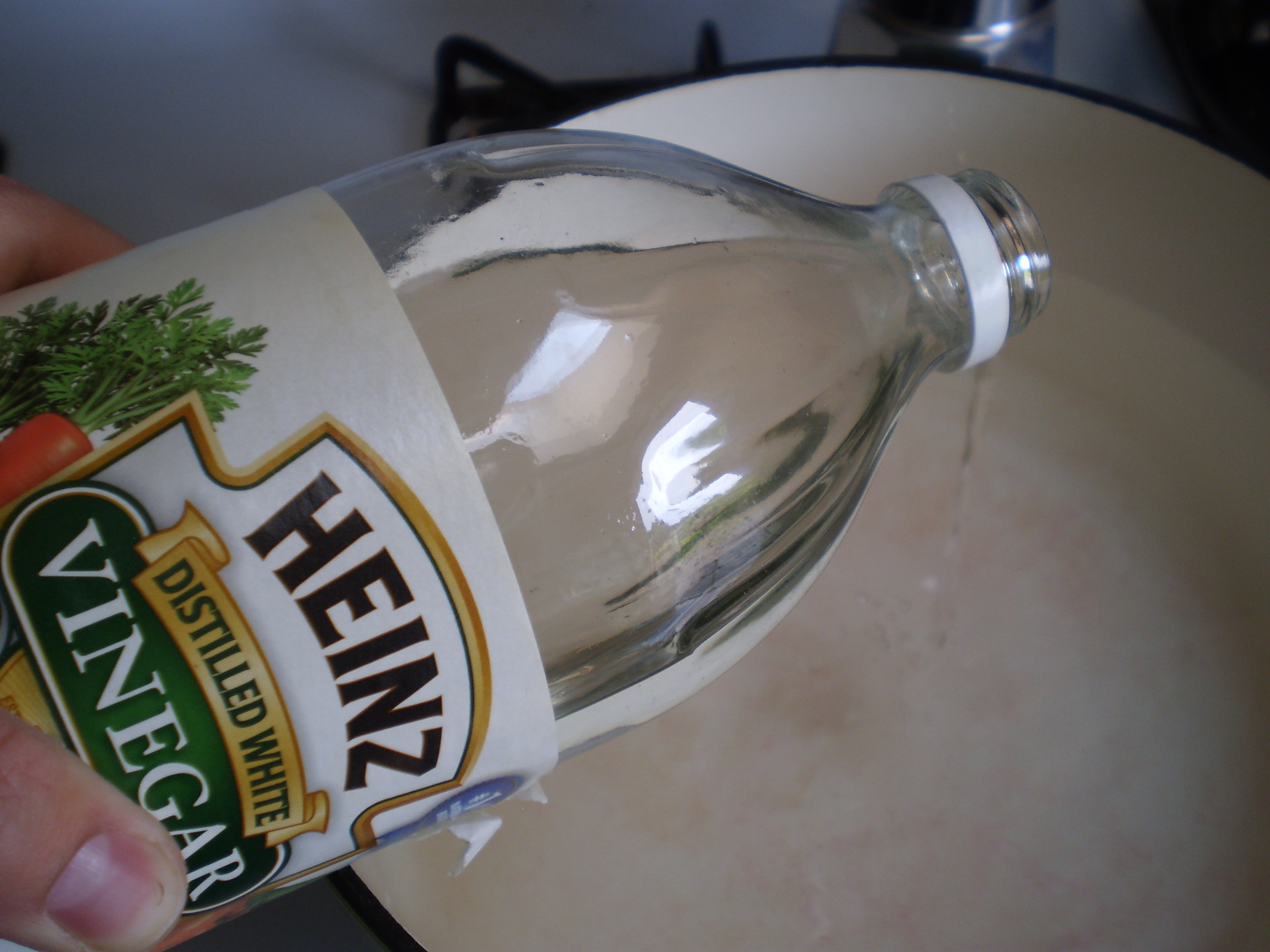
When you go to make up your dye bath, fill your non-reactive pot with plenty of water and a good glug of vinegar.  I’ve probably got about a half gallon of water, and about a tablespoon of vinegar.  You don’t really have to measure.

OLYMPUS DIGITAL CAMERAThen, add in your food coloring.  Add as much or as little as you want.  I’m trying for a really dark color, so I probably added just under a teaspoon.  If you’re going to try to get a couple skeins of the same color, you’ll want to measure carefully.  But, I’m just making the one, so I can play loosey-goosey.

OLYMPUS DIGITAL CAMERASoak your yarn in warm water.  When your dye bath is steaming and just on the verge of simmering, turn the temperature down to medium/medium-high.  Add the wet yarn all at once and give it a gentle stir with a spoon.

OLYMPUS DIGITAL CAMERALet your yarn hang out in the dye bath until all the color is taken up.  I used a TON of food coloring for this yarn, so it probably took a good half hour to take up the dye.  (Also, it’s almost impossible to take a good picture of yarn in a dye bath.  This was the best one of about 15 photos.  Frustrating.)

When the water turns clear, tip the yarn into a clean colander in the sink and rinse it out thoroughly with clean, warm water.  Make sure you get all the vinegar out.

OLYMPUS DIGITAL CAMERAHang your yarn up to dry!

Dying with Food Coloring, part 1

I’ve been getting requests to do a dying with food coloring tutorial for a while now (Hi Mom!), so let’s do it.  Dying with Kool-Aid is fun and all, and leaves your knitwear smelling fruity fresh, but there is a very limited color selection with it.  And, unless you’re six years old, you probably don’t want a “Blastin’ Berry Cherry” colored sweater.

Here’s what you need:


OLYMPUS DIGITAL CAMERA

-Food Coloring.  I like the gel concentrate stuff from Wilton.  It’s super concentrated, so you can use just a little bit and still get really bright colors.  And, it comes in approximately a million shades.  I bought this box of 12 colors for about $10 (with a coupon from JoAnn’s), and it’ll last me years.  You can use the regular liquid colors from the grocery store, but you’ll have to use a lot more volume to get brightly colored yarn.

-Vinegar.  To set the color into your yarn, you have to add an acid, and plain white vinegar works best.  It’s dirt cheap, and you probably have a bottle of it in the back of your cupboard.  (We didn’t use vinegar when dying with Kool-Aid, since it already has citric acid added to the powder, so you don’t have to add any more. Science!)

-Yarn.  Just like with the Kool-Aid, this kind of dying only works with animal fibers (wool, alpaca, angora, silk).  It has to do with the protein makeup of the yarn, but I don’t know all the science behind it.  I just know that if you try it with acrylic or cotton, it’ll never take up the color.  I’m using Paton’s Classic Worsted.  It’s a 100% wool yarn, and it’s easy to find at your local Jo-Ann’s/Michael’s/Hobby Lobby.

-Water.  Duh.  From the tap is fine.

-A non-reactive vessel.  (Just like with dying with Kool-Aid)  Stainless steel, enamel, glass or non-stick/Teflon work well.

Collect up your gear, and meet me back here next week when I’ll show you how to dye semi-solid and variegated yarn. And (if the time management gods smile upon me), I’ll give you a pattern to use your newly dyed yarn!

OLYMPUS DIGITAL CAMERA