Tag Archives: cardigan

Zzzzzzip

Sorry, Folks! I totally promised you that I’d tell you about adding the zippers to my husband’s sweater… and then I didn’t. My husband has been wearing his sweater almost every day for the past month or so, so it’s starting to look a little lived-in, but it’s still holding up pretty well.

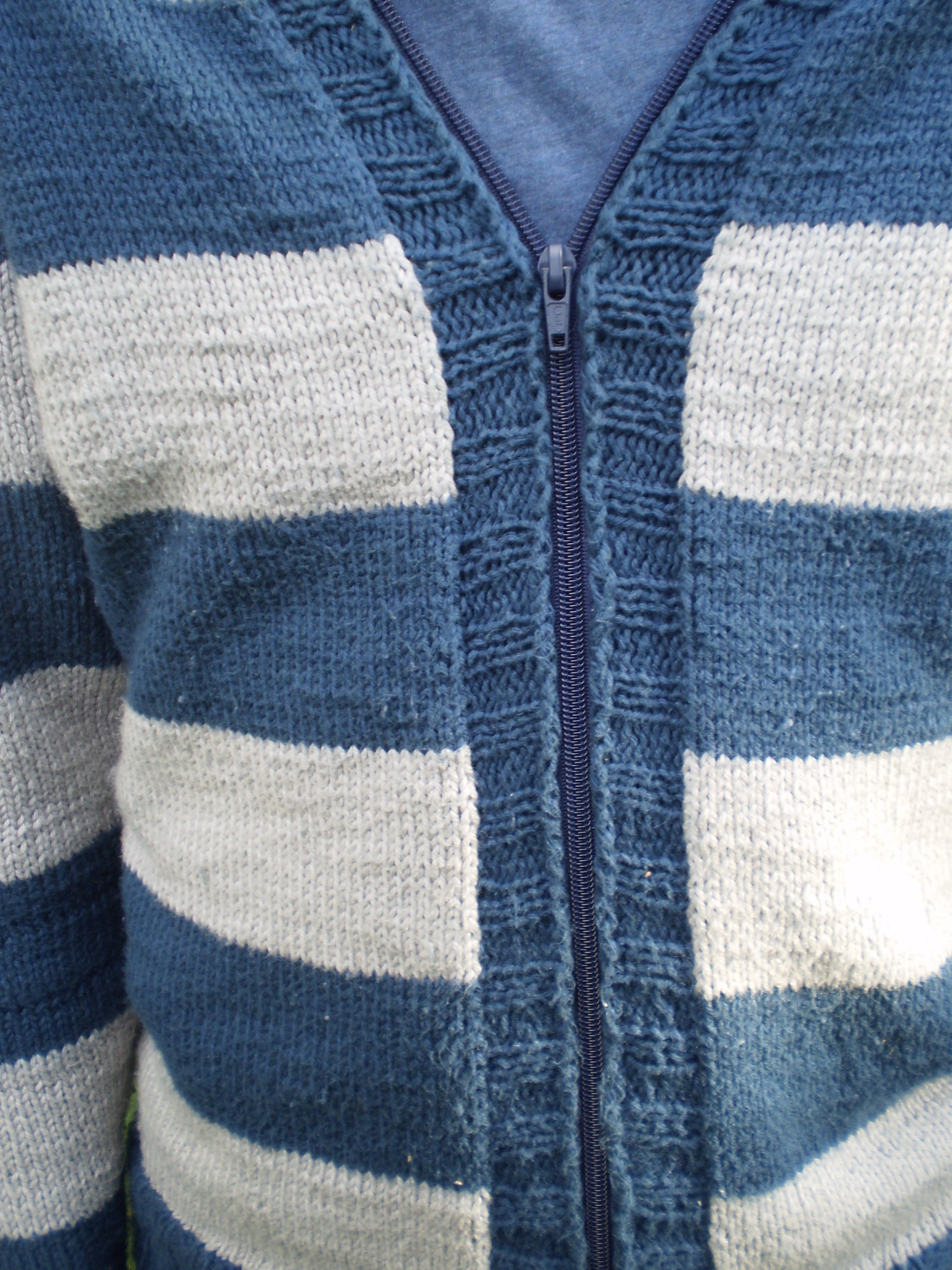
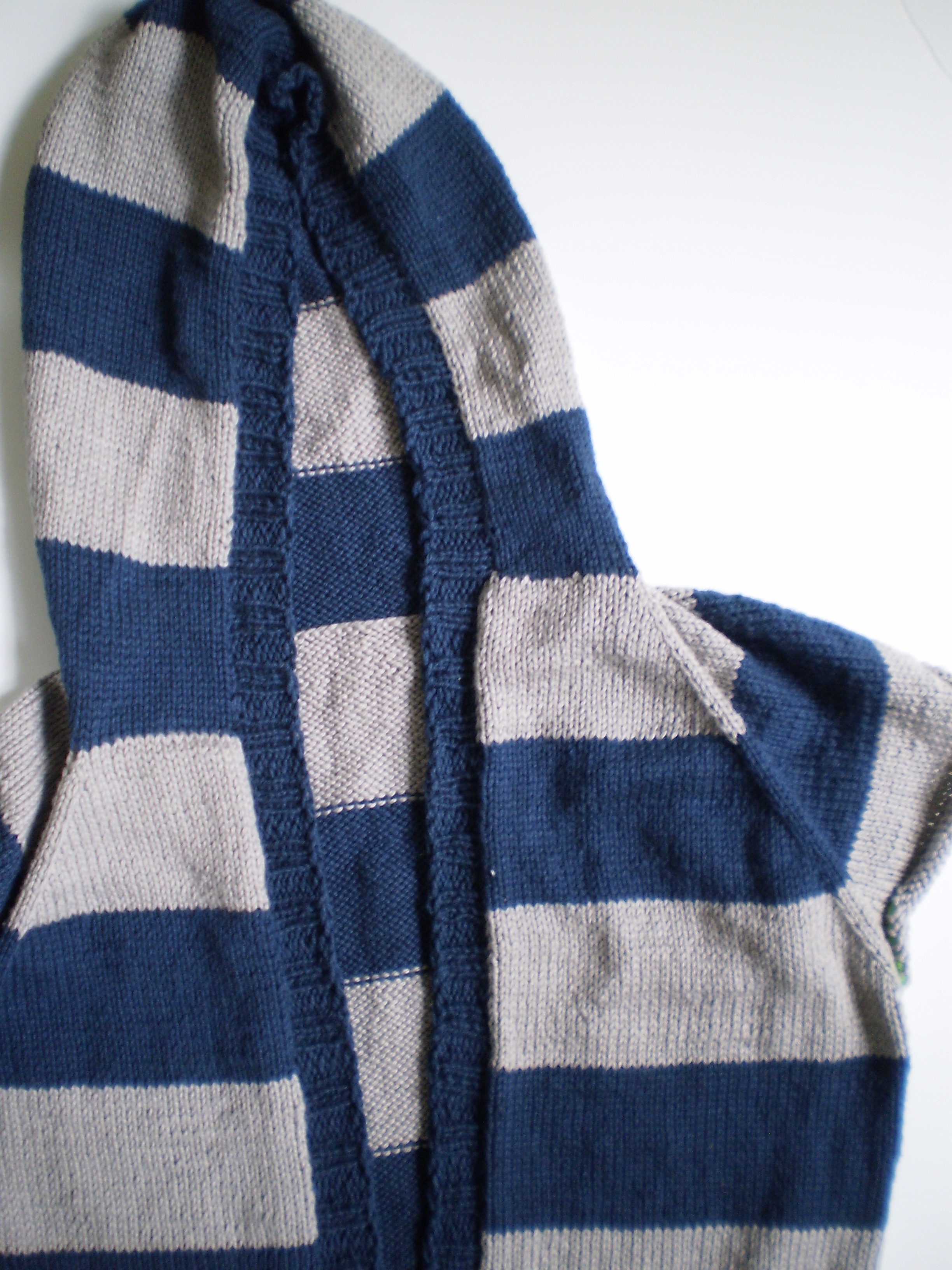
Anyway, here’s the zipper. (I think it turned out pretty well.)OLYMPUS DIGITAL CAMERA

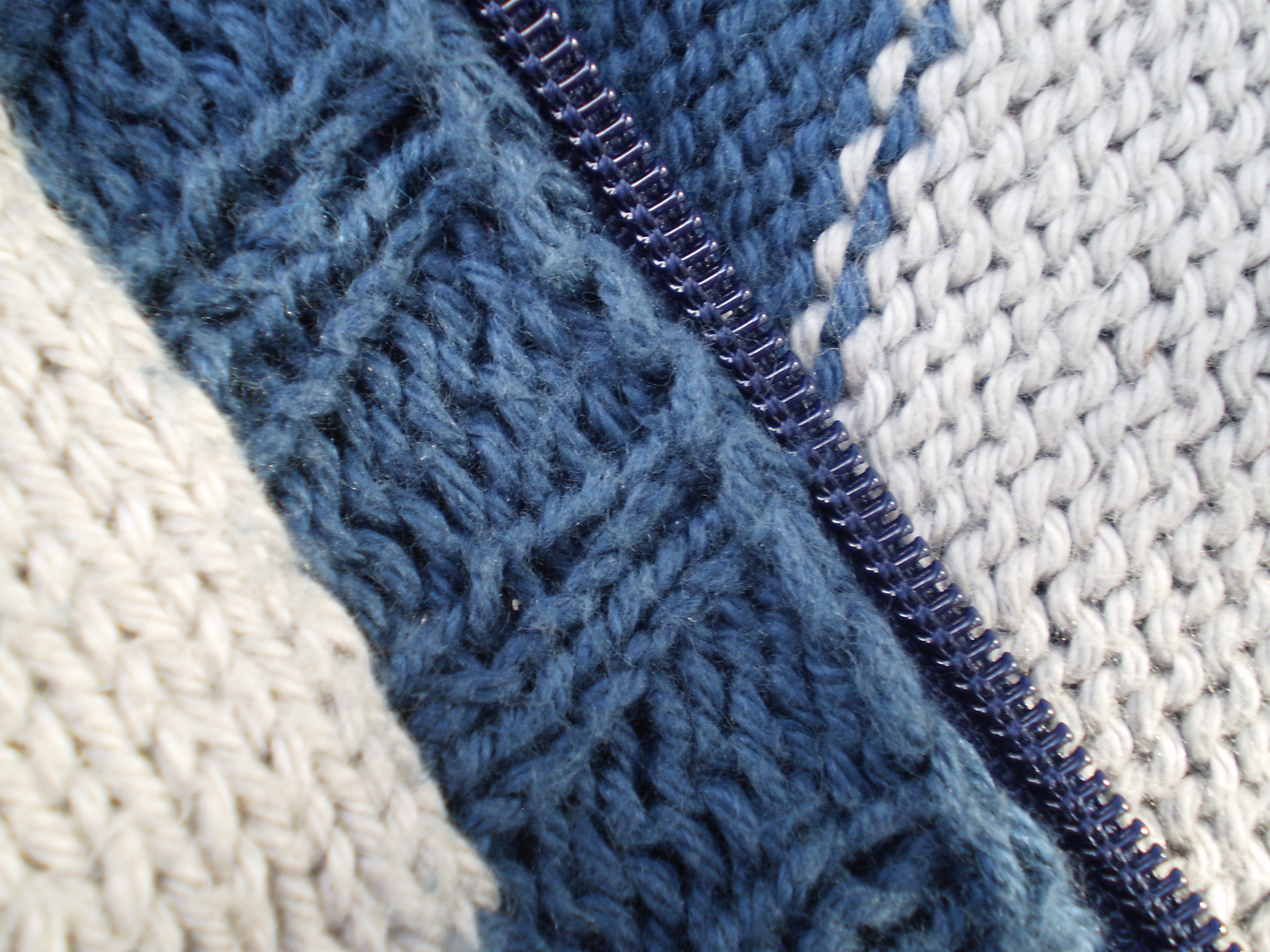
I don’t really have a secret to zipper installation, or any magic techniques. I just pin them very carefully and make sure that both sides match up well.OLYMPUS DIGITAL CAMERA

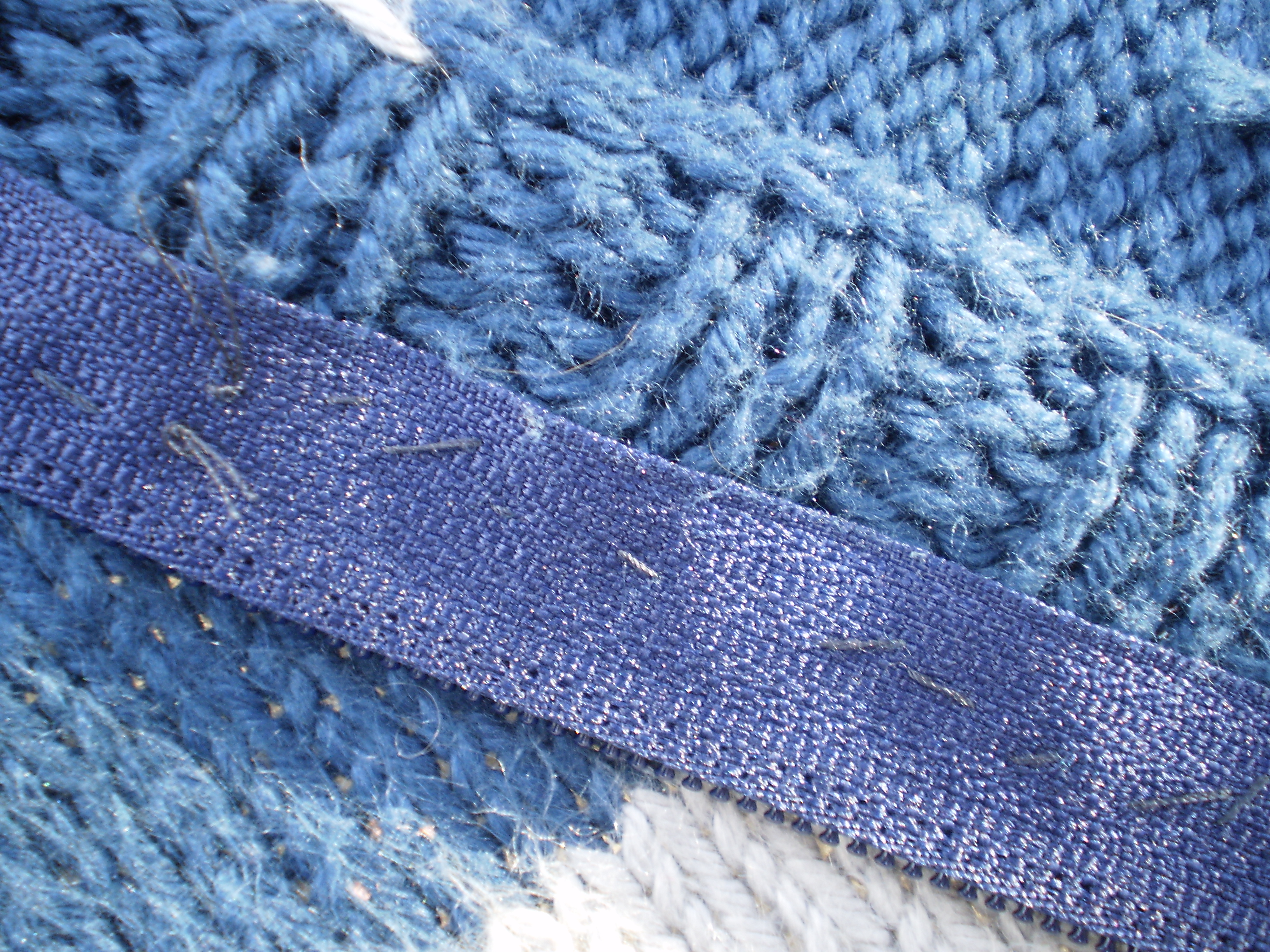
Then, I use a needle and thread to carefully sew the zipper to the knitting, trying my best to make the stitches on the outside of the sweater hidden. That means the inside stitches end up being a little messy, but the inside isn’t the important part.OLYMPUS DIGITAL CAMERA

Easy, right? Sort of, anyway.

Have you ever used a zipper for your sweater?

Speedy Sweater

Whee! That went way faster than I thought it would! I guess when you make a cropped, short-sleeved sweater in bulky yarn, it goes really fast! Who would have thought?

This sweater, from casting on to binding off, probably took about a week! I should make all my sweaters like that–size 10s forever!

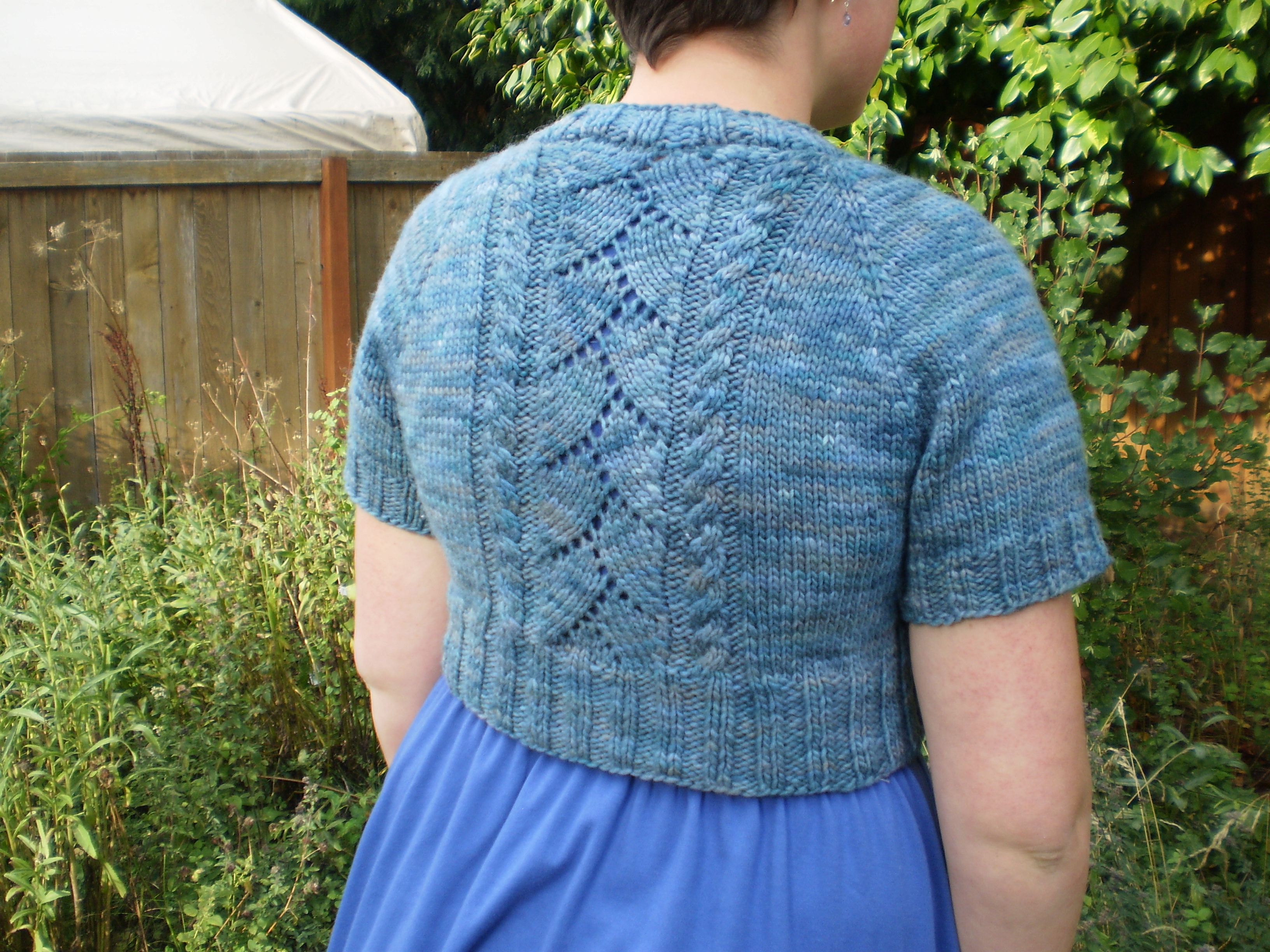
Like I said before, I worked this sweater as a top-down raglan with a V-neck, based on Ann Budd’s book, so I didn’t have to do any math. (Even math nerds like me enjoy a break from time to time.) And, as I went, I added cables and lace from my Japanese pattern book.OLYMPUS DIGITAL CAMERA

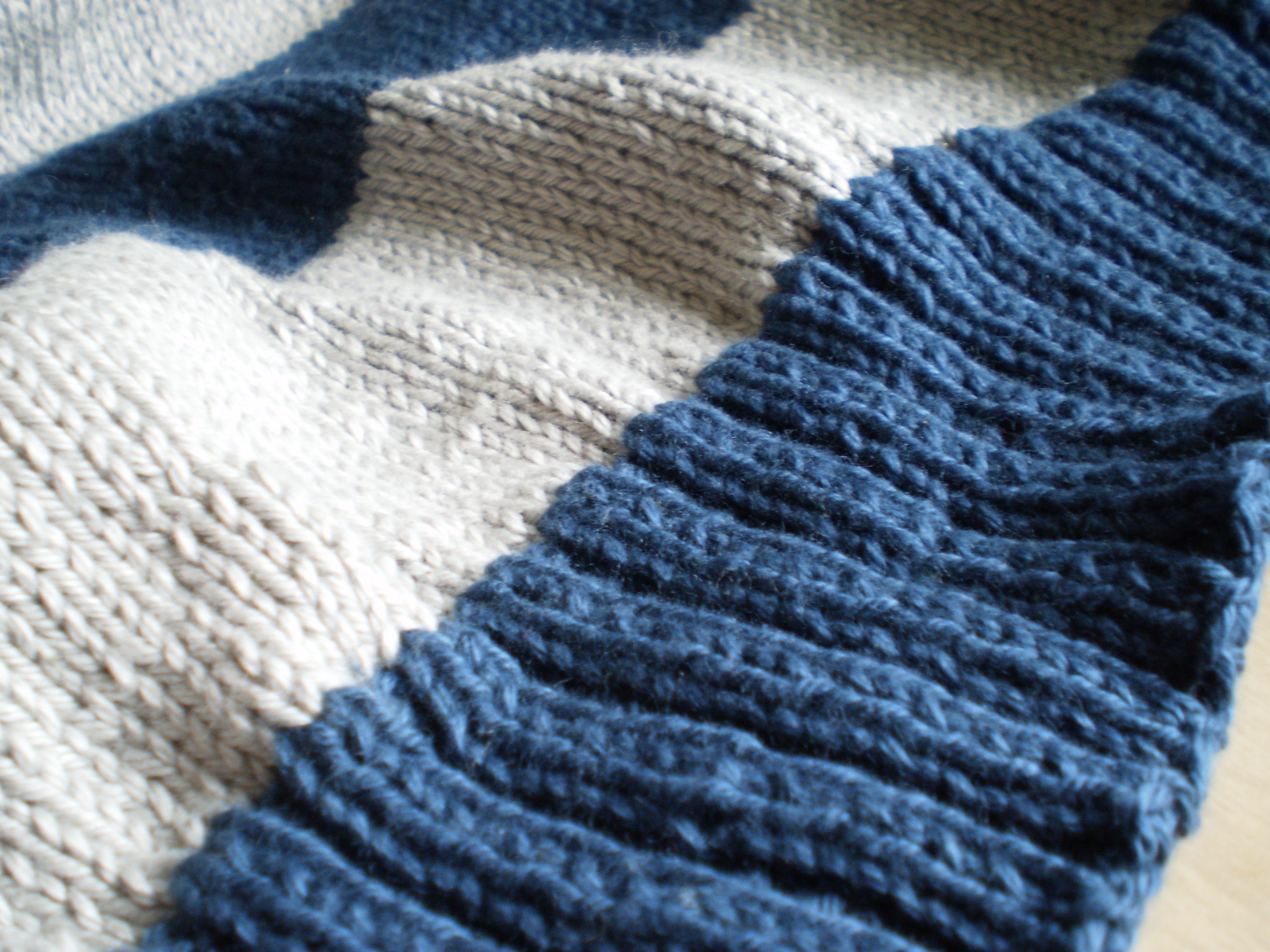
Meanwhile, I added a little k2p2 ribbing to make the sweater a little more fitted without having to worry about doing actual shaping. It’s a trick I picked up years ago. K2p2 ribbing is the stretchiest/most elastic stitch pattern, so it can act as elastic, pulling the sweater tight, when you work it in panels on the sides of your sweater. I also added a nice wide ribbed waistband and cuffs.OLYMPUS DIGITAL CAMERA

I’m so happy with how it turned out! I have a bunch of high-waisted, summery dresses, and now I can wear them with this sweater and a pair of tights all the way through winter!

Ollie likes it, too!

OLYMPUS DIGITAL CAMERAHave you ever made a project in less time than you expected?

Button Trouble

It has been well-documented that I have a problem with buttons.  The same way someone with a caffeine addiction has a problem with coffee, or a shopaholic has a problem with shoes.  It won’t kill me or anything (and thank god they’re not too expensive), but, well, I can’t stop myself.

And so, despite the fact that I have an entire jar of vintage buttons, a Zip-loc bag full of sets of buttons I just “couldn’t pass up,” and I find cards of buttons sprinkled here and there around my studio, I “had to” get a new set of perfect buttons for my cardigan.

We had friends in town, and they wanted to ride the ferry and visit one of the islands (they’re from Texas and riding a ferry is a fun, new experience for them.  I’m from the Midwest, and even though I’ve lived here for almost 5 years, I still love it, so I’m not going to argue.)  We went over to Bainbridge Island and spent a day beach combing, shopping and eating.

On Bainbridge there is a gorgeous knitting shop, Churchmouse Yarns and Teas (they make lots of patterns that you might have seen.  I love their Turkish Bed Socks.)

And they have a gorgeous selection of beautiful (and super-classy) buttons.

I almost got a set of vintage-looking silver buttons, but changed my mind at the last minute because I was afraid they’d be too heavy and weigh down the front of my sweater.  Instead, I picked out four beautiful gray mother-of-pearl buttons.  They are subtle and classy, and pick up on the beautiful variegated blues of the yarn.OLYMPUS DIGITAL CAMERAOf course, mother-of-pearl buttons are hard to photograph, so you’ll have to imagine their color being a little less silver, and a little more rainbow-y and beautiful.OLYMPUS DIGITAL CAMERAWhat do you keep collecting, even if you don’t need to?

Husband Sweater: Finished… Well, sort of.

It’s done! It’s done!

Well- mostly.

I cast off the last sleeve last Friday, after months of stagnation.  (Sorry, husband!)  It’s done!

I wove in the ends and, miracle of miracles, it fits!  Woo Hoo!

11905401_10105373908271560_3140276053640019237_n[1]It looks great, and fits like a glove, and the cotton is so lovely and soft.

WP_20150815_002And it only took me 8 months.  (Oy!)

Of course, it’s still missing one very important thing:  the zipper.

I went to get a zipper at Jo-Ann’s over the weekend, but they were closed due to a power outage from a thunderstorm(!) earlier in the day.  So my husband has been wearing the sweater sans zipper for the last few days.  At least he likes it.

The moment I get a chance to go back to Jo-Ann’s I’m zipping over there as fast as I can!

What’s the last project that took you way longer than it should have?

Husband Sweater: The Sleeves

I think it’s high time that this dang sweater stops looking like a muscle shirt when my husband tries it on.  Don’t you agree?

The only problem is that he’s not a fan of the fairly over-sized sleeves that the original pattern calls for.  Ugh.  Nothing is ever simple.

So, it’s time to get out my scratch paper (or rather, the back of the pattern), my calculator and start figuring out what I need to do.

OLYMPUS DIGITAL CAMERAOK.  Before I even have to start doing math I know a few things:

1.  I have 82 stitches (about 20 inches) at the top of the sleeve, set aside from when I split the body for sleeves.

2.  I need to get down to about 40 stitches (about 10 inches) at the top of the cuff.

3.  My sleeve needs to be about 15 inches (about 105 rows) from where I’ll pick up my stitches to the top of the cuff.  (I based this on my husband’s arm length, and the length of the sleeves of his favorite sweater.)

Now it’s math time.

If I need to go from 82 to 40 stitches, I need to do 42 decreases somewhere on the sleeve.

(82 sts at the shoulder-40 sts at the cuff=42 decreases)

I’ll do two decreases per decrease row, so I’ll need to do 21 decrease rows.

(42 decreases/2 decreases per row=21 decrease rows)

And, I want to space those decreases out evenly over 105 rows, so I’ll work a decrease row every 5th row.

(105 rows/21 decrease rows=5 rows per decrease row)

OLYMPUS DIGITAL CAMERASo that means, I’ll knit four rows evenly (while still making sure the stripe pattern matches up with the body), then I’ll work a decrease row (knitting all stitches, except for working two decreases at the underarm).  Easy!

Hopefully, this’ll look good.  It’s a more extreme decrease than I usually use for sleeves, but it might work.  Luckily, I’ll be able to finish one sleeve, have the husband try it on, and get his approval for the next sleeve (or, heaven forbid, find out I have to redo the sleeve!  Cross your fingers for me).OLYMPUS DIGITAL CAMERAHave you ever had to rejigger part of a pattern?  How did it turn out for you?

Husband Sweater: Button (er- Zipper) Band

I feel like it’s been a hot minute since I gave you an update on the sweater I’m working on for my husband.  Oof- actually it’s been almost a month.  (Sorry, husband!  Hopefully I’ll have it finished by August at this rate!)

Anyway, this time, I knit up the button band (or rather, the zipper band).  Instead of using the pattern, I used my own standard button band (mostly because I lost my paper copy of the pattern).

OLYMPUS DIGITAL CAMERA

My button bands actually start when I’m knitting up the sweater body.  I always slip the first stitch of each row.  This creates a nice, neat edge that makes it easy to pick up stitches evenly all the way around.  And I’ve found that picking up one stitch for every two rows makes a button band with just the right tension.  This way, you don’t even have to count, except for making sure you have an even number of stitches to make your ribbing come out right.

OLYMPUS DIGITAL CAMERA

I worked the button band on this sweater for about an inch, in a 2×2 rib.  This is a little narrower than my usual button bands, but that’s because I’ll be using a zipper, not buttons.  If you use buttons, the button bands will overlap, so you’ll need a wider band.  If you use a zipper, the bands don’t overlap, so you need a narrower one.

Next up-I’ll start working on the sleeves!

Husband Sweater: The Hood

I admit, it’s been a while since I updated you on the sweater situation (almost a month-eek!).  I’ve been busy with some dog stuff, some quilting, and generally catching up with other projects around the house (I even tried my hand at some very simple woodworking- I made a slightly wobbly window seat for the dog!).

But, I’m back on track with my husband’s sweater, and have the hood all finished!

OLYMPUS DIGITAL CAMERATa-da!

I actually went off-pattern for this hood, because if you remember, the one outlined by the pattern was a little, well, big:

uploadedImage_medium2[1]Instead, I based the shape of the hood off of my husband’s favorite hoodie.  I measured the height of the hood from the neck to the crown.  This was the total height of my finished hood.  Then, I measured the hood from the neck to the start of the head-shaped curve.  This was how far I would knit before starting my decreases.

The hood ended up looking like this:

OLYMPUS DIGITAL CAMERAI picked up stitches from the neck, and knit even (in pattern) for about 8 inches.  Then, I marked the center back of the hood and started decreasing on either side of the mark.  At first I decreased every fourth round, then every other round, then right at the top of the head, I decreased every round.  Finally, I grafted the hood together  at the top of the head to make a seamless-looking hood that fits my husband (almost) perfectly.

Phew!

Next, I’ll start working on the button band, once I get up the energy to pick up all those stitches!

Have you ever changed a part of a pattern?  What did you change and why?


Inspiration San Diego

I just got back from a trip to San Diego with my husband and his family.  We ate a lot of good food, drank a lot of good beer, and generally had too much fun.  (I’m a little crispy around the edges, even though I spent half my time applying and re-applying sunscreen.  I guess that’s what happens when you take a white girl from Seattle and put her on a beach in southern California.)

We spent the week beach combing, (attempting to) body surf, and generally being beach bums.  And as nice as the weather was in the daytime (70s and 80s-sorry everyone in the Great White North!), the evenings got quite chilly.  You need a sweater at night in San Diego.

Luckily, I specialize in sweaters.  Let’s take a look at some beach-appropriate sweaters that I will definitely be knitting before my next trip south.

This light pullover would be perfect for wearing on your morning walk, sipping coffee and examining the beach for treasures that washed up overnight.

San Diego Pullover by Kimberly K. McAlindin

tcb_197_medium2[1]This sweater should be worn while sipping margaritas and eating guacamole at an outdoor cafe overlooking the ocean.

California Dreamin’ by Ilga LejaCalifornia_Dreamin__Main_Image_medium2[1]

And this is the sweater I want to wear while sitting around a campfire on the beach, listening to the waves and looking at the stars.

driftwood by Isabell Kraemer

DSCN0355_medium2[1]What knitwear do you like to pack when you travel?

Husband Sweater: The Hem!

Woo!  I finally made it through the body of my Husband sweater!  Phew!  That was a slog, I tell you what.  The combination of cotton yarn and acres of stockinette at a slightly-smaller-than-usual gauge made the body seem like it took for-ev-er.  (I suppose the fact that I kept getting bored and making gnomes didn’t help it go faster, either.)

As I mentioned before, I decreased very slightly down the torso, to make the sweater a little bit fitted.  And, the row before I worked the ribbing, I used a trick I learned from Elizabeth Zimmerman.  I decreased every 10th stitch ([k8, k2tog] across).  It seems like a lot of stitches to get rid of at the end.  But, it’s actually the perfect amount to decrease to make a nice, tight-fitting hem, instead of one that flips and curls away from the body.

OLYMPUS DIGITAL CAMERANow, I’m on to the hood.  Which I might need to modify, too.  The hoods on all the projects on Ravelry are a little Assassin’s Creed-y.

uploadedImage_medium2[1]But, a big hood isn’t a big deal, I suppose. Most of the time it’ll be just hanging down my husband’s shoulders, anyway.  I’ll have to think about it, and how much effort I want to put into changing the hood.

Have you ever made a hooded sweater?  How did it turn out?

Husband Sweater: The Picard Maneuver

In case it hasn’t been perfectly clear in the last two years of blog posts, I am a big nerd.  My husband is also a big nerd.  A big exciting night with friends usually includes home-brew beer and a rousing game of Settlers of Catan.  I’ve read through the Harry Potter books  so many times that I can practically recite them.  And, even though it’s nearly 30 years old, you’ll still find us curled up on the couch watching Star Trek: TNG whenever it comes on.

So, when my husband asked me to be sure that his new sweater is long enough that he doesn’t have to preform the “Picard Maneuver,” I knew exactly what he meant.

What?  You’re not a weirdo nerd, too?  You don’t know what the Picard Maneuver is?  Let me explain.  Captain Picard, Starfleet officer and coolest bald man in the known universe, always keeps his ship and his uniform neat and tidy.  So, whenever he sat down, stood up, or otherwise mussed up his uniform, he would always tug down his uniform top to make it lay nicely.  For example:


Thus, the “Picard Maneuver.”

My husband has a couple sweaters he has to use the Picard Maneuver on.  You can understand why he is worried about the length of his new sweater.

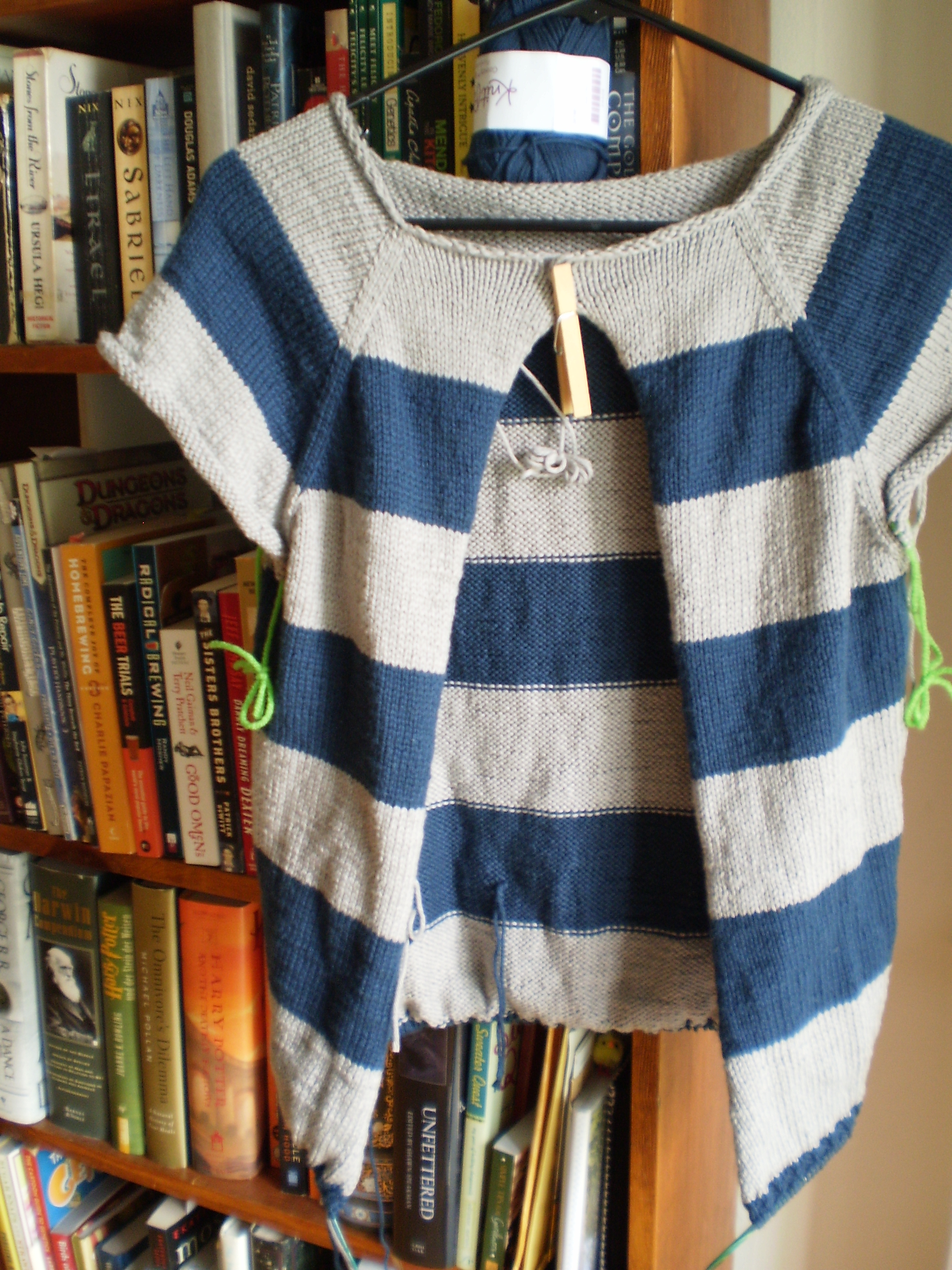
I’ve decided not to measure the sweater.  I know, crazy.  Instead, I’m going to keep knitting and trying it on him until it is the absolute perfect length.  I’m hanging it up for a couple days to let the yarn sag naturally, especially since it’s cotton, which tends to droop more than wool.

OLYMPUS DIGITAL CAMERAThis weekend, I plan on knitting the rest of the waistband, based on how long it ends up looking on my husband.  Hopefully, all this elaborate hanging up, trying on, and re-trying on will make the Picard Maneuver unnecessary.

Do you have any clothes you have to do the Picard Maneuver on?  How do you prevent it?