Tag Archives: yarn

December is Gift-cember

My porch was icy this morning when I went out to the car, and it’s dark by 3:30 in the afternoon.  That can mean only one thing:  Christmas is coming!

And, if Christmas is coming, then gifts are coming, too.  So, I’m going to dedicate the blog from now until Christmas to everything knitting and gift-related.

Here are a couple of topics we’re going to cover, just to get you excited:

-Gifts for people who knit (your mom, your nephew, your great-aunt Phyllis or that dude who knits socks on the train that you take in to work in the morning)

-Knitted gifts for people who don’t knit (but appreciate the work that goes into a pair of mittens.  If they won’t appreciate your mittens, then they get a gift card to Amazon.)

-Gift inspiration (Giftspriation?  No.  That’s too cutesy, even for me.)

-Yarn-related gift wrapping (cooler than it sounds.)

So, slide up a chair, pour yourself a mug of hot apple cider, wrap a blanket around your shoulders (and pull on some wool socks, a hand-knit sweater or two, maybe a hat, and don’t forget the fingerless mitts… I’m cold, can’t you tell?) and get ready for a month-long gift-giving extravaganza!


*If you’re not one for the whole “Christmas” thing, that’s OK too.   Don’t worry, I’m not going to get all religious on you (although I can’t promise there won’t be a Rudolph or two in the following posts).  Everyone gives gifts at some point, or at least gives gifts to themselves from time to time, so you’ll probably (hopefully) be able to find something useful here in December.

Pattern Spotlight: Yarn ball push pins

I don’t usually do this, but I just saw this little project on the Mr. Handsomeface Blog, and I just had to show it to you guys.  It’s a quick little project to make mini-yarn ball pushpins for your bulletin board.  Unfortunately, I don’t have a bulletin board, so I won’t be making them.  But you should!

five-minute-diy[1]

And what if you stuck in little toothpicks with beads glued on the ends as “knitting needles?”  Cuteness Overload!

all-four-pins[1]

Lots of Lots

Like I mentioned in my dying posts, it’s really really ridiculously hard to dye two skeins of yarn separately and end up with the same color finished product.  Even for companies who do nothing but dye yarn all day.  Point in case:

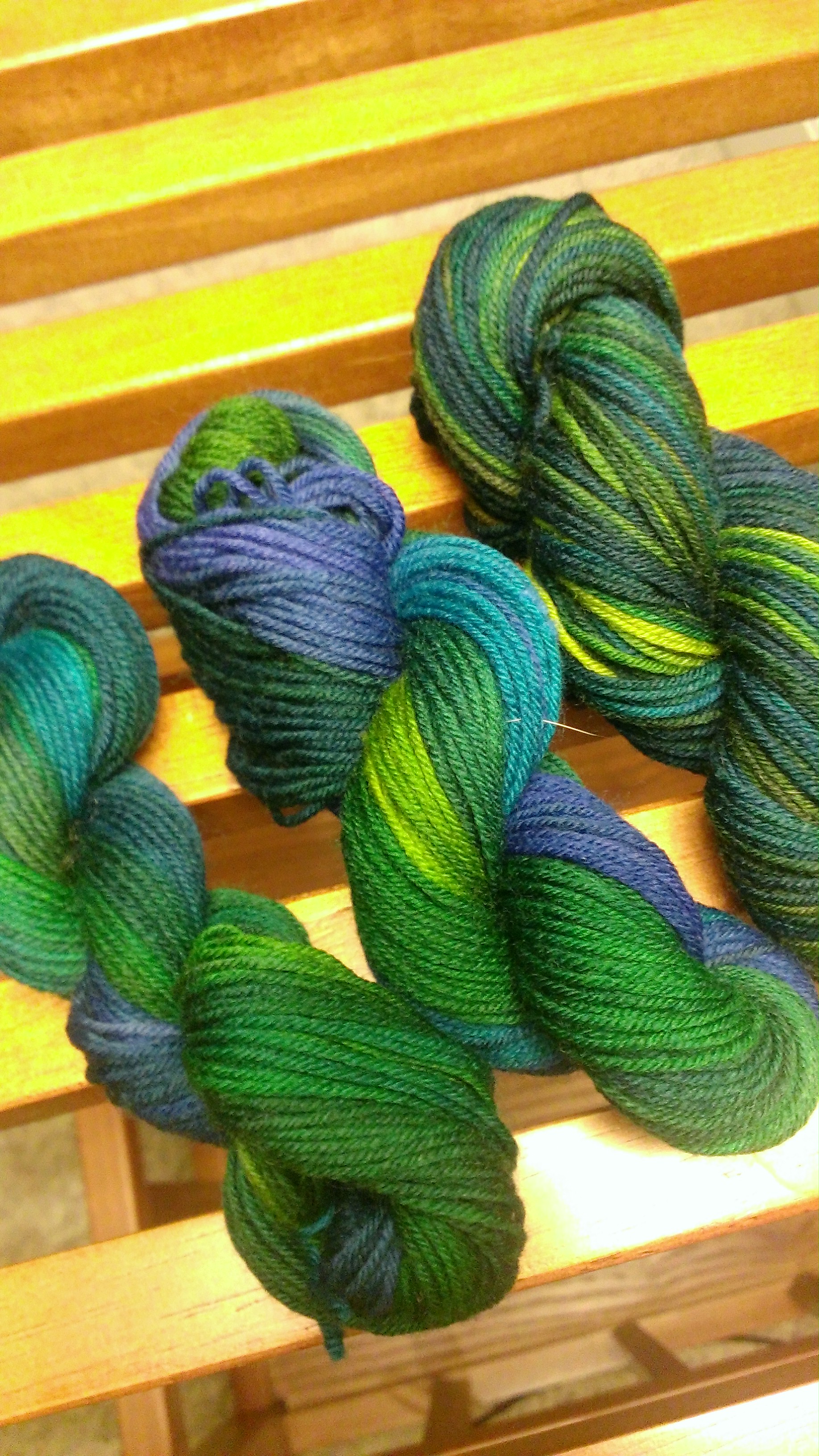
WP_20130802_009(Pardon the cell phone pic.  I had to start knitting, so there wasn’t time for finding my camera…waiting for the sun to come out.  Don’t judge me.  I know I have a problem.)

I actually bought these three nano-skeins as a single mini skein. They were the ends of a couple different batches (aka. dye lots) of yarn, supposedly dyed the same way.  See how the one on the right is more olive-y?  See how the left one is greener?  And the one in the middle has a lot more blue in it?  When you buy hand-dyed yarn, you have to expect there will be a bit of variation in dye pattern between dye lots.  (Even mass-produced yarn has some variation between dye lots.)  Sometimes it’s subtle, but sometimes it’s super obvious.

How do you avoid this?  You’ve got two options:

Option 1:  Buy all your yarn from the same dye lot.  Look on the label, and you’ll see information about the color.  The colorway (the color the yarn is supposed to be) will be indicated.  Usually the colorway has a descriptive name (like Heather Gray, or Sunshine Yellow, or whatever), but sometimes it’s a serial number.  It depends on the company.  The dye lot will be indicated by a number.  It’ll be written “Lot:###” or “Dye Lot:###.”  Usually yarn stores will stock mostly one dye lot at a time, but check anyway, just to be sure.

If you can’t find enough skeins of yarn from the same dye lot, you can move on to Option 2:

Stripes.  Lots of stripes.  If you mix your yarn together (changing the yarn you work with every row or two), changes between the dye lots will blend together and become unnoticeable.  If you’re working in the round, think about using my spiral technique from Friday.

This option takes approximately another metric ton of extra work, but if you’re talking about the difference between making a sweater that you will wear for the next ten years, or a sweater you’ll leave sitting in the bottom of your closet, it might be worth it.  Just sayin’.


So Twisted

So,  you’ve got your pretty yarn all died and dry.  It’s in a big skein, but the threat of tangles still looms.  What’s a girl to do?

OLYMPUS DIGITAL CAMERA

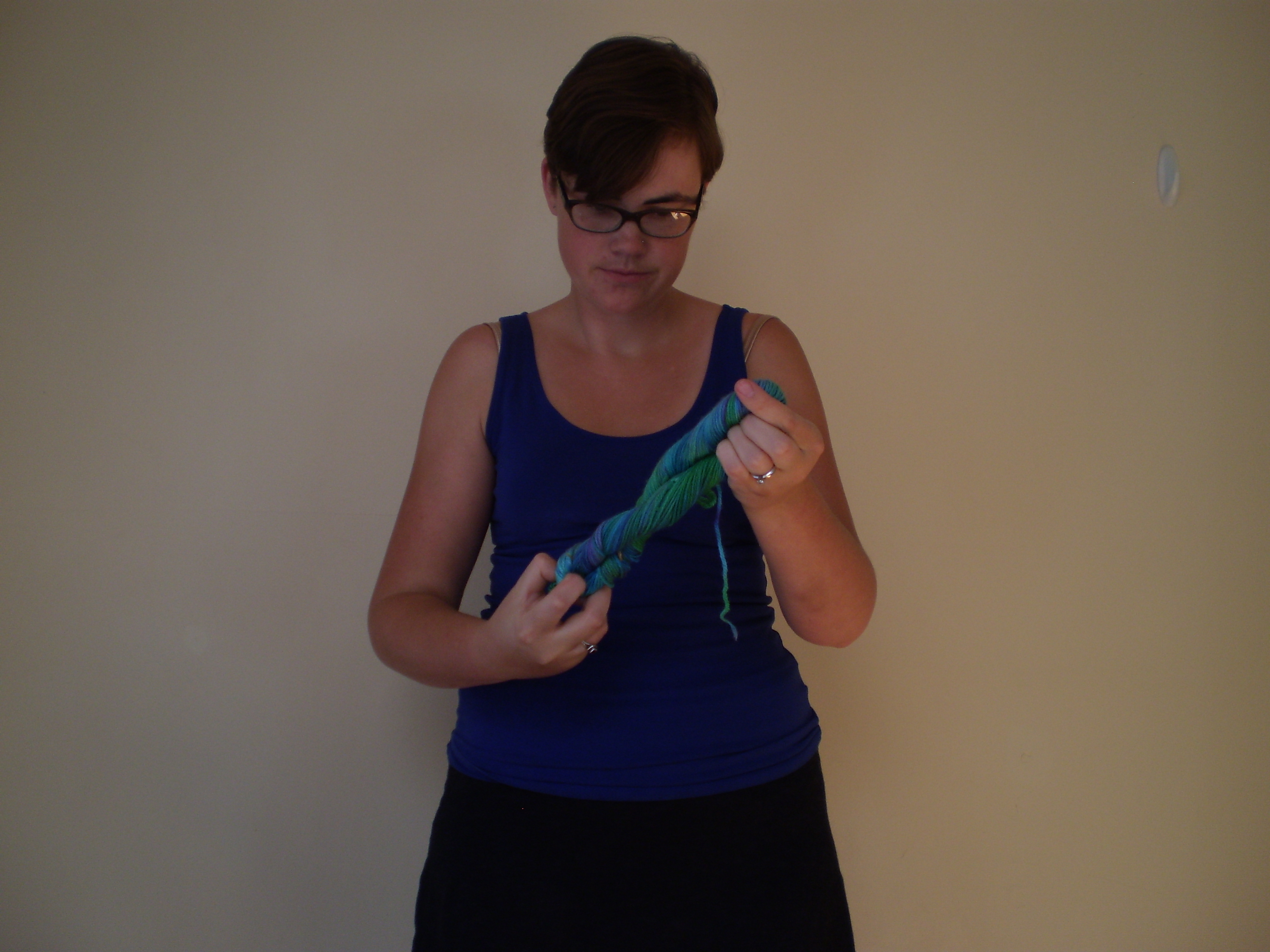
Here’s what to do to get your yarn into a pretty little twist.  It’s not terribly practical, but it’ll keep your yarn tangle-free until you get a chance to ball it up.  (Also, skeined yarn looks pretty, so if you’re giving your yarn away as a gift, this might be the way to go.)

Step 1:  Loop the yarn around your hands.OLYMPUS DIGITAL CAMERAStep 2: Twist, twist, twist.  Twist until you can’t any more.

OLYMPUS DIGITAL CAMERAStep 3: Fold the yarn in half.  I either hold the middle of the yarn in my mouth or under my chin. Don’t gag.  Ew.

OLYMPUS DIGITAL CAMERAStep 4: Tuck one end of the skein through loop at the other end.

OLYMPUS DIGITAL CAMERAStep 5: Futz with the skein to even out the twists.

OLYMPUS DIGITAL CAMERAStep 6: Success!

OLYMPUS DIGITAL CAMERA

Dying With Food Coloring, Part 3

Now let’s really have some fun!  Variegated yarn is my favorite to make… it’s sort of like finger-painting, or tie dying.  But with yarn.  Fabulous!


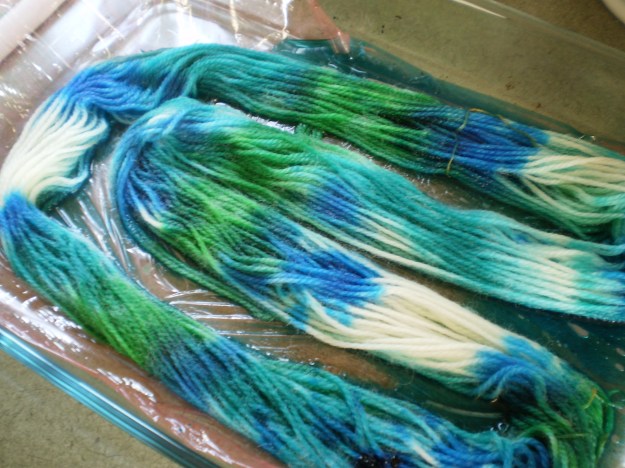
Start out by soaking your yarn in some nice warm water (like usual).  When it’s thoroughly soaked, get out a big baking dish and line it with a piece of plastic wrap (mine is pink, because it’s left over from Christmas, when, apparently, you can buy pink plastic wrap).  Then, arrange your yarn neatly in the dish, so that it’s all nicely laid out.

OLYMPUS DIGITAL CAMERA

Set your yarn aside for a couple minutes while you put together your materials for your dye.  This is going to be a little different than how we’ve done it before, so it helps to have everything ready.

Here’s what you need to get out:

-A glass measuring cup with a spout.  If you don’t have one, that’s OK.  You can use a mug or something else heat-proof, but having a spout keeps everything neat.

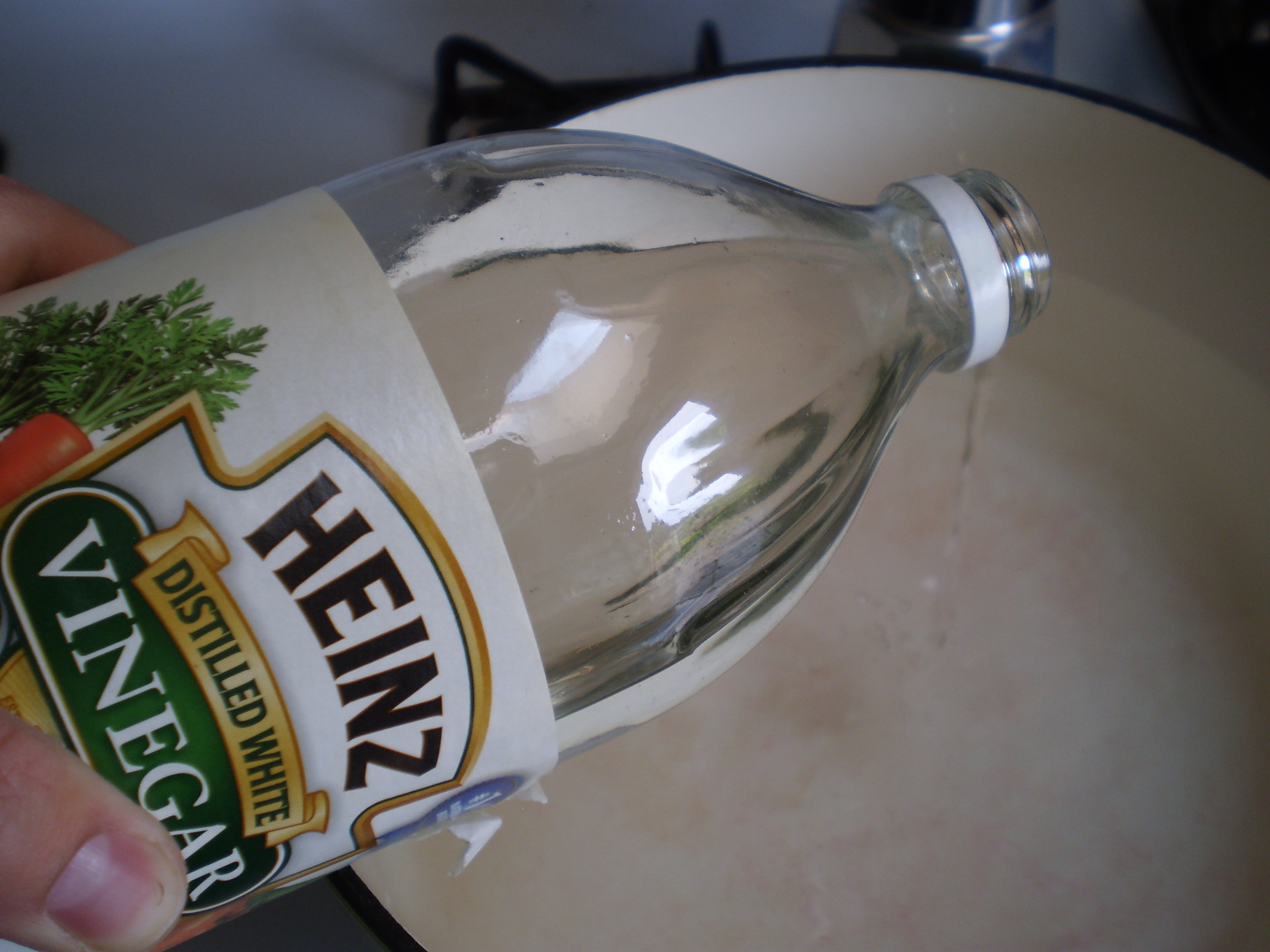
-A bottle of vinegar

-Food coloring of your choice

-A spoon or butter knife for mixing

-A kettle (or pot) of boiling water (the boiling part is important)

OLYMPUS DIGITAL CAMERA

Ready to start?  You’ll have to work kind of fast, so you might want to read over the instructions before you begin.

Mix your dye.  The dye needs to be much more concentrated than the dye we used before, since we’re hardly using any water.  Here’s what I used (more or less.  You know me, I like to eyeball my measurements):

-1/2 cup of boiling water

-1/2-1 tsp of vinegar

-Food coloring to make the shade I want.  For this colorway, I probably used about a 1/4 teaspoon of each color… more or less.

Mix it together with your spoon.  If you’re using the gel food coloring, try to get rid of any lumps or chunks (but it’s not the end of the world if you miss some).

OLYMPUS DIGITAL CAMERA

While the dye is still super hot, dribble it artistically over your yarn.  (You want to move fast, so that the residual heat from the boiling water sets the color right away.  If you wait for the dye to cool, you’ll end up with muddier, mixed up colors.  Of course, if you want to go for a mushy, water-color look, then feel free to experiment.)  When you dye a section of the yarn, try to dye all the strands in the bundle.  This way your whole skein will end up with more or less the same color pattern.  But, again, feel free to experiment.

OLYMPUS DIGITAL CAMERA

Add your other colors one by one:OLYMPUS DIGITAL CAMERA

And keep going until you like how the yarn looks (or until you run out of white spaces… whichever comes first):

OLYMPUS DIGITAL CAMERA

So, assuming you did everything right, most of the dye has already been taken up by the yarn.  But, as you can see above, some dye might still be hanging around in the liquid.  We can’t have that.  So, we’ll use the microwave to add a little more heat and finally set the colors.   Bundle the plastic wrap around the yarn, making a fiber-arts burrito:

OLYMPUS DIGITAL CAMERATransfer your burrito to a microwave-safe plate or bowl.  Pop the whole thing in the microwave, and zap it for 1 minute at a time.  Every time you pull it out of the microwave, let it sit for a minute or two, then check to see if the water has turned clear.  Once it has, rinse out the yarn with warm water, and hang it up to dry.

Fun, right?

OLYMPUS DIGITAL CAMERA

Dying With Food Coloring, Part 2

Let’s start at the beginning, and make us some semi-solid yarn.  I’m going to try to make some black yarn.  Now, when you shoot for black yarn, you usually end up with really really really really dark purple or blue, but I’m OK with that.

The process is really similar to dying yarn with Kool-Aid, with a few small differences.

OLYMPUS DIGITAL CAMERA

When you go to make up your dye bath, fill your non-reactive pot with plenty of water and a good glug of vinegar.  I’ve probably got about a half gallon of water, and about a tablespoon of vinegar.  You don’t really have to measure.

OLYMPUS DIGITAL CAMERAThen, add in your food coloring.  Add as much or as little as you want.  I’m trying for a really dark color, so I probably added just under a teaspoon.  If you’re going to try to get a couple skeins of the same color, you’ll want to measure carefully.  But, I’m just making the one, so I can play loosey-goosey.

OLYMPUS DIGITAL CAMERASoak your yarn in warm water.  When your dye bath is steaming and just on the verge of simmering, turn the temperature down to medium/medium-high.  Add the wet yarn all at once and give it a gentle stir with a spoon.

OLYMPUS DIGITAL CAMERALet your yarn hang out in the dye bath until all the color is taken up.  I used a TON of food coloring for this yarn, so it probably took a good half hour to take up the dye.  (Also, it’s almost impossible to take a good picture of yarn in a dye bath.  This was the best one of about 15 photos.  Frustrating.)

When the water turns clear, tip the yarn into a clean colander in the sink and rinse it out thoroughly with clean, warm water.  Make sure you get all the vinegar out.

OLYMPUS DIGITAL CAMERAHang your yarn up to dry!

Skein Rhymes With Pain

Before we get started dying your yarn, we need it in a skein.  A skein of yarn is basically a nice neat loop of yarn held together in a couple spots by scrap yarn.  It’s good for dying , since it lets your dye get to every little bit of your yarn, but prevents your yarn from becoming the world’s biggest knot.

Sometimes you can buy yarn already in a skein (usually from knitting specialty stores), but usually it comes in balls when you buy it from JoAnn’s or something like that.  Putting it in a skein is a bit of a pain, but it’s worth it.

So, how’s it done?

OLYMPUS DIGITAL CAMERAFirst, wrap your yarn around something.  I’m using the backs of two chairs sitting next to each other.  You could use a really big book, or the hands of a very patient friend.  Keep wrapping until you have it all wrapped up.  (I’m actually splitting my ball of yarn in half, and making two even-ish skeins of wool.  This way, I can dye them separately and have two different colors of yarn.)  Tie the ends of your yarn together to keep everything neat.

OLYMPUS DIGITAL CAMERAThen, using scrap yarn or embroidery floss, add a couple ties around your skein.  Hold the embroidery floss behind the yarn, while it’s still wrapped around the chair back (or whatever).  Split the yarn in half with your thumb.

OLYMPUS DIGITAL CAMERATake the bottom end of the floss, and loop it behind the middle of the floss, in between the two halves of the yarn.

OLYMPUS DIGITAL CAMERAKnot the ends of the floss together.  Make sure the tie is secure, but loose around the yarn.  If it’s too tight, you’ll end up with white spots in your dyed yarn.  And no one wants that.

Add a couple more ties around the skein.

Slip the skein of yarn off the chair back, and you’re ready to start dying.  (The yarn, that is.  Don’t actually die.  That would suck.)


Dying with Food Coloring, part 1

I’ve been getting requests to do a dying with food coloring tutorial for a while now (Hi Mom!), so let’s do it.  Dying with Kool-Aid is fun and all, and leaves your knitwear smelling fruity fresh, but there is a very limited color selection with it.  And, unless you’re six years old, you probably don’t want a “Blastin’ Berry Cherry” colored sweater.

Here’s what you need:


OLYMPUS DIGITAL CAMERA

-Food Coloring.  I like the gel concentrate stuff from Wilton.  It’s super concentrated, so you can use just a little bit and still get really bright colors.  And, it comes in approximately a million shades.  I bought this box of 12 colors for about $10 (with a coupon from JoAnn’s), and it’ll last me years.  You can use the regular liquid colors from the grocery store, but you’ll have to use a lot more volume to get brightly colored yarn.

-Vinegar.  To set the color into your yarn, you have to add an acid, and plain white vinegar works best.  It’s dirt cheap, and you probably have a bottle of it in the back of your cupboard.  (We didn’t use vinegar when dying with Kool-Aid, since it already has citric acid added to the powder, so you don’t have to add any more. Science!)

-Yarn.  Just like with the Kool-Aid, this kind of dying only works with animal fibers (wool, alpaca, angora, silk).  It has to do with the protein makeup of the yarn, but I don’t know all the science behind it.  I just know that if you try it with acrylic or cotton, it’ll never take up the color.  I’m using Paton’s Classic Worsted.  It’s a 100% wool yarn, and it’s easy to find at your local Jo-Ann’s/Michael’s/Hobby Lobby.

-Water.  Duh.  From the tap is fine.

-A non-reactive vessel.  (Just like with dying with Kool-Aid)  Stainless steel, enamel, glass or non-stick/Teflon work well.

Collect up your gear, and meet me back here next week when I’ll show you how to dye semi-solid and variegated yarn. And (if the time management gods smile upon me), I’ll give you a pattern to use your newly dyed yarn!

OLYMPUS DIGITAL CAMERA

So Fluffy!

I was lucky enough to spend last week at a family reunion up on Whidbey Island.  We rented a gigantic house (think “The Godfather”) and spent the week hiking, beachcombing and generally having a fantastic time.

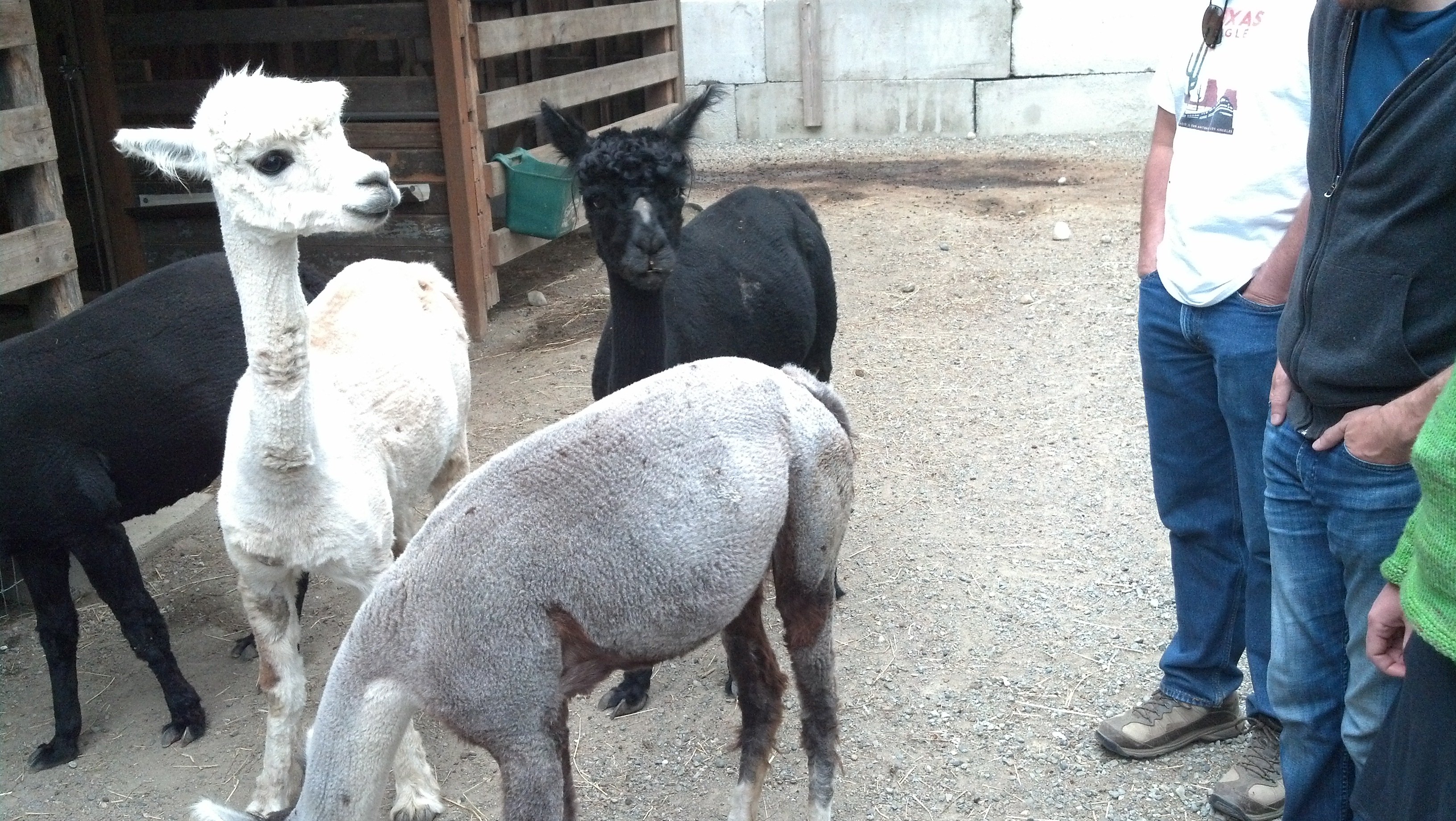
But one of my favorite things we did was to visit Fern Ridge Alpaca Farm, which was near where we were staying.  We got to meet a whole mess of alpacas (probably about 20 or so).  They are adorable little(ish) dudes.  We got to feed them and pet them.  They are ridiculously fluffy.

2013-07-31_17-45-34_115

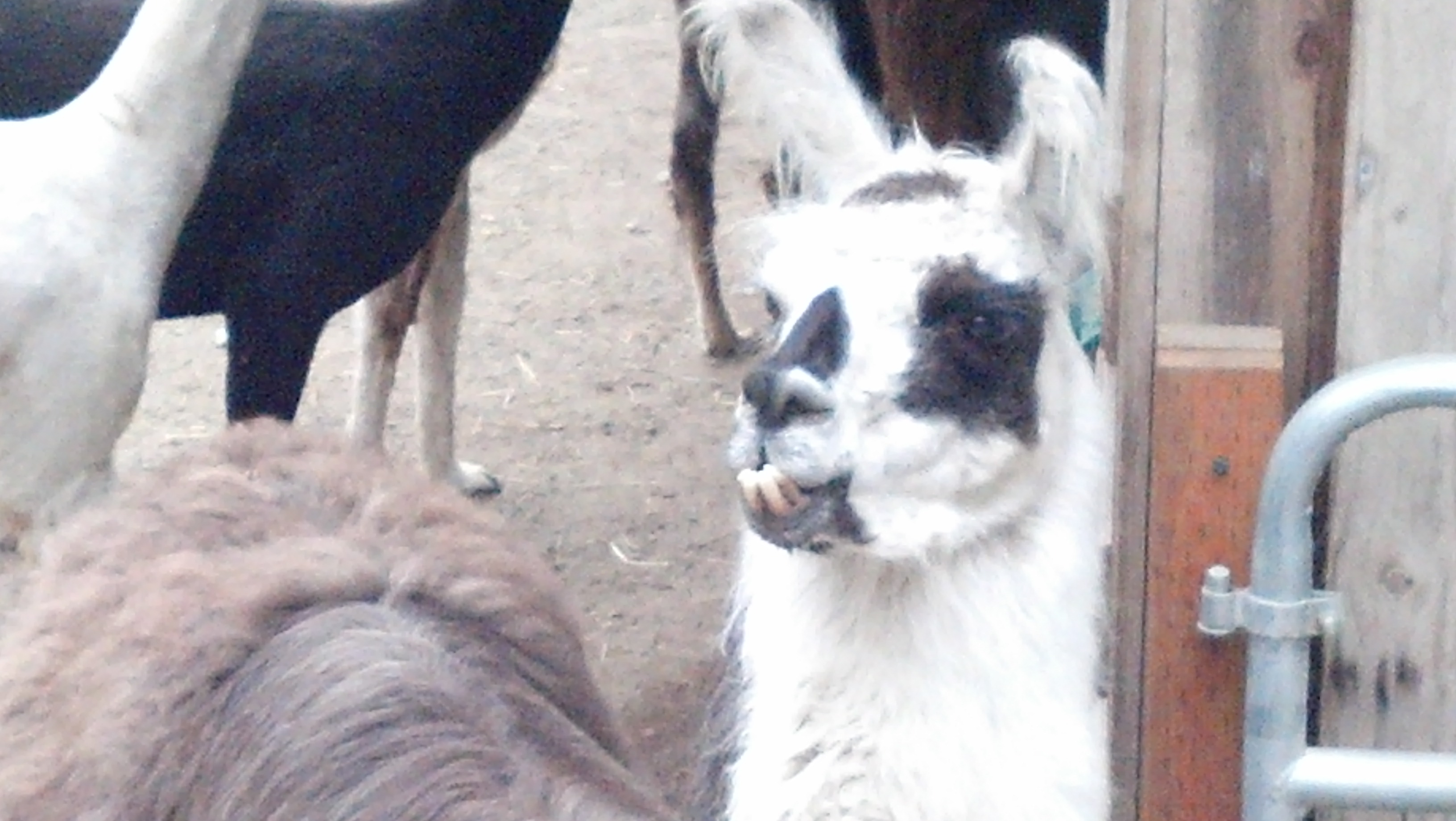
Did you know that alpacas are often raised with guard llamas?  That’s something I learned.  They’re fierce (although they look like they need a good set of braces)!

2013-07-31_17-39-22_111

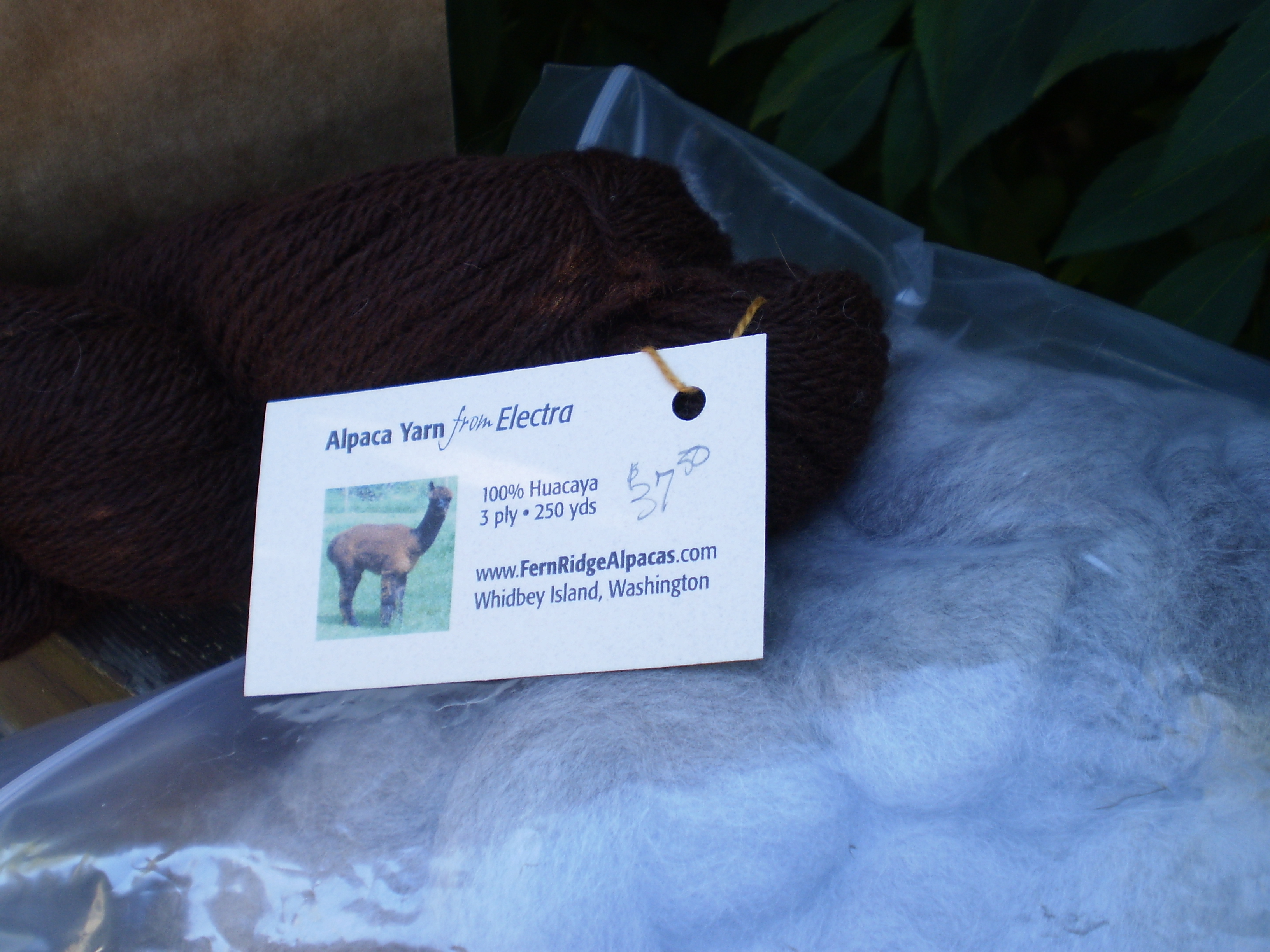
I was able to buy the softest, most beautiful chocolate brown yarn, and a big bag of light gray roving from the super friendly owners of the farm.

OLYMPUS DIGITAL CAMERA

The best part was that I got to meet Electra, the alpaca that my yarn came from.  She was super pregnant, skittish, and a little dopey looking.  But I’ll give her some leeway, since she produced such beautiful yarn!

2013-07-31_17-36-01_145

Now I just have to come up with something really special to make from her yarn.  250 yards of worsted weight Alpaca.  I’m thinking something with cables.  Any thoughts?

Oh Yeah! Dying With Kool-Aid

IMG_5541_edited-1

Dying is super fun and rewarding (and surprisingly easy).   It’s a great way to play with yarn when it’s too hot to sit around with a big pile of sweater on your lap.

There are a million ways to dye yarn, but this is the easiest one I’ve found.    You probably have everything that you need in your kitchen right now. I’ll do further yarn dying posts about more complicated dying processes later, but this should get you started (and you end up with a whole bunch of fruity-smelling yarn).

Please note, this will only work with wool or animal fibers (cashmere, angora, silk, etc.).  Dying other fibers (cotton, linen, anything synthetic etc.) takes a lot more effort as well as some fairly toxic chemicals, so I don’t bother with that.  But doing this is super easy and fun.  It’s a little like making magic potions, and you can do it with kids, if you’ve got some around that want to help.

You’ll only need a couple things to dye your wool:

  • Wool.  Duh.  You can use a wool blend, but know that the wool fibers and the acrylic (or whatever) fibers will take up the dye differently, which can give you a heathered look.  Superwash wool works well, and you won’t have to worry about your yarn getting felted in the process.  You can dye colored yarn or white yarn, just know that if you start with dark yarn, you’ll never dye it so that it ends up lighter.  If you’re trying to get bright or pastel colors, start with white.
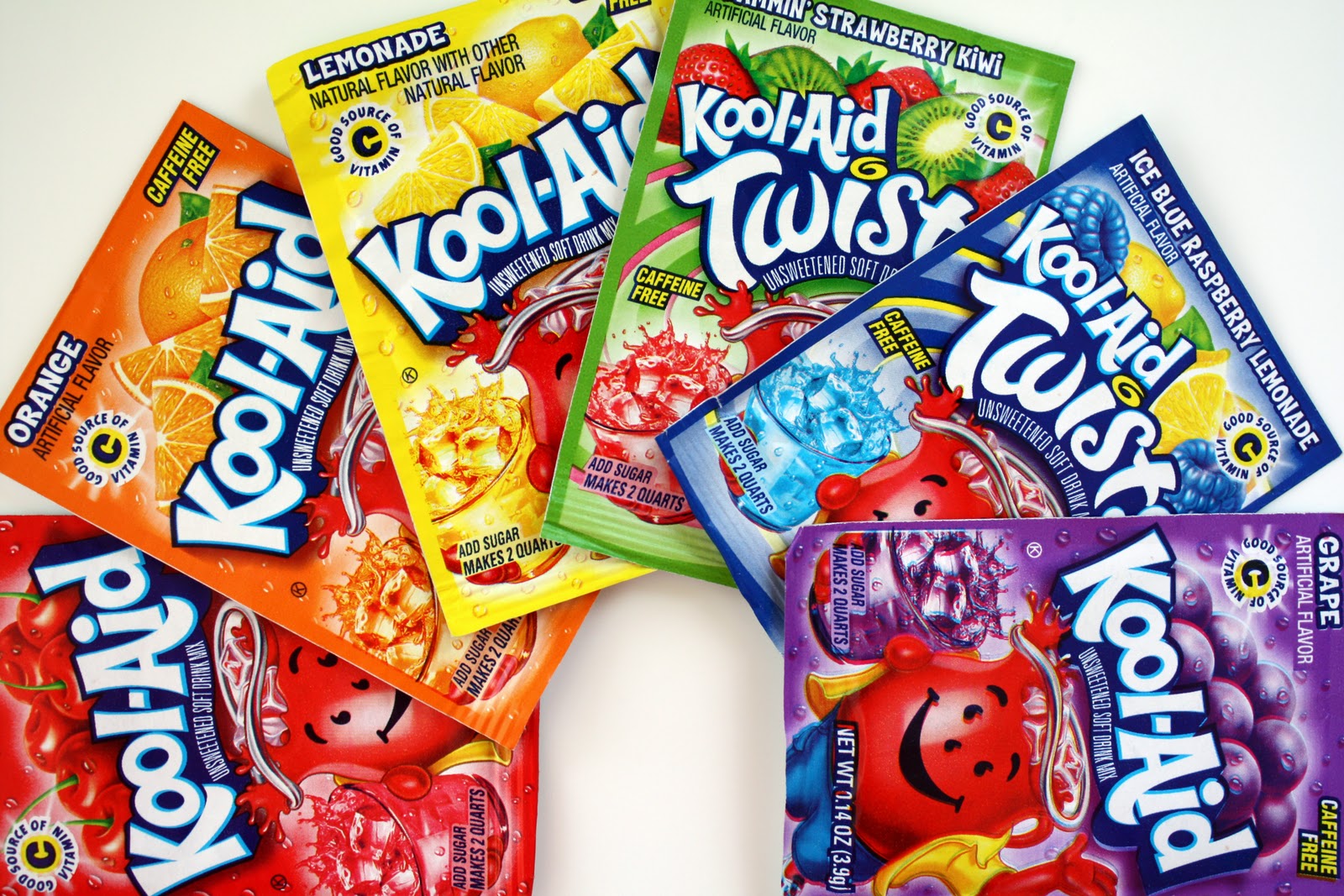
  • Kool-Aid (in the color of your choice) I’m using “Ice Blue Raspberry Lemonade”.  Get the kind in packets, not the kind in the big tubs with sugar pre-added.
  •  Water-From the tap.  Nothing fancy.
  • A non-reactive pot in which to do your dying. A stainless steel, enamel or non-stick pot works well if you’re trying to get a solid (or mostly solid) color.  Copper or cast iron pots can cause weirdness when you try to dye in them.

So how do you do it?

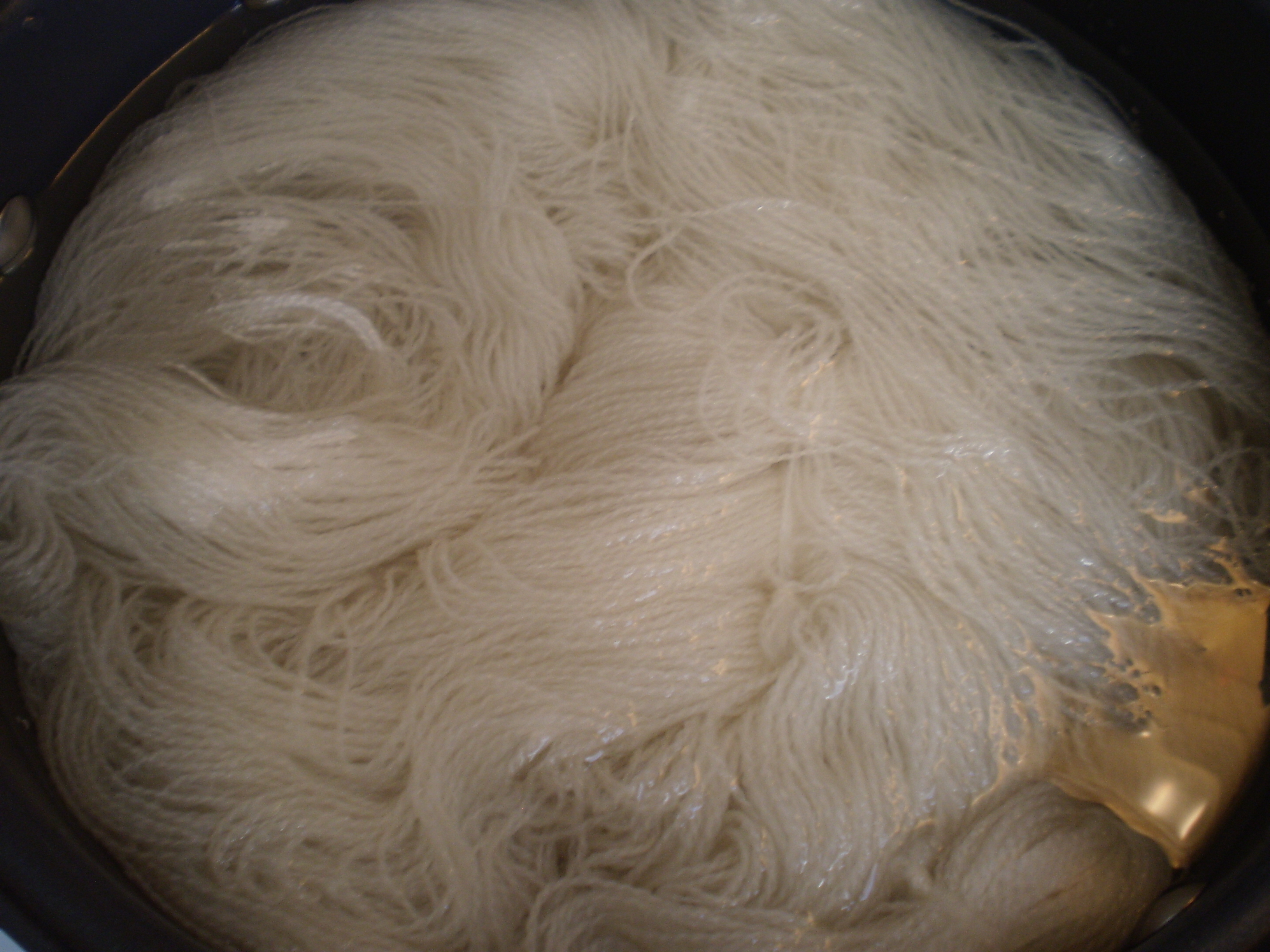
  1. Soak your yarn in warm water.  Make sure it’s nice and wet through.  If the yarn is wet to start with, it will take up color more evenly.OLYMPUS DIGITAL CAMERA
  2. Mix up your dye.  Just add a packet or two (or three or four) of Kool-Aid to a pot full of water.   It’s better to err on the too light side than the too dark side, since you can always add more color, but you can’t remove it.  I’m going for a pastel blue color, so I’m going with just one packet of color.  Heat up your dye until you just barely start to see little bubbles.  Don’t actually boil the water, but get it close.OLYMPUS DIGITAL CAMERA
  3. When your dye is steaming hot, and just about to start simmering, turn the heat way down and throw in your yarn.  Submerge all your yarn at once, and poke it around a little bit, so that each strand of yarn gets plenty of exposure to the dye.
  4. Set the color.  Keep your dyepot nice and hot, until the color transfers from the dye water to the yarn.  You know you’re done when the water is no longer colored.  Adjust the temperature to make sure that the dye stays nice and hot, but make sure not to burn or boil the yarn.  (Most Kool-Aid flavors will end up turning totally clear.  I picked one of their lemonade flavors, which they put something in to turn the water cloudy.  You’ll never get lemonade colors totally clear, but as long as the water turns white instead of blue (or yellow or whatever), you’re good to go.)OLYMPUS DIGITAL CAMERA
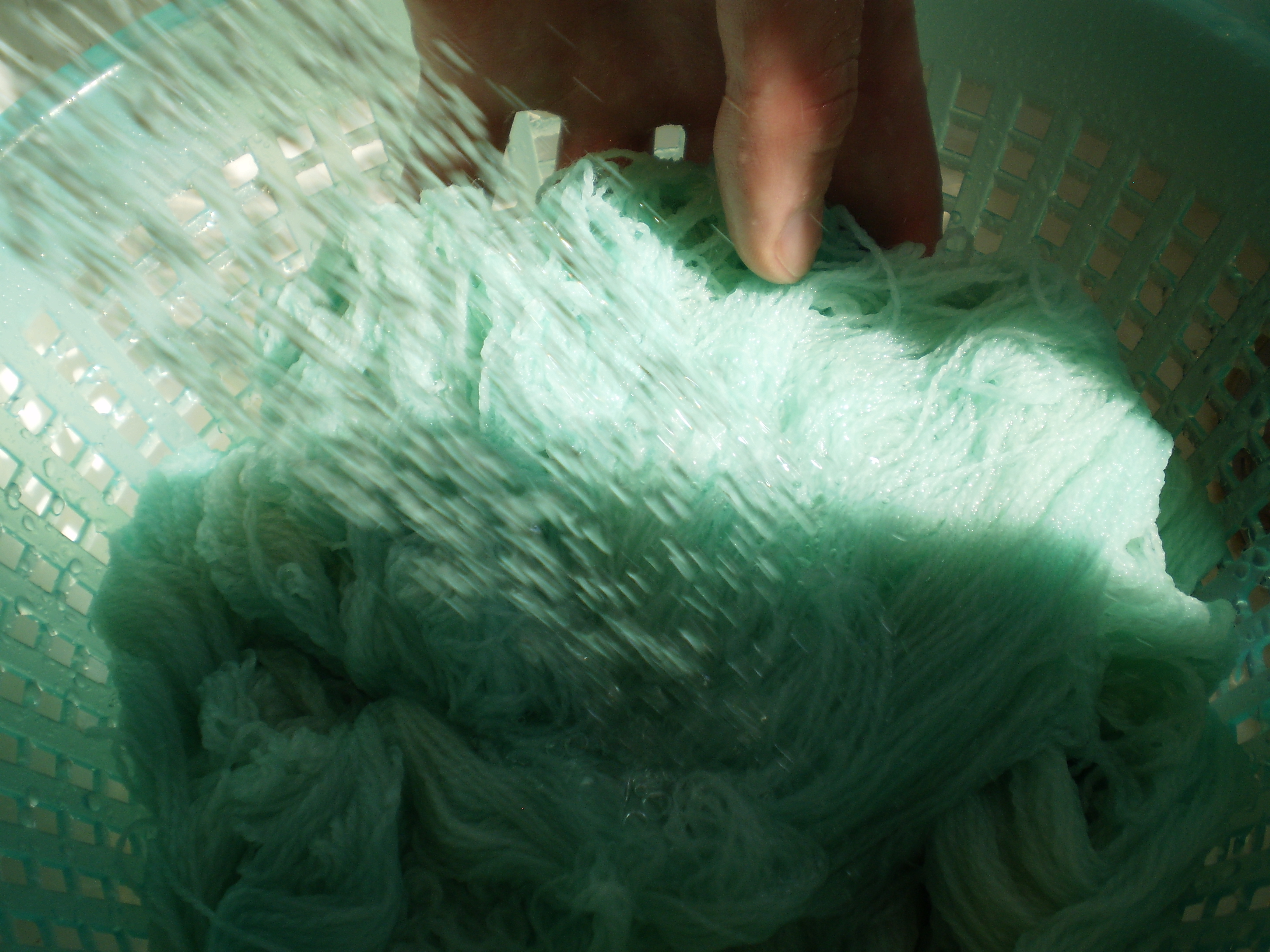
  5. Carefully (without burning yourself) move the yarn to a colander, and rinse the yarn under hot water from the tap.  Slowly lower the temperature of the rinse water until you can touch it without burning yourself.  Don’t immediately shock the yarn with cold water, because it can damage the yarn and cause felting.  Once you can touch the yarn without screaming in pain, keep rinsing out the yarn, gently flipping and turning it until no more color rinses out of the yarn.OLYMPUS DIGITAL CAMERA
  6. If you are happy with your color, hang up the yarn to dry.  If you want to add more color (this is called over-dying) go through the steps again with more dye.
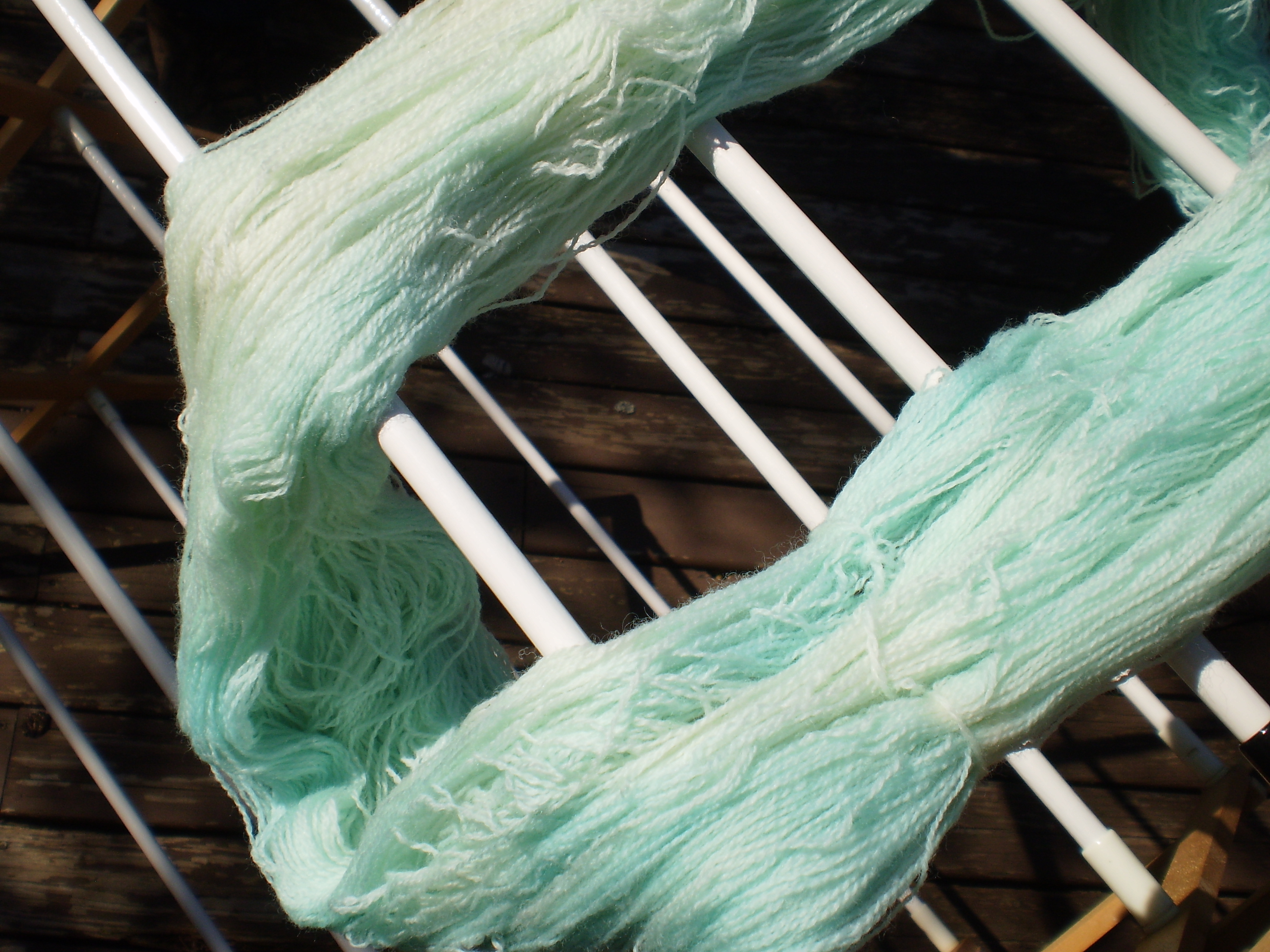
  7. Knit something fabulous with your new hand-dyed yarn.OLYMPUS DIGITAL CAMERA