Tag Archives: knitting

Design Process Series: Turning the Heel

OK, guys.  It’s time.  Time to turn the heel.

I remember my first pair of socks.  I got to the heel, took one look at the instructions, got scared and put it in the bottom of my WIP pile for about a year.

Let’s not do that.  Heels aren’t that scary.  It’s just some little short rows, and then next week, we’ll pick up some stitches.  No biggie.  (If you want a more detailed explanation, feel free to go back to my “Socks by the Numbers” series.)

This heel will be a basic short-row heel with a reinforced slip-stitch heel.  The slipped stitches will make the heel lovely and thick and squishy (which I think will fit well with the whole “warm and cozy” thing).  They’ll be perfect for wearing with your favorite pair of broken-in hiking boots. (Or while sitting on the couch with a cup of cocoa.)

Ready to start?  Great!

So far, we’ve been knitting in the round on 4 needles.  Now, we’ll be using just one needle, working back and forth as we work up the heel flap.

Join your CC and knit the next 24 (26, 28, 30) stitches onto a single needle.  You’ll have an extra needle.  Put this somewhere you won’t loose it.  We’ll need it later.  These 24 (26, 28, 30) stitches are your heel flap stitches, and we’ll only be working with these stitches today.  Turn your sock around and get ready to work back across your heel stitches.

  • Slip 1, then purl across.
  • (Slip 1, knit 1) across.

Repeat these two rows until the heel flap is 24 (26, 28, 30) rows long.  Finish with a purl row.

OLYMPUS DIGITAL CAMERA

I couldn’t find a stitch marker, but you should have one right in the middle of the blue section.

Next, we’ll shape the heel cap.  (This is the part of the heel that gets nice and round.)

  • K12 (13, 14, 15) then place marker.  Then, K2, K2tog, K 1, wrap and turn.
  • P to marker, slip marker, P2, P2tog, P1, wrap and turn.

Then:

  • K to 1 before the wrap and turn gap, k2tog, k1, wrap and turn.
  • P to 1 before the wrap and turn gap, p2tog, p1, wrap and turn.

Repeat these last two rows until you have worked all heel flap stitches.  (On the last two rows, the math might not quite work out and you might not be able to do the last k1/p1, or the last wrap and turn.  Don’t worry about it!)  End with a purl row.

OLYMPUS DIGITAL CAMERA

Break Contrast Color, and get ready to work the foot next week!

Blocking: Gear

A lot of people love shopping.  To them, there’s nothing more exciting than starting a new project and collecting all the gear they’ll need.  They enjoy dropping a couple hundred bucks on top-of-of-the line tools and professional-grade materials.

I am not one of those people.

It’s probably because I was raised in the Midwest, that most pragmatic portion of the country.

I like to get the bare minimum, and, if I can use stuff I already have around the house, all the better.  (After all, the money I save can go to buying more yarn!)

Sure, you can go buy fancy blocking wires, specialty blocking pins and expensive, nice-smelling blocking detergents.  I’m sure they’re all nice to have, but when you’re just beginning to block your knitting, do you really need these things?  No.  (And, frankly, even now, I use these materials for 90% of my projects.)

Here’s what you really need:

(And, FYI, these are all materials for wet-blocking projects.  It’s what I do for almost all my projects, and so far it’s served me well.)

1. Something to put water in.  Do you have a sink, a bowl, a bathtub?  Is it clean?  That’s all you need.  If it can hold warm water, and isn’t gross, you’re good to go.stainless-steel-bowls[1]2.  Pins.  I just use regular sewing pins.  They’re dead cheap, and you probably already have a little box of them squirreled away.  If you don’t, you can get a pack of a couple hundred for a few bucks at your local fabric store.  Some people will tell you that sewing pins will rust and discolor your knitting.  But, I haven’t seen that happen; the amount of time a pin is in contact with moisture is too short for rust to develop.  Of course, I wouldn’t use a rusty pin to block my knitting, but that’s just common sense.sewing-pins-new[1]3.  Something squishy to stick pins in.  For years, I actually used a clean towel, spread out over the Berber carpet in our attic.  The carpet held pins in place nicely, and was free.  But, our new house is unfortunately all wood and tile.  I know some folks block on a spare bed, or the back of a couch, but that’s a pain.  Instead, I went to the kids’ section of Target and got a $20 pack of foam tiles (the kind you’re supposed to put out on the floor so kids don’t crack their head when they fall).  They lock together into whatever shape you need, and work great.  You can get foam tiles that are specifically made for blocking, but they cost a bunch more.

81xrtGJjGNL._SL1500_[1]4. Your knitting.  Obviously.  FYI, wet blocking works best with animal fibers (wool, alpaca, etc.).  I have blocked some cotton things, which works a little, but blocking plant and man-made fibers never has the same amazing results.OLYMPUS DIGITAL CAMERANow that we’ve gathered the things you need from around your house (or maybe a quick trip to the store), next week we’ll start with blocking something simple!

Inspiration: Talavera Tile

Before I moved to Seattle, I lived for a few years in Texas.  I love Seattle, but Texas was super fun, too (in a barbecue and rednecks kind of way).  I know this makes me kind of dorky, but one of the things I liked most about living down there was seeing the traditional Mexican/Southwestern influences mixed in with all the modern buildings.  And, my favorite part of that were the amazing talavera tiles everywhere.  (If I ever have to do a remodel on our house, I’m definitely going to suggest adding in some talavera tiles, even if they don’t really “go” in Seattle.)

til086[1]1411768119-Nine-Tile-View[1] til047[1]Totally gorgeous, right?  (By the way, these tiles are all available for sale here.  Not that I’ve been window shopping or anything.)

I love the vivid colors, the delicate details, and the fantastic organic patterns.

I wonder if I could translate that into knitting?  Of course I can!

This gorgeous sweater would look fantastic in creamy-white, burnt umber and forest green.

Oranje by Ann Weaver

oranjeBACK_medium2[1]And this hat is the absolute cutest!  Look at those earflaps!

Talavera Ear Flap Hat by Elizabeth Murphy

IMG_0855_medium[1]And this gorgeous hat already looks like it’s been tiled!

The Inga Hat by Sheila Macdonald

Inga_medium2[1]I guess I’ll just have to get my talavera fix through my knitting for now…  oh well…

Blocking!

I’ve gotten a few questions recently about blocking.  And it is kind of mysterious, so I understand the confusion.  It actually took me several years of serious knitting before I started regularly blocking my projects.  And let me tell you, it was amazing how much nicer my projects looked once I started blocking them.

OLYMPUS DIGITAL CAMERA


Think of blocking like adding a squeeze of lemon or a dusting of powdered sugar to your project.  It’s a flourishing touch that turns a good project into a great one.  Sure, your sweater will fit, even unblocked, but it will be so much better if you do.  Blocking makes your stitches more even, straightens out any little pulls and makes your knitting look more professional.  And (and this is a huge bonus), it lets you cheat a little bit on the size of your finished project.  Did the scarf turn out a little too small?  Are your sweater’s sleeves a little too long? Blocking can fix (or at least kind of fix) it.

Over the next couple weeks, I’ll talk about how I block (of course there are as many ways to block projects as there are knitters),  what you need to block a project, and what blocking can do for you.

Stay tuned!


Inspiration: Mother’s Day

I feel like I’ve been doing a lot of “inspiration posts” lately.  I’ve picked up some extra work, so my knitting-and-blogging time has been cut down a bit.  Sorry about that (unless you’re into the inspiration posts, in which case, you’re welcome.)

But this post isn’t so much an Inspiration Post, as a PSA.  Everyone!  Pay attention!

Mother’s day is this Sunday.

You have been warned.

Let’s take a minute to celebrate our moms!  Our moms who taught us to knit, to sew, and to make a mean pan of brownies.  (Or maybe that was just my mom?)

And our moms who dressed us up in matching outfits.

(Luckily, as far as I know, Mom never did the whole Mother-Daughter outfit thing (Thanks Mom!).  But, there is a pretty adorable Sears portrait of my brother and I in coordinating overalls when we were itty-bitty (Mine were pink, and his blue.)  I think Mom actually sewed them herself.  She’s talented like that.)

I get the impulse behind the idea.  I mean, kids are always cute when they look like tiny adults.  And, Lord knows, I can’t hold myself back when I think of a new craft project. But there is a right way and a wrong way to execute the whole matching knitwear thing.

Exhibit A:  The wrong way.  Look at that poor kid.  Her eyes are saying “Kill me” or maybe “I will burn this sweater as soon as I can get out of it.”

Mother/Daughter Sweaters #20306 by Lion Brand Yarn

20306ada_medium[1]Exhibit B:  This girl looks like she’s having fun, at least.  And the dress isn’t terrible.  I wouldn’t wear it with a white T-shirt and a pair of kakhis, but maybe that’s just me.

Mother-daughter Tunics by Pierrot (Gosyo Co., Ltd)

img57876435_medium[2]Exhibit C:  Now, this is how you do matching knitwear!  These cowls are fantastic-cozy, comfy, and they look age-appropriate on both the mother and the daughter.  I love them! (I might even make one for myself!)

Cocoon Cowls by Stefanie Japel

IMG_1285_medium2[1]So, don’t forget, folks!  Call your mom on Sunday!

And, Happy Mother’s Day, Mom!  Thanks for teaching me to knit all those years ago!  I bet you didn’t expect it to turn into a lifelong obsession.  (And thanks for not dressing me up in matching outfits!)

Design Series: Color!

I know, I know, I know.  This sock-design project is taking longer than maybe you (and certainly I) expected.  But, honestly, these are all the questions I have to ask myself while designing any pattern.  I’ve just never put my thought process into words before.  It’s a bit of work at the beginning, but it’s worth it to get started the right way.

Last week, we talked about the technical theme of the socks.  And, it looks like “Simple socks” won by a hair!

IMG_2698_medium2[1]We’ll be making super cozy socks in a simple pattern with two or three colors. (Maybe we could even make them at a big, cozy gauge!  That would be fun!)

So, the next question of course is:  What color are our socks going to be?

Actually, what colors are our socks going to be?

Lets first pick a main color:Maincolors

And then we can pick an accent color:Accentcolors

Vote, Vote, Vote!  Or, if there’s a color I didn’t include, let me know and I can add it in!

Design Series: Technical Beginnings

Woo!  These socks are starting to take shape in my mind!  I’ve got so many ideas!

The tally is in, and we’ve decided that the theme of our socks is (drum roll please…):

Warm and Cozy!

cozy-cabins[1]I absolutely love this theme (especially today-it’s gray and blustery outside, and all I really want to do is curl up in a nice armchair next to a fire and read a really great novel).

So, now that we have the feel decided on, it’s time to start talking about actual knitting details: what techniques are we going to use to evoke a “warm and cozy” feel in our socks?

Here are some ideas.  Keep in mind, that these are only jumping off places.  We won’t be replicating these socks specifically, instead we’ll take their ideas and tweak them to create something awesome and unique.

Option 1: Simple socks with touches of contrasting color.  Sometimes a contrasting toe or cuff can transform a sock that’s dead simple into one that’s simply beautiful!

IMG_2698_medium2[1]Option 2:  All-over stripes.  Thick or thin, bright or muted, stripes can be used to evoke almost any mood.  Cozy, warm colors (chocolate browns, brick reds, and pine-tree greens) could combine to make the perfect socks for our theme.DSC02936_medium2[1]4445452408_b2e51aebc1_z[1]Option 3: Lace.  We could do an all-over lace pattern, or include panels of lace up the sides of the socks.  If you want the look of lace, but want something cozier, using thicker yarn makes fantastic socks to wear with winter boots. hedera_1_medium2[1]Option 4: Cables.  Cables always make socks look warm and cozy, which would be perfect for our theme.  But, keep in mind that they can make socks a little bulky if you plan on wearing them with shoes, and not just around the house. DSC_2774_medium2[1]Option 5: All-over texture.  My favorite socks all come from this category- sometimes, you just want a workhorse sock that looks good with any pair of shoes and keeps your toes warm.  Simple socks knit with the seed stitch or basket weave stitches are classic and beautiful.  Or we could try a more complicated pattern with slipped stitches or other interesting techniques.3704532404_227f070d7a_z[1] Option 6: Combination.  Stripes and cables?  Lace and textures?  The sky’s the limit!  If you’re itching for something more complicated than a simple sock designed with a single technique, let me know!  And leave your ideas in the comments section.

Design Series: Inspirations

All right, knitters!  The votes have been tallied and it looks like socks are the big winner!

When I’m working on my own designs, the next thing I decide on is the inspiration behind my project.  This isn’t anything technical; I’m not doing any math, or even picking out any stitch patterns yet.  This step simply lets me figure out what the feel of the project will be.  Once I decide on an inspiration, the rest of the design will start to fall into place.

So, here are a few options for the inspiration of our socks:

Option 1:  Fun and silly, like this little goat.

funny-animal-pictures-of-the-week-039-001[1]Option 2:  Sleek and sophisticated, like the Singapore skyline.singapore_skyline[1]Option 3: Delicate and feminine, like these forget-me-not flowers.Forget-Me-Not-[1]Option 4: Warm and cozy, like this mountain cabin.cozy-cabins[1]Option 5: Light and breezy, like this tropical beach.Tropical-Beach-2[1]Option 6: Natural and outdoorsy, like this mountain range.yellow-stone-national-park-mountains[1]Option 7: Cool and practical, like the Pacific Northwest coastline.

Rialto-Beach-Olympic-Peninsula-WA[1]Let me know what you’re into, and next week, we’ll start narrowing down the design.

Design Series-What are we making?

All right!  Judging by your reaction to my last post, I’d say that designing a garment/item together is something you want to do!  I’m excited, I think it will be fun.

I’ve been thinking about it, and I think that the easiest way for us to do this is through a series of polls.  Then, once a week or so, I’ll tally up the votes, and we’ll move forward with whatever design wins.   Sound good?

8176171268_c8f5ee53d9_bSo, first things first, what are we going to make?  I’ve got some ideas, but I want to see what y’all want to do before I say anything.

So Vote, Vote, Vote!  I’m itching to get this project rolling!

Yarn Spotlight: Preciosa

On my trip to California, I decided I needed a simple project.  One I could throw in my purse and work on in the car or at the beach.  Something that I didn’t have to worry about counting stitches, changing colors, grafting, or otherwise fiddling with.

So, Hitchhiker Scarf it is.

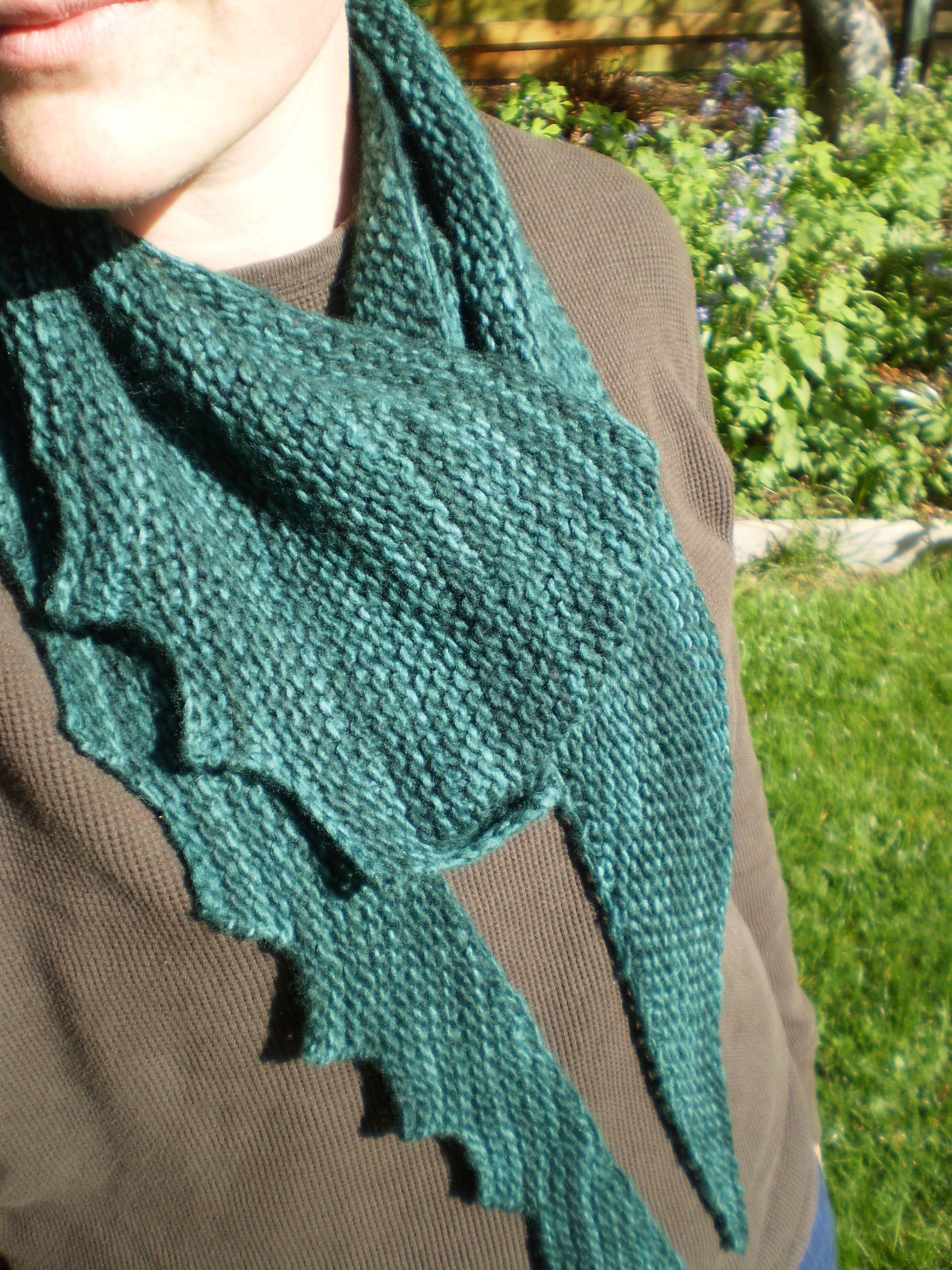
And, as luck would have it, a few days before we left on our trip, I received a surprise package in the mail from the lovely folks at KnitPicks (I love that this is part of my job now!).  And what was to tumble out, but a lovely, squishy skein of their newest yarn, Preciosa in Bonsai, a  glorious forest-green.

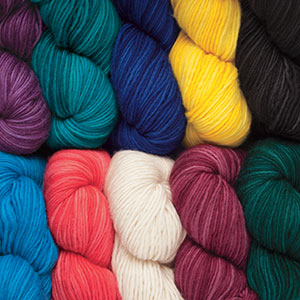
5420278Preciosa is a worsted-weight, single-ply merino yarn that is crazy soft and squishy.  It’s available in 16 semi-solid colorways.  It reminds me of Malibrigo or Manos del Uruguay, but not quite as dense.   It would be perfect for any close-to-the-skin accessories, and a cozy sweater in Preciosa would be absolutely amazing for deep winter in the Great White North.

OLYMPUS DIGITAL CAMERAMy Hitchiker, which I knit on slightly larger needles (US 10s, although the yarn calls for US 7-9s), has fantastic drape and is delightfully soft.  It feels totally luxurious.   I just wish it were cold enough in Seattle to warrant wearing a scarf.  (First world problems, right?)

OLYMPUS DIGITAL CAMERAWhat would you use Preciosa for?