Stoichiometry and Knitting

calculator[1]I don’t get to use my college degrees very often (they’re in a couple fairly impressive-sounding branches of biology and chemistry), but sometimes I get to use a technique I learned in school.  It always makes me happy to use to use things my professors never would have expected.

For example:  Stoichiometry.

Never heard of it?  Not a problem.  Stoichiometry is a fancy chemistry word for a really useful way to do conversions.

If you’ve ever figured out how many stitches there are an inch of sweater or how many rows you need to knit to make a  foot of scarf, you’ve probably done stoichiometry without even knowing it.

Here’s the idea:

You know how if you divide a number by itself, it equals 1?  (Like:  2/2=1)  Stoichiometry tells you that you can do the same thing with words, units, and variables (remember x from high school algebra?).

So what does that mean?  Let’s take a really simple example:

1We can cancel out the “sts” from the top and bottom, so the answer (1) doesn’t have any units.

Now, that example is kind of useless to us, right?  So let’s use stoichiometry to do something that really is useful.  Figuring out how many rows we need to knit to get a 7 inch-tall sock.

Start by making a list of everything you know:

  • Our gauge is 12 rows/inch.
  • We want a 7 inch sock.

You could probably figure this one out in your head (or just on a calculator), but let’s do it the long way for example’s sake.

Start with the number that has a single unit (in this case the “7 inch” finished length) then, build your equation, multiplying across, and making sure that you cancel out your units as you go:

4 We can cross out the units that appear on the top and on the bottom (in this case, the “inches”).

Then we just multiply across, and the answer to the problem gets whatever unit is left (in this case, “rows”)3

So, in this example, if you have a 12 row/inch gauge and you want to knit a 7 inch sock, you have to work 84 rows.

Does that make sense?  Want to do one more (slightly complicated) example?

OK:  Imagine you’re designing a sweater pattern.  You want the front to be covered with fair-isle patterned stripes that are 8 rows tall.  You want to calculate how many stripes you will need to work to cover the front.

Here’s what we know about your sweater:

  • Gauge: 6 rows/inch
  • Sweater length from hem to shoulder: 22 inches
  • Stripe width: 8 rows/stripe

So, let’s set up the formula (starting with the sweater length- remember, begin your calculation with the number with the single unit.)

5(See how I flipped the 8 rows/stripe upside down, so it’s 1 stripe/8 rows?  That’s totally OK!  And, actually really important.  Flip any/all of your numbers, if it makes the units cancel out correctly.  Just remember, if you flip your the number, make sure you flip your units, too.)

Once everything is lined up correctly, start crossing out units that cancel:

6Then multiply across:7And then divide the top by the bottom.8So, in this example, you’d need to work 16.5 Fair Isle stripes to cover the entire front of your sweater.

Cool right?  (Or maybe that’s just me being a math nerd.)

Of course, you don’t have to use stoichiometry to work these things out, but it’s a great tool to have in your pocket- you never know when it will come in handy.

Do you think you’d ever use this technique to calculate bits of your pattern?  Do you have a different technique for calculating things?  Or do you avoid math completely?

Help me! I think I have a problem!

And that problem is that I’m now obsessed with lace shawls.  I can’t stop looking at patterns.  I’ve even gone digging through my stash and found a bunch of yarn I could use .

Sock yarn!

I’ve been collecting sock yarn over the years, and I have a big box of it next to my desk.  Sometimes I open it up and dig around in it just for fun.  But now I think I want to make a lace shawl with some of my sock yarn (despite having absolutely zero time for “fun” knitting right now.)

So here’s your task: talk me out of knitting one of these shawls.

I love the garter stitch body on this one, with the big openwork edge and the chunky braided cable.  Gorgeous and elegant!  Look at those huge eyelets along the edge!  So pretty!

French Cancan by Mademoiselle C

DSC_8833_medium2[1]I love this one, too.  It’s not exactly lace-y, but it is completely beautiful.  And I could use up a bunch of little skeins of leftover yarn to make the gradient stripes!

Song of the Sea by Louise Zass-Bangham

DSC_6050_-_Version_2_medium[1]And how great would this one look with a soft gray garter stitch panel and deep burgundy or forest green for the lace edging?  *Drool.*

Henslowe by Beth Kling

IMG_1366Or, of course, I could (should) just keep on working on the projects I’ve already committed to.  But where’s the fun in that?

A Short Pause

I love being busy.  To me “a day with nothing to do” means “a day I can work on extra projects.  I  could work on my yard, knit up a sweater, write out a new pattern, make some peach sorbet, or get a jump on my blog writing.

But, it seems like this summer it’s been a little too busy.

I’ve been keeping up with the blog, of course, and working my two day jobs.  I’ve been working on several super-secret freelance design projects (stay tuned for more details!).  Plus, I have a puppy to take care of, a house to keep clean and dandelions to battle in the yard.  And, we keep having visitors stop by.

I love all of these things-  Our house guests have been fantastic, my jobs are great and I couldn’t be happier with how my patterns are turning out.

But there are only so many hours in the day, and I’m starting to get a little frazzled.

Luckily, today is a magical, amazing, special day.  A day when I don’t actually have to go into work!  It’s 9:30, and I’m still in bed.

Sure, I’ve already put in a good hour and a half of knitting time and I’m writing today’s blog post from my laptop, but it’s so much more pleasant to “work” from bed with music playing and a cup of coffee, my pup curled up at the foot of my bed.

My goal today is to knit as much as possible.  And that’s it!  It’s kind of great to only have one thing to do today.

So, I’ll sip my coffee, listen to my music, and knit another row.  (And then another, and another.)

Sometimes that’s all you need to refresh your brain.

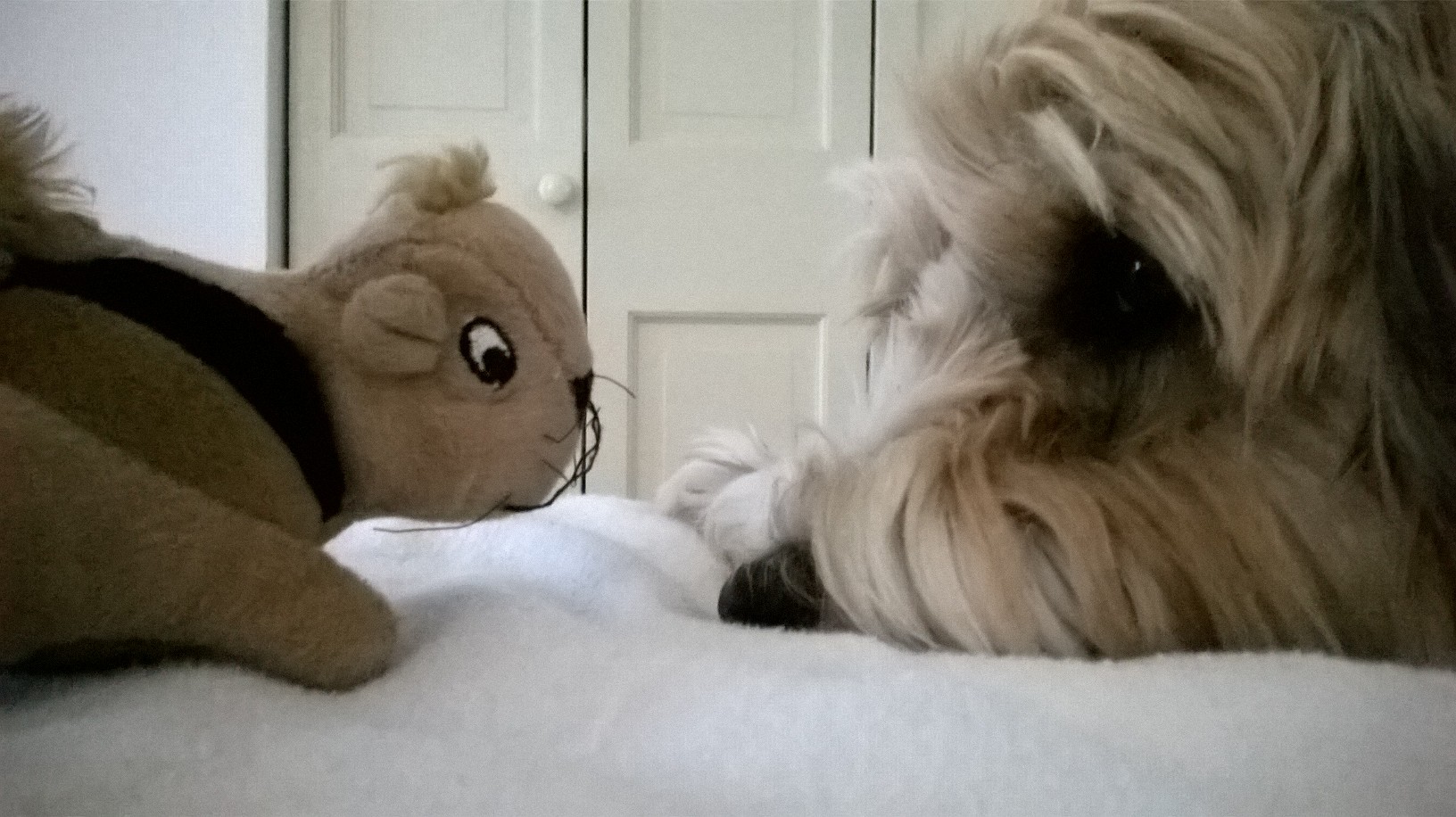
And now, a picture of my dog having a very important conversation with his squirrel toy:

WP_20150702_003

Inspiration: Lace Shawls

All this talk about lace (and blocking lace) has gotten me itching for a new project (despite the fact that I have a million other projects I need to be working on, and I’m working more than 40 hours a week for the summer- Wheee!).

I usually am not terribly girly with my clothes. You can find me more often in flannel and jeans than dresses and lace.  But, I admit- I’m a sucker for a gorgeous lace shawl.

There’s something fantastically satisfying about knitting up something beautiful and complicated- especially with beads.  Lace shawls drape amazingly and are simply gorgeous.  I don’t even wear most of the ones I’ve made over the years.  I have several hanging on my walls as art.

And when I’ve had a bad day, I love ogling lace shawl patterns, and lusting after skeins of luxury lace yarn at my local yarn shop.

Sigh…

Rainshine by Boo Knits

rain3_zpsrsexz0oo_medium2[1]Out of Darkness by Boo Knitsdarkness6_medium2[1]Snow Angel by Boo KnitsIMG_7621_medium2[1]Do you have a guilty knitting pleasure?

Blocking: Lace

Nothing makes me happier than finishing a big lace project- a shawl, a scarf, or a fancy-pants sweater, and stretching it out across my blocking boards.  There’s something alchemical and transformative about blocking lace.  It’s kind of magical.

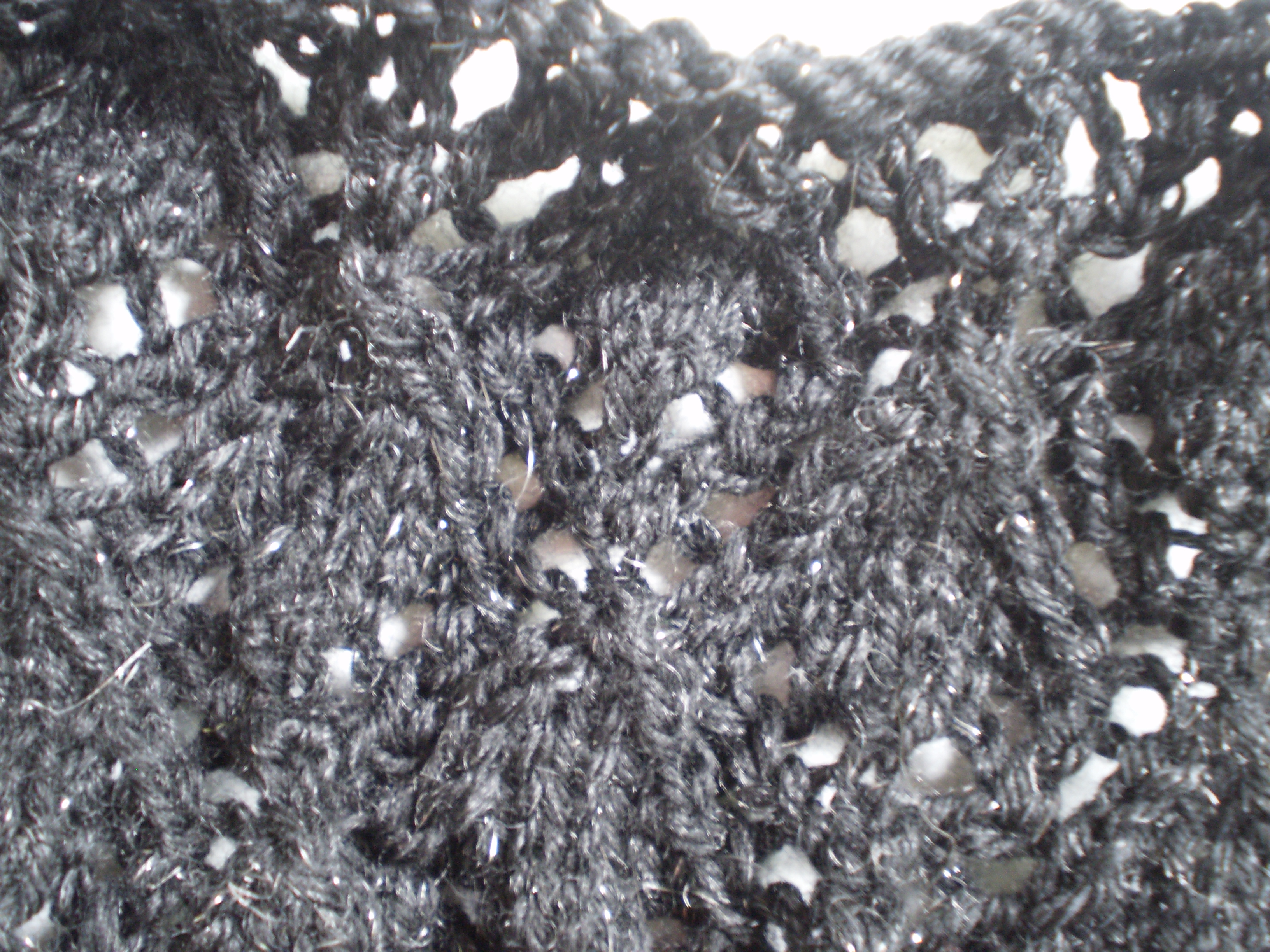
You start with a little blob of knits, purls and yarn overs, and toss it in some water to soak.

OLYMPUS DIGITAL CAMERA

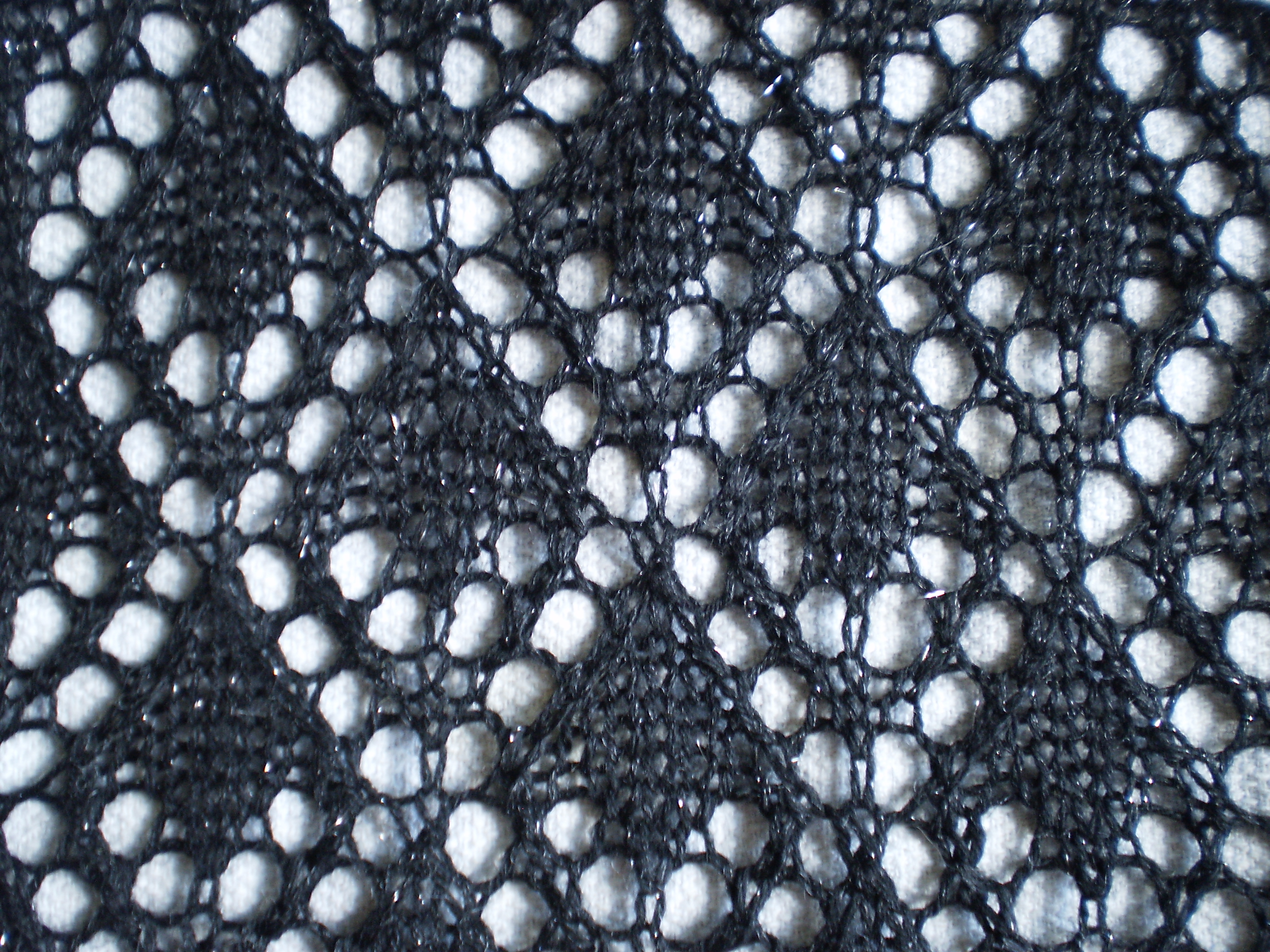
It stretches, and changes, and I think I’m going to accidentally rip it in half (especially if it’s something particularly delicate).  But, then, I get it pinned out, and hey, presto!  You can suddenly see all the lovely stitch detail.OLYMPUS DIGITAL CAMERAEven when you remove it from the board, the fabric is totally transformed from the ugly knot you started with.  Now, it’s flat, beautiful and incredibly drape-y and wonderful.

OLYMPUS DIGITAL CAMERAAnd, of course, pinning out scallops and points on finished lace shawls always makes them look even better!  (Remember how we tried to avoid stretching the knitting so much that it made points on scarves and socks?  You can do it on purpose now!)

Here are a couple shawls I’ve made over the years with interesting borders:

Panache by Lankakomero

OLYMPUS DIGITAL CAMERA

Aeolian Shawl by Elizabeth Freeman8176172544_3cfd6827e5_z[1]

Knitting lace can be a tedious and slow process, but there’s nothing more satisfying than pulling out the last pin from your dried shawl and looking at your beautiful creation.

It’s too %^*$ing hot

I don’t like it.

I refuse to accept that it’s this hot.

It’s been in the upper 80s/low 90s for weeks at this point, and I’ve really and truly begun to melt.

This is not why I moved to Seattle.  I was promised 60s and raining.  Sweater weather.

Not tank-tops and shorts weather.

Sure, I lived in Austin for several years and central Illinois for almost a decade, but in those places at least people had air conditioning.  We don’t have AC, and most businesses around here don’t either.

My work sure doesn’t.  There’s nothing like hanging out with a dozen cranky pre-teens as they sweat and dehydrate.  Ugh.

And, my poor pup is handling the heat about as well as I am.  (Here he is waiting for us to fill up his pool.  Notice how all my grass has died-except for the dandelions.  I am convinced that nothing short of nuclear winter will kill dandelions.)

11242554_10105201950730850_1616358060907359022_oI know, I know.  I’m being whiny.  But, it’s exhausting.

And It’s made me thoroughly uninterested in knitting.  (Which really stinks.)  In fact, this post was supposed to be an update on my progress on the “Husband Sweater.”  But, honestly, I’ve probably knit about one inch of sleeve since I last posted about it in May (sorry, Tristan!).

Instead, I’ve been drinking lots of water, eating Popsicles and trying my best not to move.

I hope your summer is going well, and you’re staying cool and hydrated.  And that you’re still interested in your knitting.  I’m sending you happy, air-conditioned vibes and best wishes for your summer knitting.

Inspiration: Knitted Food

This post is inspired by a friend of mine, Wendy.  Wendy is a fantastic knitter, but she has a little quirk.  She almost exclusively knits toy food.

I know!  How fantastic is that?

She makes big picnic baskets of food, cornucopias of food, full Thanksgiving dinners, and an array of “fresh” fruits and vegetables that would make a greengrocer (ahem) green with envy.

Let’s spend today talking about knit food, in Wendy’s honor.  (And because knit food is ridiculously cute!)

You could always go the healthy route, and knit up some lovely produce:

Pears…

Pear-fecto! by Susan B. Anderson5334391790_5a3c048656_z[1]Mushrooms…

Knitted ‘Shrooms by Abby Kroken

mushrooms_medium[1]Carrots…

Heirloom Carrot by Sara Hills

carrots3_medium2[1]And peas.

Peas in a Pod by Hansi Singh3937321083_af8cc2990c_z[1]But sometimes you’re in the mood for something a little fancier.  A nice plate of sushi perhaps?

Sushi by Joanna Rankin

group1_medium2[1]And, of course, there’s always room for milk and cookies after a delicious (knit) meal.

Milk and Cookie by Raynor Gellatly

2668565040_c301b7640c_z[1]Have you ever knit food?  Are you going to now?  (I might- these projects are just too cute to ignore.)

What should I be reading?

I have a confession to make.

I am a (clearly) avid blogger- I’ve consistently written three posts a week for the last two and half years.  I like the idea of blogs, and I think they’re totally worthwhile and can be amazing.

But (and here is the confession), I haven’t consistently read any knitting blogs (or any blogs, really) since I started On the Needles.

I know!  Heresy!

Back in the day, and several computers ago, I had a whole list of a dozen or more blogs that I’d check nearly every day.

Now, I can’t remember their names.  And the ones I do remember seem to have lapsed.

Through the Loops has changed its name, and hasn’t been updated since May.ThroughTheLoops-Logo[1]The Mason-Dixon Knitting ladies haven’t posted since February.511RlvWDFBL[1]And, the Purl Bee has completely changed- It looks like an online store now.

header-sticky-logoTell me that there are still good knitting blogs out there.  I know there has to be, but where are they?  What should I be reading?  I need to up my blog-reading game.

Pattern: Committee Socks

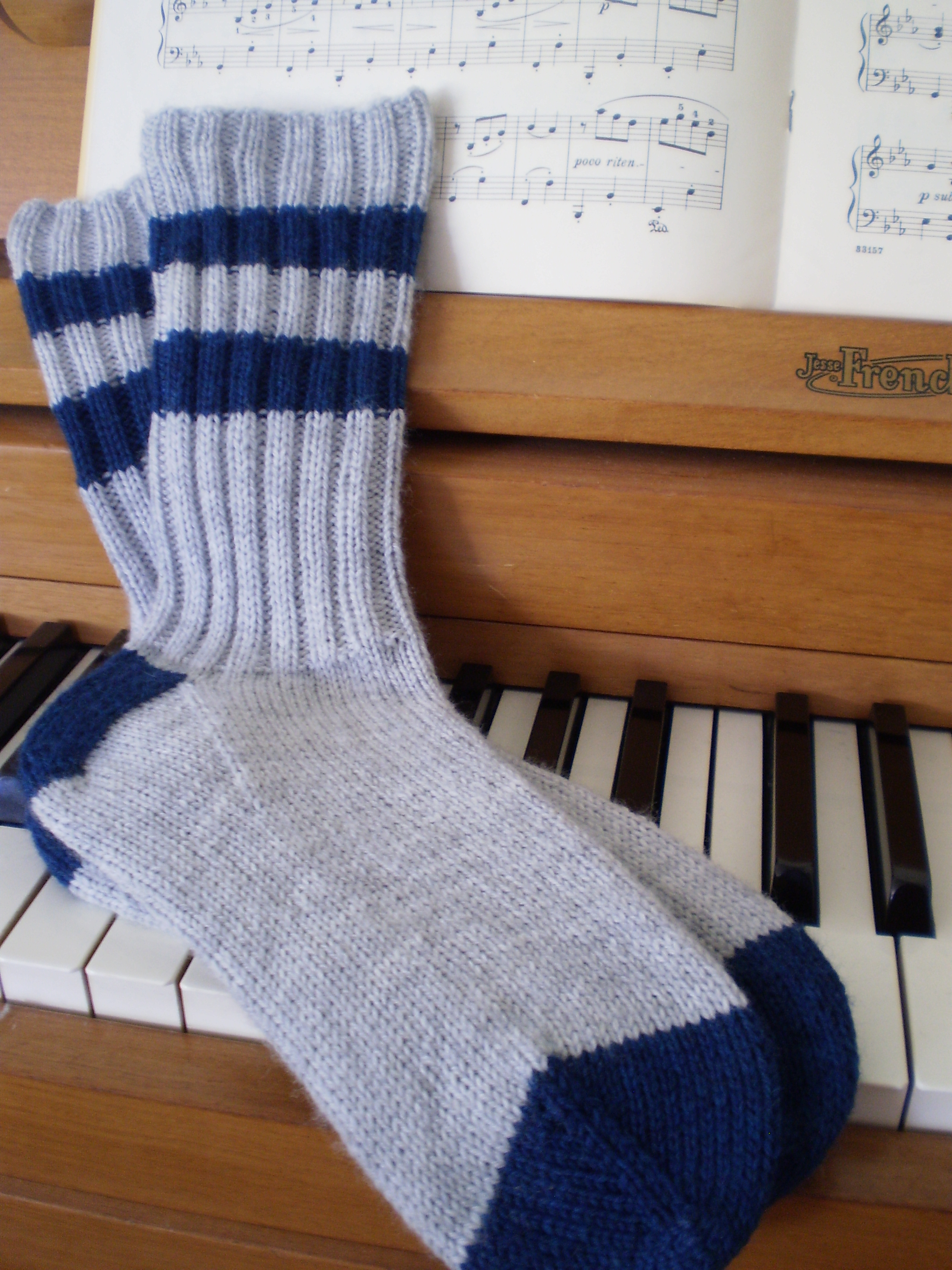
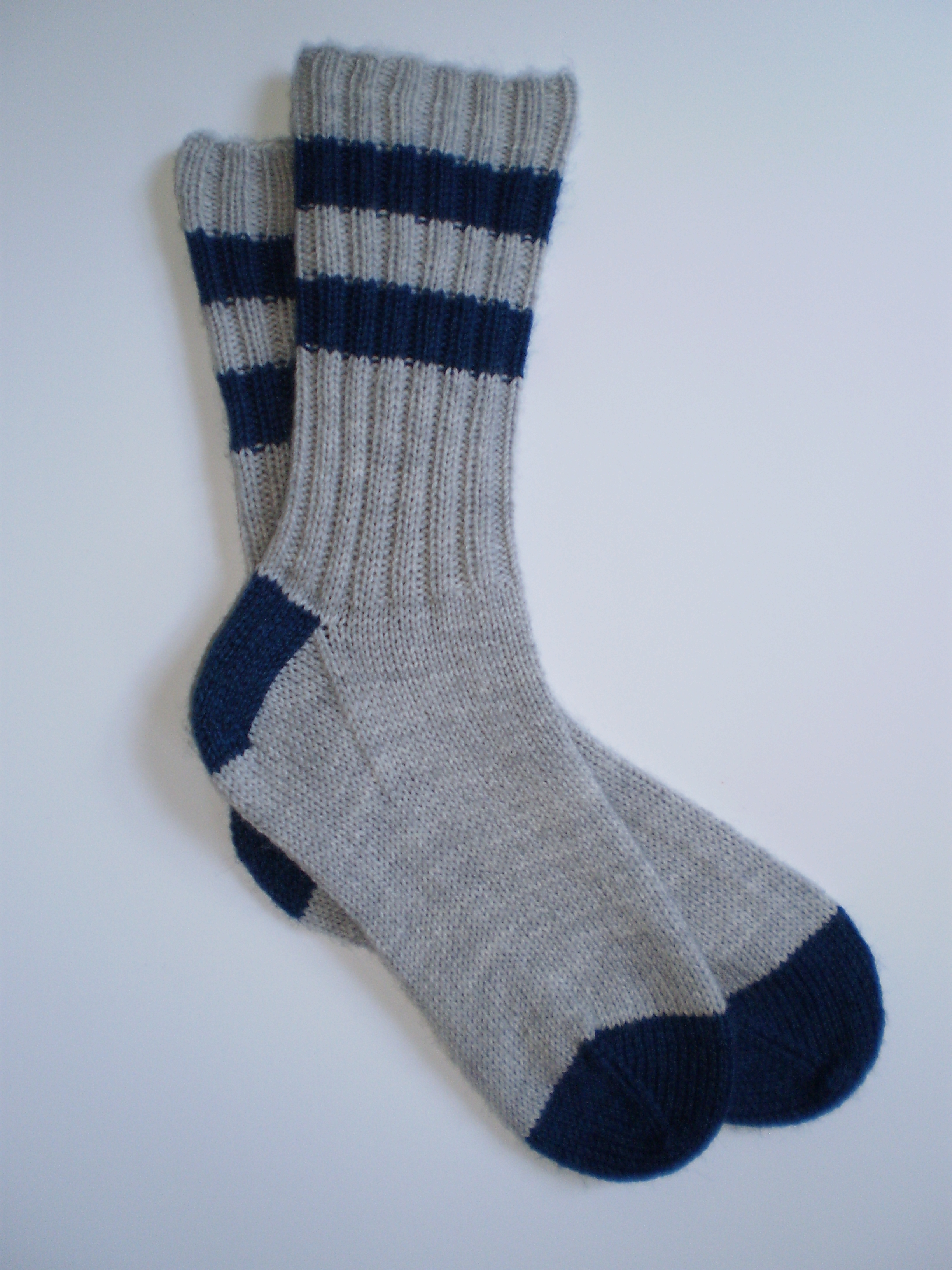
We’ve done it, guys!  We’ve finished our socks.  The ones we started talking about way back in March.

You picked out the item, the style and even the colors.  And, over the last couple months, we’ve been knitting up the socks piece by piece.

And, here’s the day we’ve been waiting for!  It’s Finished Sock Day!

OLYMPUS DIGITAL CAMERA

They are the perfect comfy-cozy everyday socks. Featuring a classic ribbed leg with bold stripes of contrasting color and a slip-stitch reinforced heel, these socks are perfect for hiking up to your mountain cabin, beachcombing on the Puget Sound or lounging in front of the fireplace. Simple, classic, cozy and perfect.

OLYMPUS DIGITAL CAMERA

Thanks, everyone for your input!  I hope you had fun working on these socks together… I know I did.

Want a nice copy of the finished pattern?  Get it here:

Committee Socks.docx


Blocking: Socks

I think my favorite thing to block might be socks.  This is pretty silly, since you really don’t have to block socks.  (I suppose, technically, you don’t have to block anything, really.  But some projects, like lace, you kind of have to block.)

Since socks are worn skin-tight, they look like they’ve been blocked while you’re wearing them.  But, if you’re giving someone a pair of socks as a gift (or you’re just making them for yourself), there is nothing prettier than a nicely blocked pair of brand-new hand-knit socks.

And the process couldn’t be easier.

Just soak your finished socks in clean, warm water for 10 or 20 minutes (like usual), and slip them onto your sock blockers and let them dry.  (Mine hang dry from the ugly chandelier in my kitchen.) Easy!

OLYMPUS DIGITAL CAMERA

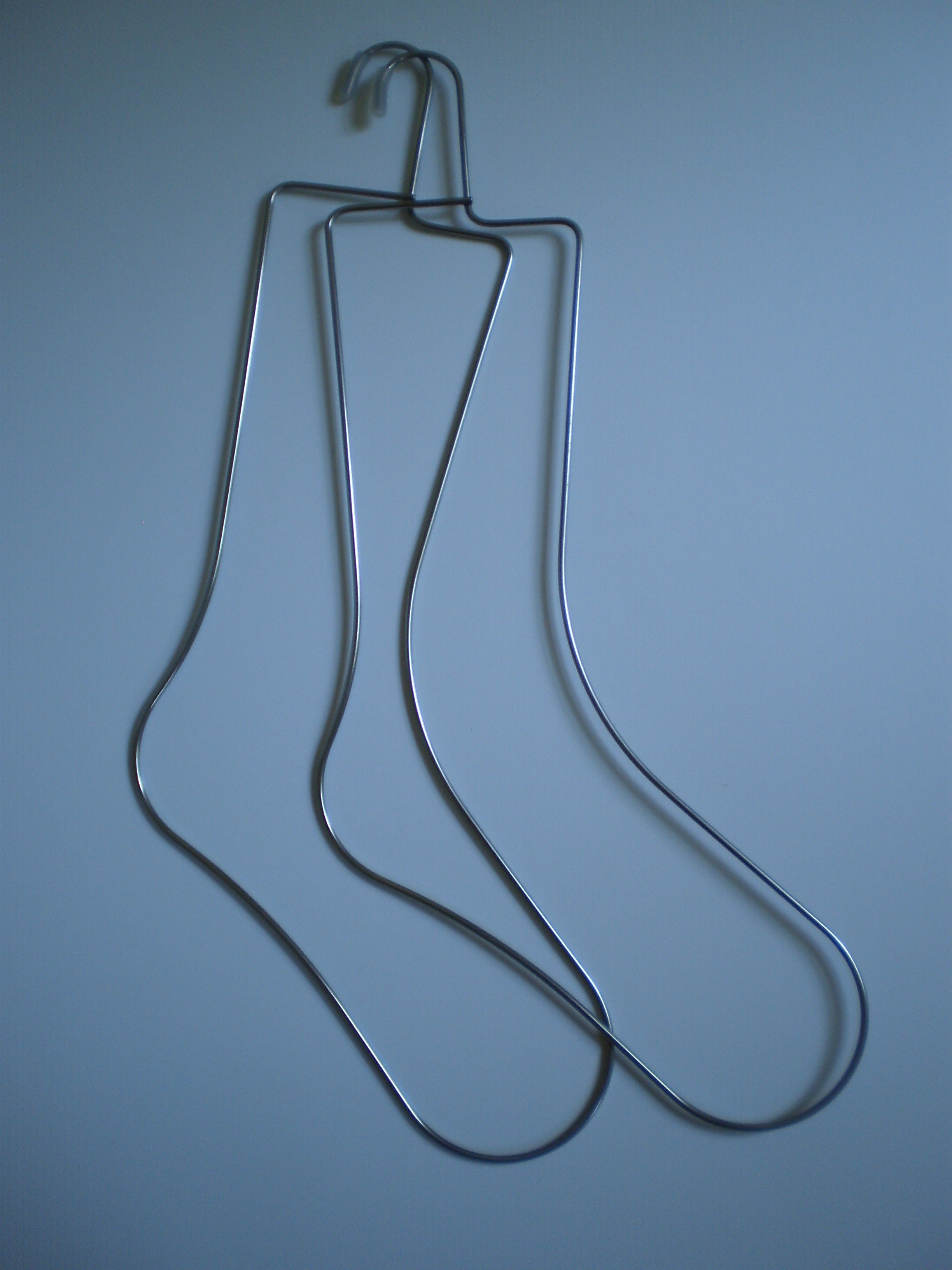
What’s that?  You haven’t heard of sock blockers?  Well, let me tell you about them, because they’re basically magical, especially if you make a lot of socks.

Sock blockers are rigid, sock-shaped frames that will produce professionally-finished and identically-shaped socks every time.  They come in lots of sizes and are made with many different kinds of materials (wood, acrylic, and metal are common.  Mine are made from wire).  You can even make your own, though I think they’re totally worth the 15 or so bucks they cost.

OLYMPUS DIGITAL CAMERA

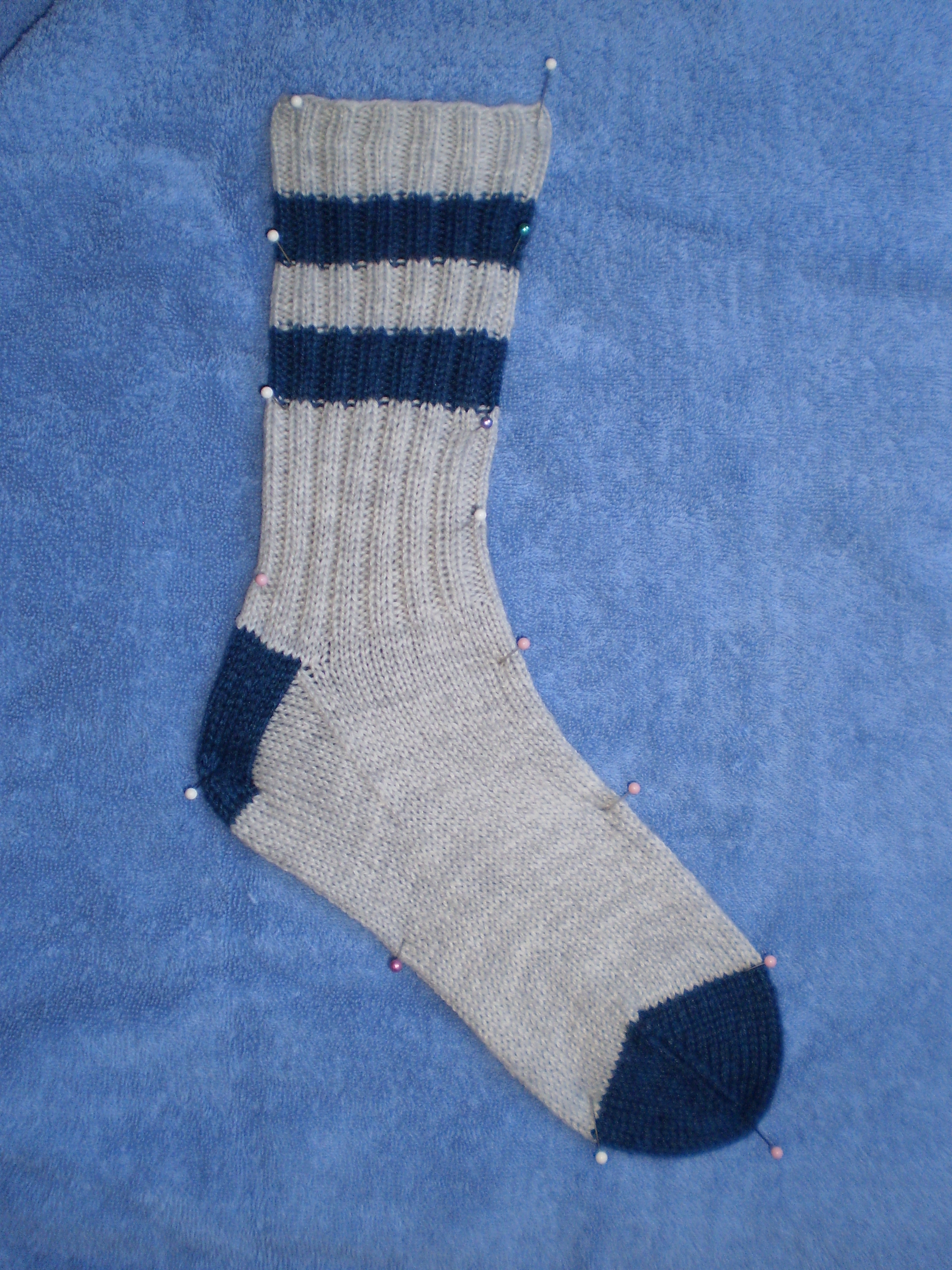
You’re not convinced?  OK, I get that.  Why spend money on a unitasker that you’ll only use now and then?  If you don’t have sock blockers, and don’t plan on buying them, you can always block with foam and pins, just like normal.

OLYMPUS DIGITAL CAMERATwo things are very important to keep in mind.  First: make sure you are blocking both socks to the same dimensions.  You wouldn’t believe the number of lopsided pairs of socks I made before I got my sock blockers.

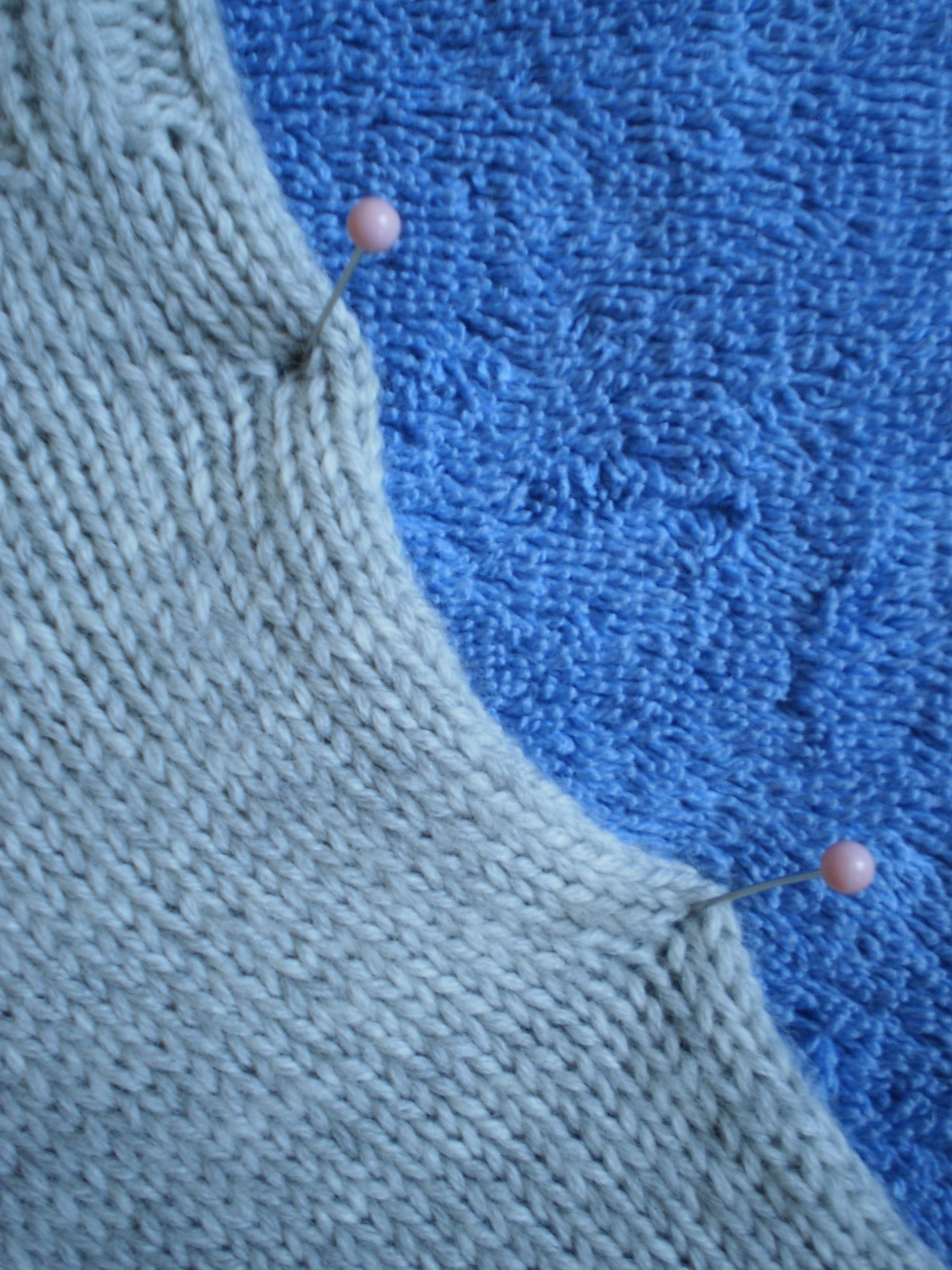
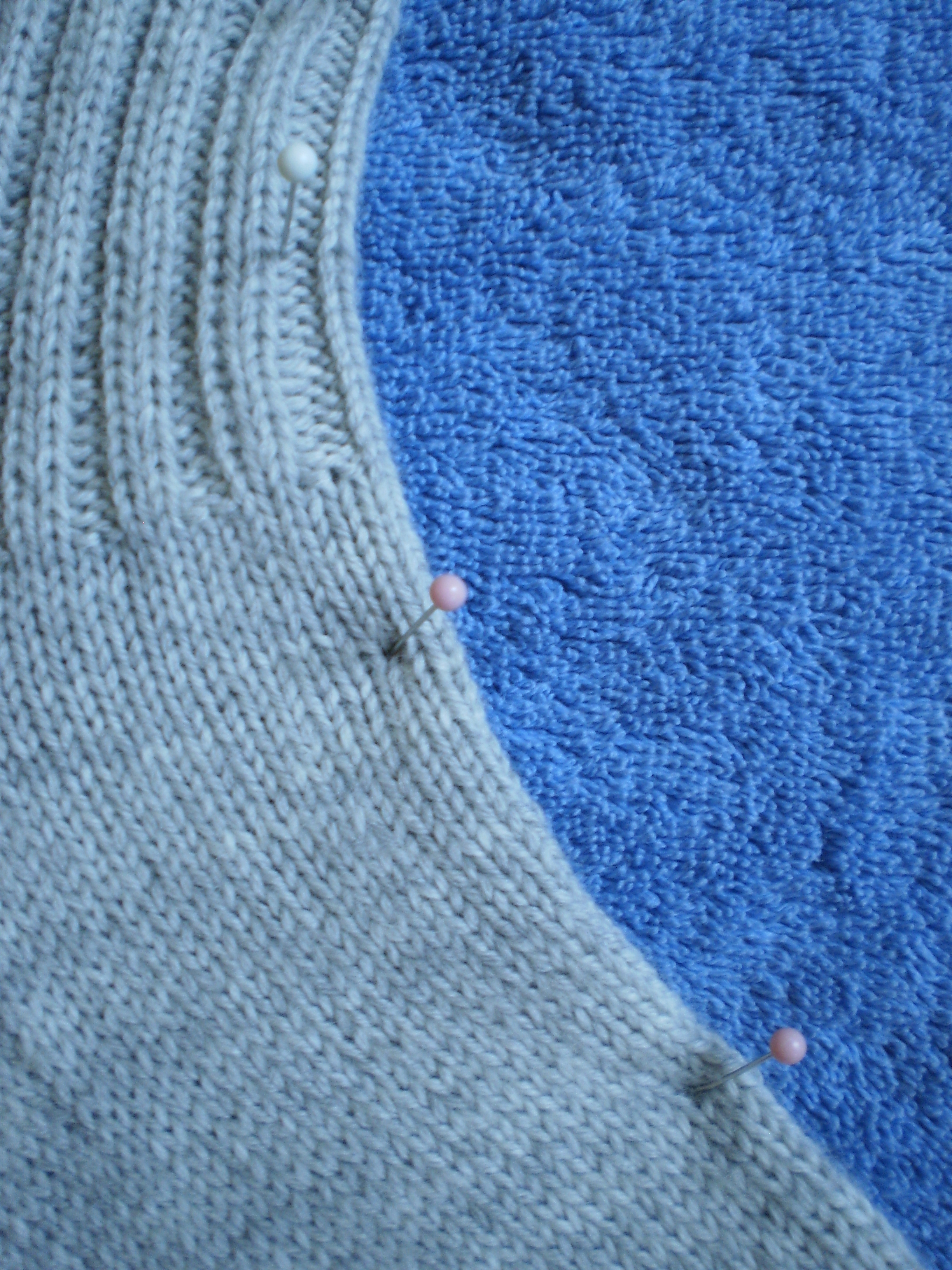
And second:  Do your best to avoid puckers and points from your pins.  They’re really obvious on socks.  To avoid points, I use lots and lots of pins to spread out the tension around the edge of the sock, and I stick the pins in away from the edge.

OLYMPUS DIGITAL CAMERA

Not good

Good

Better

Either way you do it, blocking socks takes something that looks like a lame, wrinkly snake, and changes it into a beautiful, professional-looking accessory.OLYMPUS DIGITAL CAMERAOLYMPUS DIGITAL CAMERAHow do you block your socks?