Casting On- The Provisional Cast On

I want to introduce you to my friend, the provisional cast-on.  It’s a nifty little technique that can be completely invaluable.  It lets you cast on (and knit), then come back and knit in the other direction.  The finished product is insanely stretchy and totally unnoticeable.  It’s perfect for top-down sweaters (so you can knit the entire sweater, then knit the collar).  It’s also great for lace shawls and scarves, where you don’t want an unsightly cast-on edge.

So, how do you do it?

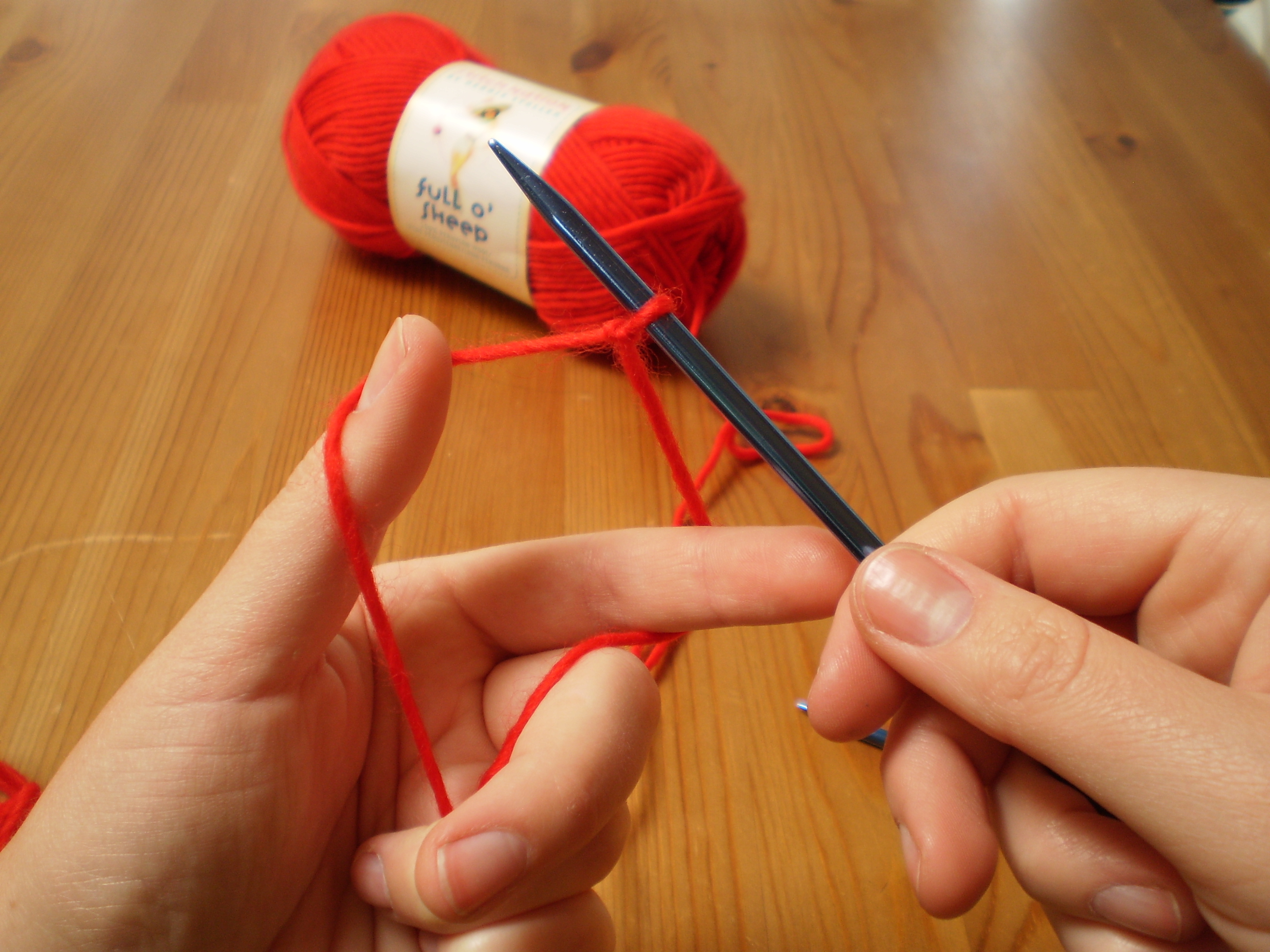
Grab some scrap yarn and a largeish crochet hook and chain several stitches more than you want to cast on.  Don’t worry about making the crochet look pretty, it’s all going to be removed before you finish the garment.

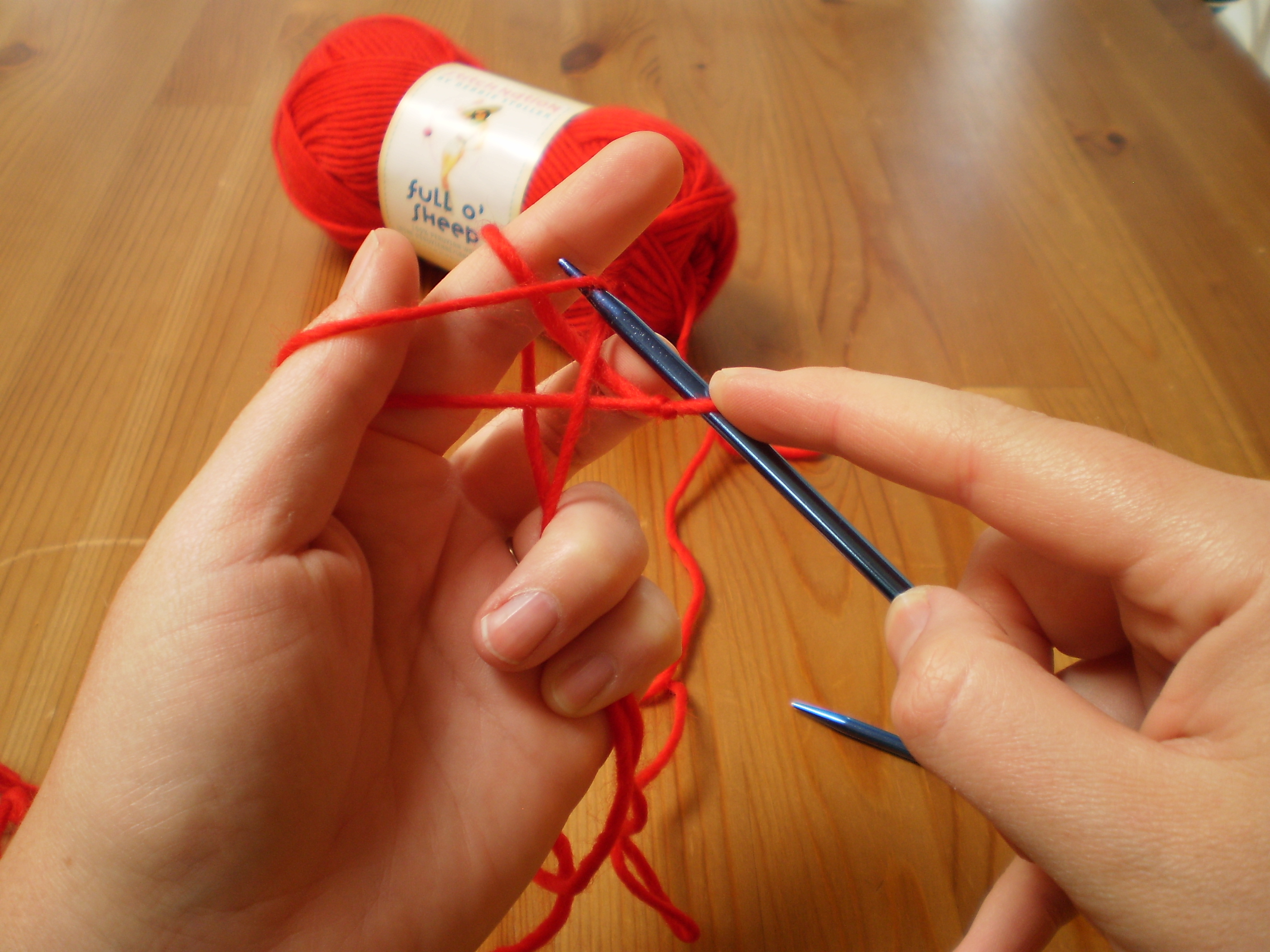
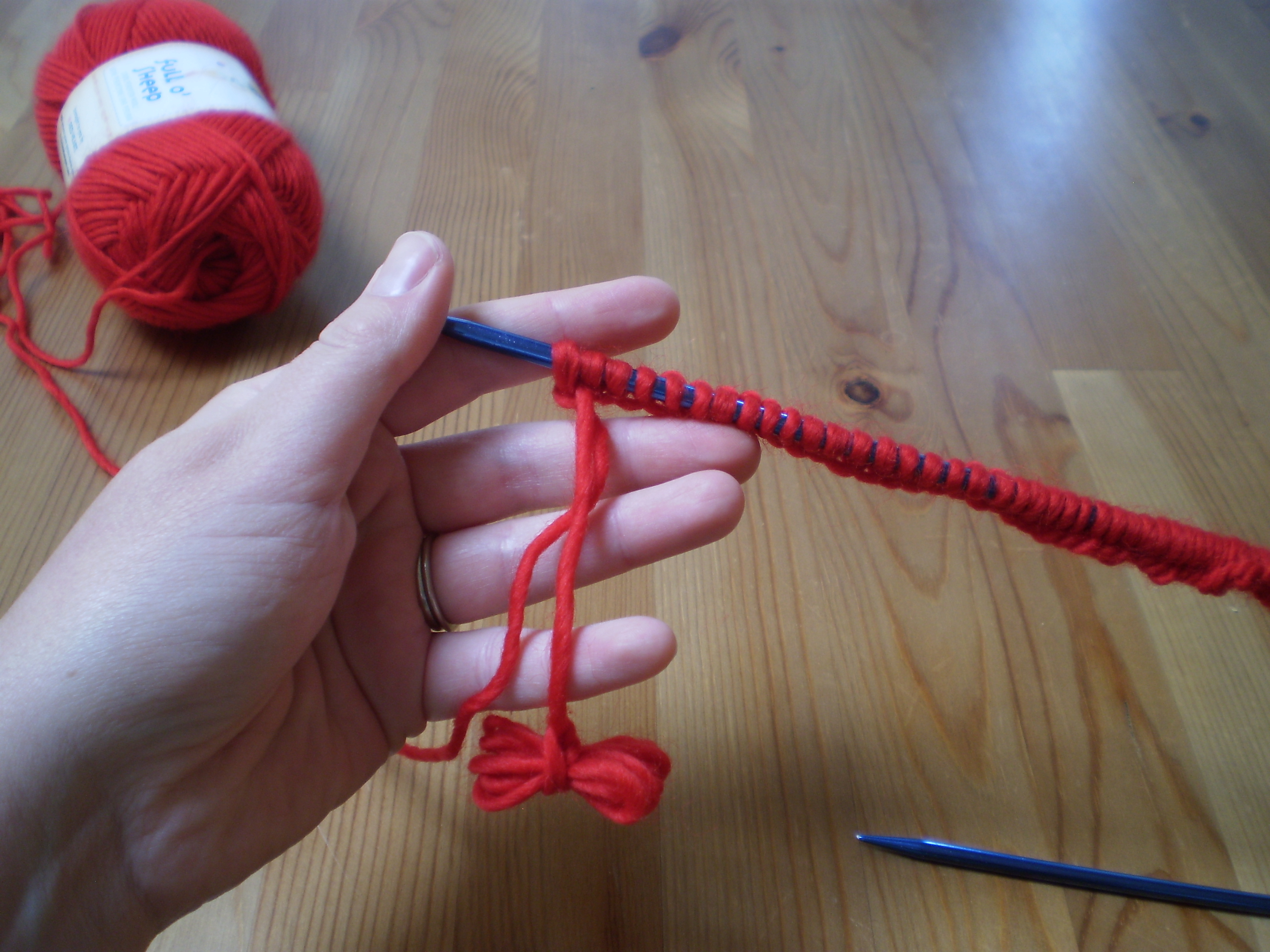
OLYMPUS DIGITAL CAMERAThen, use your knitting needle to pick up and knit one stitch in each chain.

OLYMPUS DIGITAL CAMERAKeep going until you have the number of stitches that your pattern calls for.

OLYMPUS DIGITAL CAMERAThen, just knit your pattern as you normally would.  Ignore the ugly neon green crochet stitches at the collar of your sweater, they will be gone soon enough.OLYMPUS DIGITAL CAMERAHere comes the cool part.  Carefully undo the crocheted chain one stitch at a time (or a few stitches at a time).
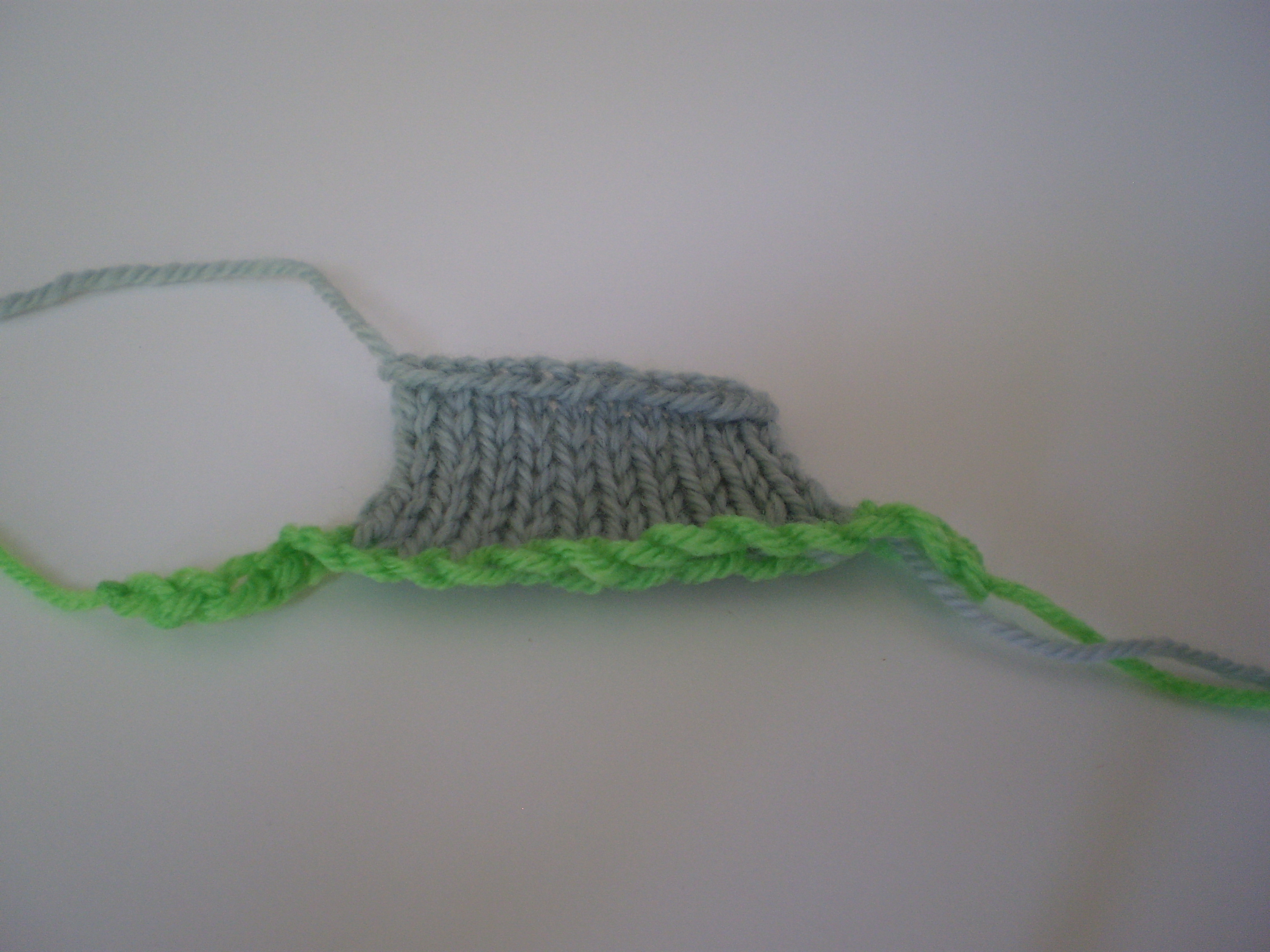
OLYMPUS DIGITAL CAMERAAnd slip your needle into the newly freed stitches.  (In knitter’s lingo, these are now “live stitches.”)OLYMPUS DIGITAL CAMERAKeep going, until you’ve picked up all the live stitches.OLYMPUS DIGITAL CAMERANow you’re ready to keep going.  Join your yarn and start knitting the other direction!

OLYMPUS DIGITAL CAMERA

Pattern: Grandma Anna’s Counterpane

My Great-grandmother Anna was a remarkable woman. She was married at 16, lived through the Great Depression and World War II, and raised 11 children (and nearly a hundred grand-children). And through it all, she spent every free moment knitting and crocheting to keep her family warm. She even won a blue ribbon at the Wisconsin state fair for her knitting!

I never got to meet my great-grandmother, but her legacy lives on in the projects she has left behind. I like to imagine that every piece of her knitting is a friendly little “hello” through the decades to me and her other descendants.

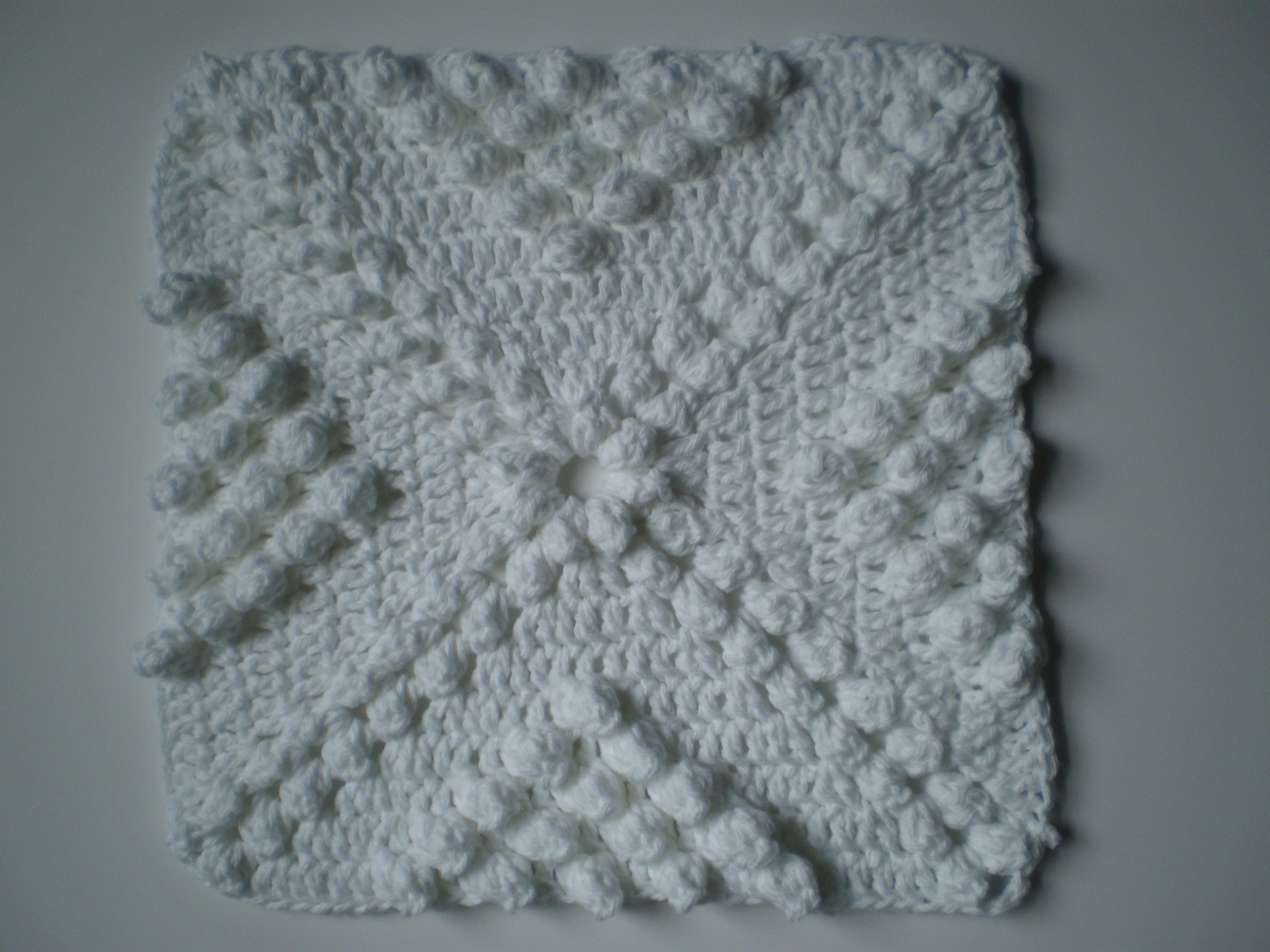
Zimmer CounterpaneThis counterpane is based on a bedspread that one of my mother’s cousins inherited from Great-grandma Anna. The pattern has been lost, so I decided to come up with my own. The original was made with white worsted-weight cotton, like most traditional counterpanes. Feel free to substitute your favorite fiber, or change the color to give the blanket a more contemporary feel.

OLYMPUS DIGITAL CAMERAGet the pattern here:

Grandma Anna’s Counterpane

Inspiration: Counterpanes

Ever since I saw that picture of my Grandma’s counterpane, I’ve had counterpanes on the brain.  They’re so charmingly old-fashioned, but still manage to combine the elegance of a monochromatic palette  and gorgeous textured stitching with the coziness of a snugly soft blanket.

Let’s indulge my new minor obsession, shall we?

Bedspread (Counterpane with Leaves) by A.M.

bedspread_close__003_medium[1]dogwood by tincanknits

9M-dogwood-00_medium[1]Marguerite by Priscilla Publishing Company

5698274754_ea17cdfdc5_z[1]

Needles that Rule

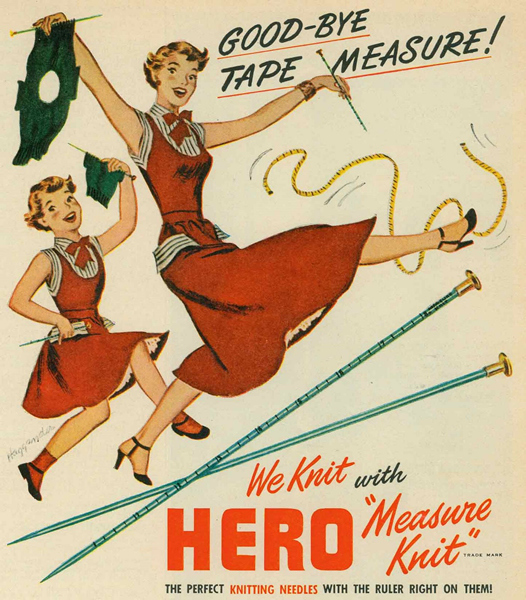
J0yDjiKJust a quickie today, something silly and fun.   I stumbled across this ad from the fifties for the “Measure Knit.”  They’re knitting needles with markings for inches, so you can use them as rulers.  How smart is that?  I’m always loosing my tape measures, so having a ruler/knitting needle hybrid would be super useful.

And, if the ladies in the ad are any indication, these needles are more exciting than a barrel full of monkeys.

Inspiration: Freedom

Happy 4th of July, everyone!

Instead of talking about fireworks, flags and red, white and blue, I wan to talk about freedom.   And free-form knitting.

Free-form knitting is knitting without a pattern, without a plan (or at least without much of a plan).  It’s playing with stitches, colors and textures.  And it’s super interesting.  Pick a coordinating color palette, cast on a few stitches, and start playing!

Here are a couple tutorials:

Freeform wrapper OMG by Colleen Davisomg_wrapper_medium[1]

Tips for Freeform Knit & Crochet Garments, Prudence’s Way by Prudence Mapstone2041214197_4929516023_z[1]

Basic Introduction to freeform knitting and crochet by Janice Rosema

2740000828_88b9886d25_z[1]

So, go celebrate your freedom with a little free form knitting (and maybe a backyard barbecue).

Keeping Warm, Old-School Style

A few months ago, my mom visited one of her cousins.   She showed my mother a bedspread she had inherited from their grandmother (my great-grandmother).  And, knowing my love of anything fiber arts, especially anything related to fiber arts with a sentimental back story, Mom sent me a picture:

Zimmer Counterpane

It’s a beautiful crocheted counterpane.  Counterpanes are traditionally knit or crocheted bed spreads, worked in white or off-white cotton yarn.  They usually are comprised of separately-worked pieces (squares, octagons, etc.) which include textural elements that work together  to make a bigger pattern once sewn together.

See how this blanket is made of large squares, sewn together?

Zimmer Counterpane large squaresBut, when the big squares line up, smaller squares appear?

Zimmer Counterpane small squaresMy great-grandmother was a prolific knitter and crocheter, but through the years, most of her projects have been lost to moths, given away, or otherwise misplaced.  I always get excited to see a piece of her work that has been kept safe over the years, especially as beautiful and well-preserved as this blanket.

Casting on- Long Tail Cast On

The Long Tail Cast On is the most basic cast on. The white bread of cast ons. The Ford Taurus of cast ons.  Not flashy, but totally functional.

The Long Tail Cast On is used about 90% of the time (at least by me), and is absolutely serviceable. It’s probably the cast on that your mom taught you how to do back when you were a kid. It’s moderately stretchy, and fairly easy to use. It’s not exactly beautiful, and not as stretchy as some cast ons, but we still love it.

There are a few ways to perform the Long Tail Cast on, but this is my favorite:

Measure out your long tail (make it about 4 times as long as you want your cast on to be).   Start by making a slipknot and (ahem) slipping it onto your needle.OLYMPUS DIGITAL CAMERA Then, hold the yarn in your left hand, slipping your index finger and thumb between the two strands of yarn. Like this:OLYMPUS DIGITAL CAMERAUse the point of your needle to catch the thumb loop of yarn.OLYMPUS DIGITAL CAMERA  Then, slip the point of the needle over to your index finger and grab the loop of yarn over there. OLYMPUS DIGITAL CAMERAAnd pull the index finger loop through the thumb loop, like this:OLYMPUS DIGITAL CAMERAThen drop the yarn from your left hand, and snug up your stitch.    OLYMPUS DIGITAL CAMERA Keep repeating these steps until you have all your stitches, turn your work and start knitting. OLYMPUS DIGITAL CAMERA

Beginning at the Beginning: Casting on

You get the basics of knitting. You know how to follow a pattern, what “raglan” means, and why merino is infinitely superior to acrylic (not that I’m being a snob…). It’s time to start getting technical. Really technical.

Let’s talk about casting on. OLYMPUS DIGITAL CAMERA

Casting on (making that very first row of stitches) is something that most knitters basically ignore. Most of the time, I cast on only as a way to get to the meat of my pattern. But, spending a little time to find the perfect cast on for your project can elevate your knitwear from good to great.

So, for the next couple weeks, I want to talk to you about the various ways that you can cast on; each method’s benefits, problems, and how to use them.

Stellar’s Jay Sweater: Stagnation

So, I have this spreadsheet that I use to plan out my blog posts (because I am a nerd, and like to be organized).  Today I was supposed to tell you about how I knit up the arms on my Stellar’s Jay Cardigan.  It was going to be a nice little post, to give you an update on my progress, and tell you about how well everything was going.

Well.   It turns out that today’s post will actually be a little different.  It will be about how I forgot to work on my sweater at all since you last saw it, over a month ago.

It’s sitting in its little project bag, between my stash of sock yarn and my little chest of finished projects.  I look at it every couple days and think, “I should probably pick that up and knit a row or two.”  But, still it sits there, forlorn and neglected.

I could make excuses, pleading that I have been too busy with other projects (which is sort of true).  I could say that I have been busy with work, or getting ready for summer.  But the truth of it is, I’m just not feeling inspired by my little blue sweater.

I’m sure I’ll pick it up again, one of these days.  I’ll suddenly get the urge to finish it, and I’ll dive back in head first, but for right now, I’m happy chugging away on some other projects I’ve got in the works.  It’ll be waiting for me  when I get back to it.

Do you ever put a project on hold?  What do you do to get your inspiration back?

Listening and Knitting

Sometimes, I need my eyeballs while I knit.  I can usually get away with watching TV, but sometimes I have a project that needs more of my attention (especially if I’m working up a new pattern, or I’m working on something with a lot of counting).

When that happens, I like to turn on my podcasts.  Podcasts are great. They’re basically radio shows that you can have your smart phone download automatically (like magic!).  You can listen to them whenever you have the time, and can pause them whenever you need.  It’s as if there was a radio station that only aired the shows you liked, and followed your schedule.  Genius!  (And, if you don’t have a smart phone, you can find them online, and listen to them through your computer.)

Here are a couple of my favorites:

Sawbones500_35[1]Sawbones is a podcast about the weird things that people have done to try and cure disease throughout history, presented by the totally hilarious Justin McElroy and Dr. Sydnee McElroy.  (Did you know that tying a frog to your forehead is supposed to cure headaches?  Now you know.)

pchhblogrect1_custom-ac140c703215b507ceb79d3edbff1eb73ae6011d-s3-c85[1]Pop Culture Happy Hour is produced by NPR, and is an hour-long intelligent discussion of pop-culture-related topics.  That makes it sound totally dry and nerdy, but it’s actually really interesting.  And, the hosts give really great suggestions for books, TV shows, and other media.  I’ve discovered lots of cool things by listening to these guys.

mza_3767929519462584539.600x600-75[1]The Knit Picks’ Podcast is (surprise!) put out by the staff of Knit Picks.  They just updaged their format, and now pick a single topic for each episode.  They interview each other, knitting designers, and local knitters about that topic.  Sometimes it gets a little commercial-y, but I enjoy listening to what’s going on at my favorite online yarn store.

What do you listen to while you knit?