Category Archives: FYI

Icing on the Hat Cake

I love my little red hat, and I bet you love your hat, too.  But, I feel there is something missing… something extra… something… fluffy.  Also, I have some leftover yarn that I want to use up.
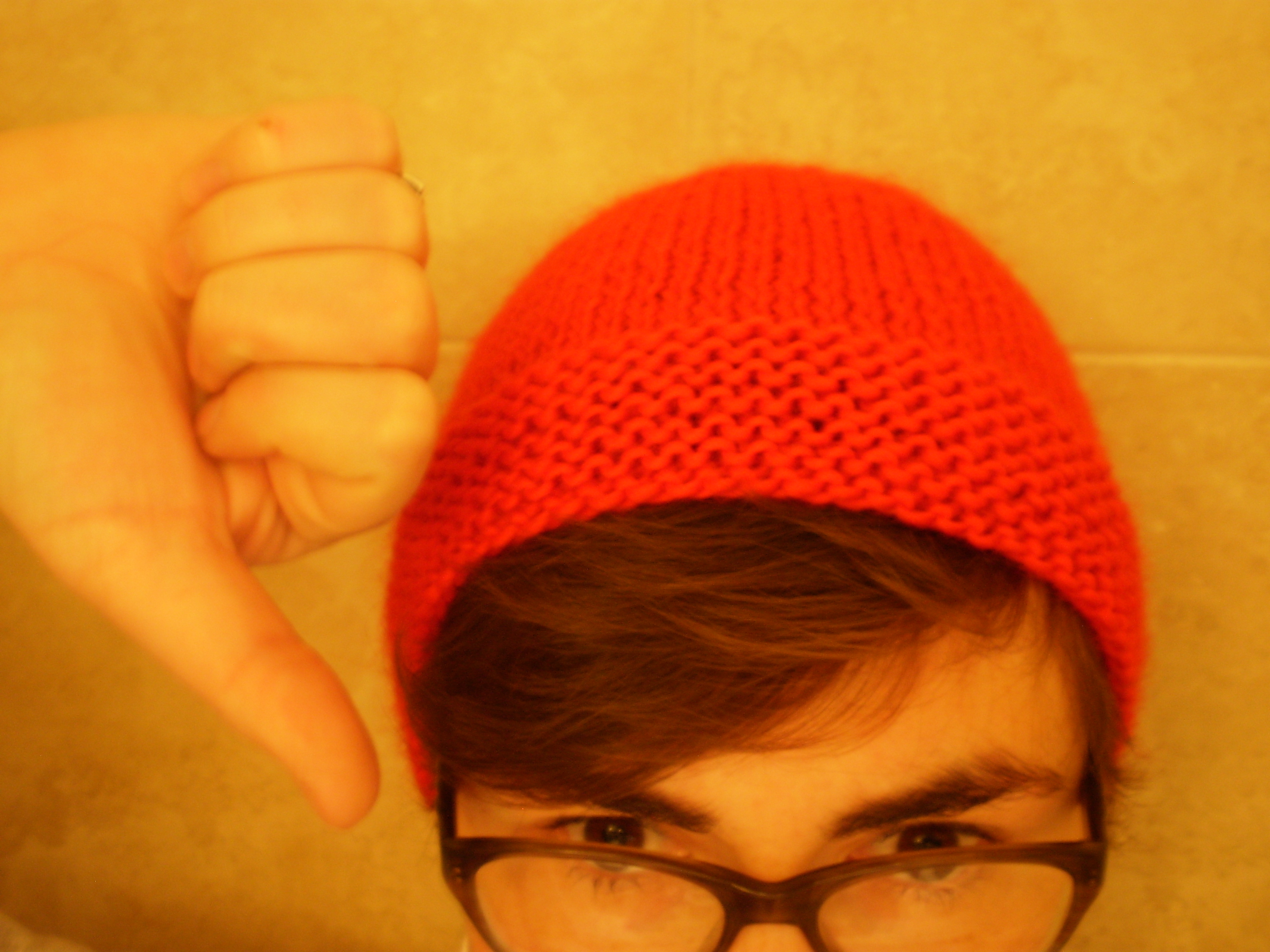
OLYMPUS DIGITAL CAMERAI’m going to make a pompom to put on top of my hat!  (I realize that pompoms are something of a polarizing subject for folks, but I enjoy a good pompom from time to time, and this is definitely one of those times.)

Pompoms are easy to do, but probably the messiest project you’ll ever do involving yarn…the little scraps of yarn tend to go everywhere and stick to things if you’re not careful (that static cling will get you every time).  You have been warned.

Here’s what you need:

Yarn (The fluffiness of your pompom depends on the amount of yarn you use.  The more yarn, the more fluff.)

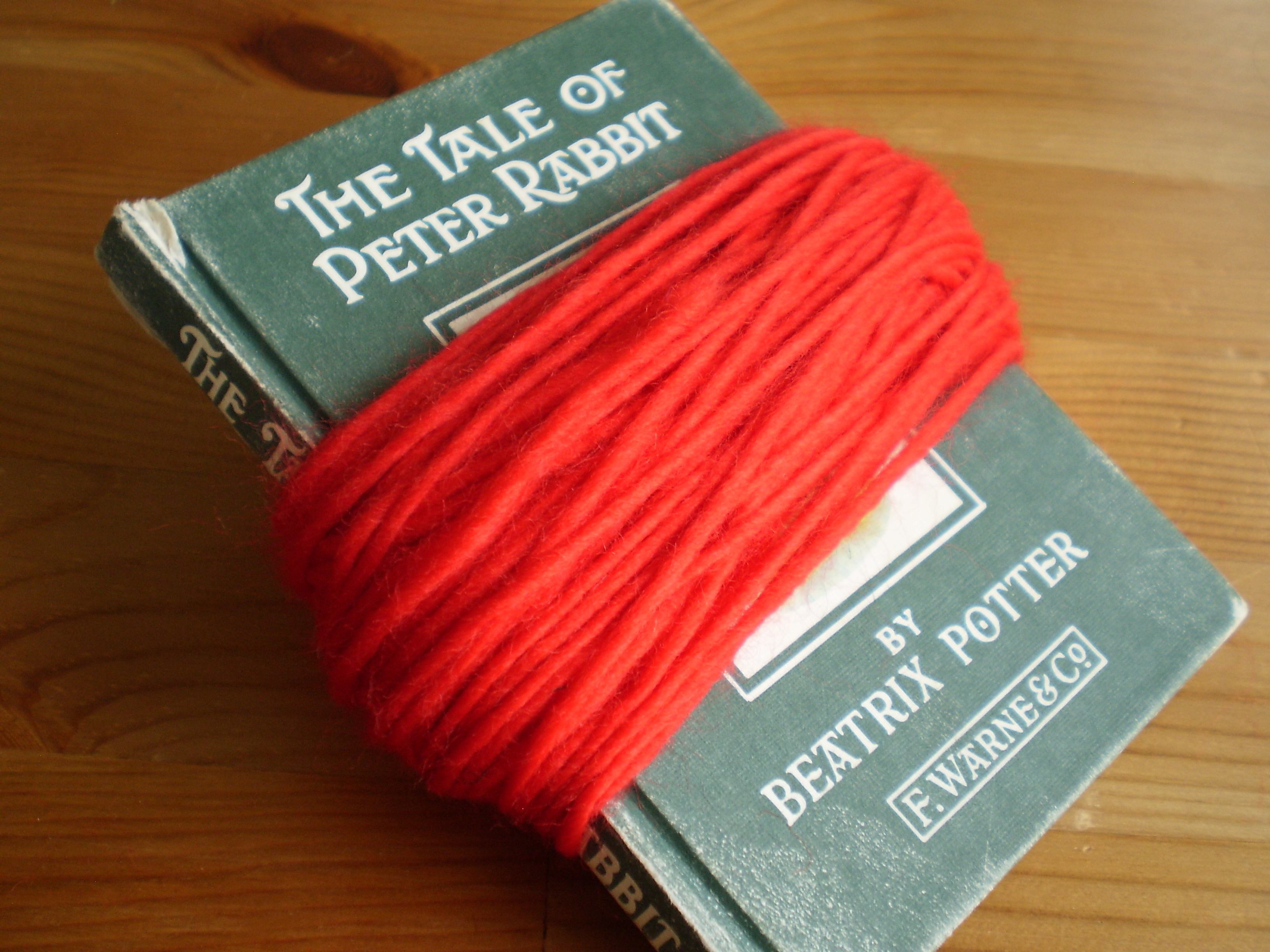
A book, coaster, cell phone, box or other small, rigid object that you can wrap yarn around.  The object should be slightly longer than the desired diameter of the finished pompon.  I’m using a tiny copy of Peter Rabbit that I have on my bookshelf for some reason.  It’s about 4 inches wide.

Scissors

A great big mixing bowl, pot, trash can, or drop cloth (optional, but recommended. Use his to keep your schnipples neat while you work.)

Step 1: Cut a piece of yarn about 2 feet long and tie a slip knot in the middle of it.  Set it aside.

OLYMPUS DIGITAL CAMERAStep 2: Wrap the rest of your yarn around the book approximately 1 million times.  Try to get the yarn to build up into a big clump.  Stop when you get bored, or when you think that you have enough.  It might be possible to wrap too much yarn around the book, but I haven’t done it yet. Cut the yarn when you have enough wrapped around the book.
OLYMPUS DIGITAL CAMERAStep 3: Carefully slide the yarn off the book, being sure to keep the clump nicely together.  Slip the piece of yarn you set aside earlier over the clump, and pull the slipknot tight.  Wrap the ends of the knotted yarn tightly around the clump a couple times and secure with a square knot.  See how the clump has now become a neat bundle of yarn?

OLYMPUS DIGITAL CAMERAStep 4: Cut all the loops, and use your fingers to fluff out the ends.
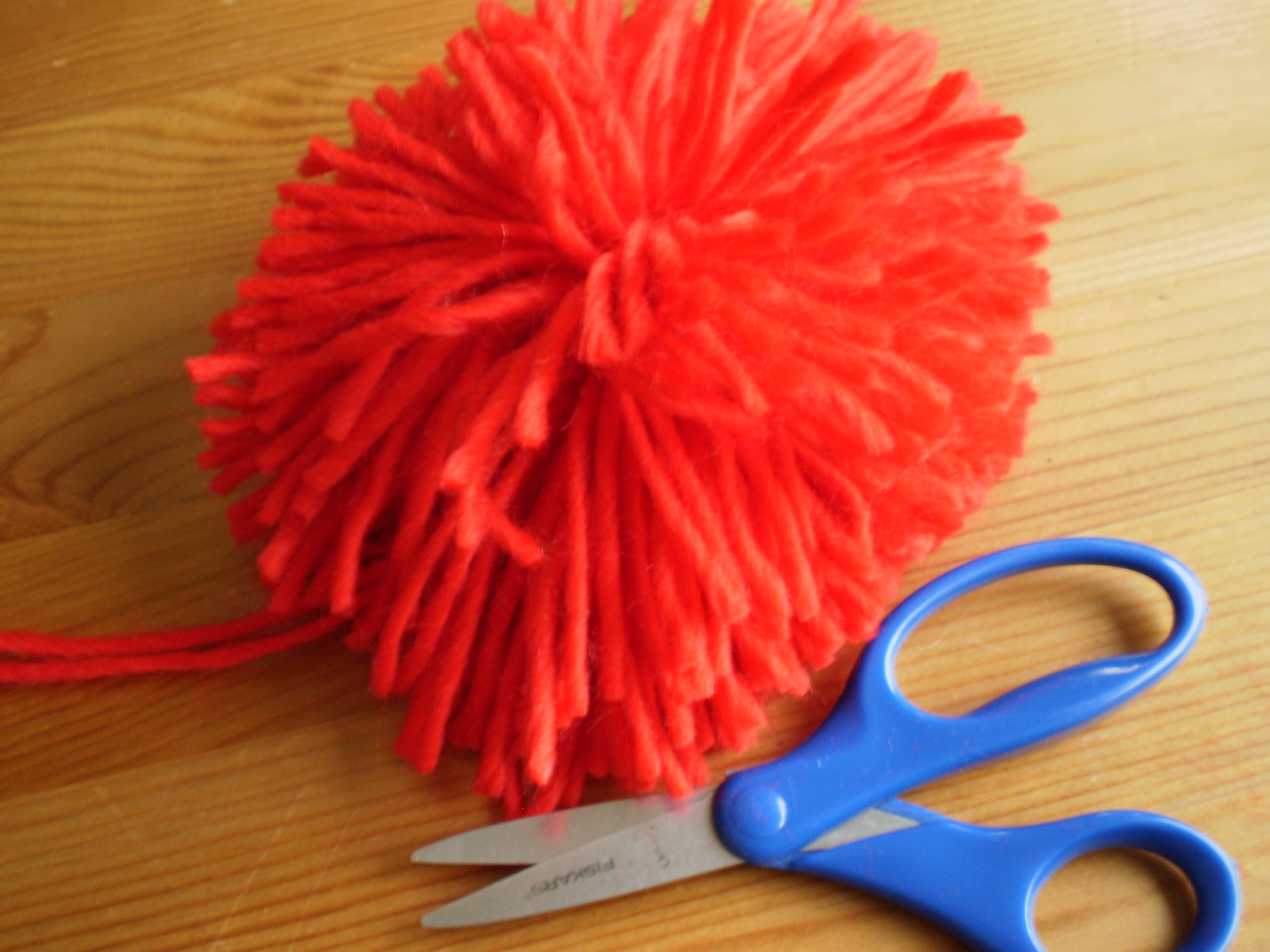
OLYMPUS DIGITAL CAMERAStep 5: This is the messy step.  With your scissors, carefully trim the ends of your yarn until the pompom starts looking nice and round. Go slowly, since you can always trim off more yarn, but can’t add any back in.  Try to avoid cutting the long tails of the tie-off yarn.
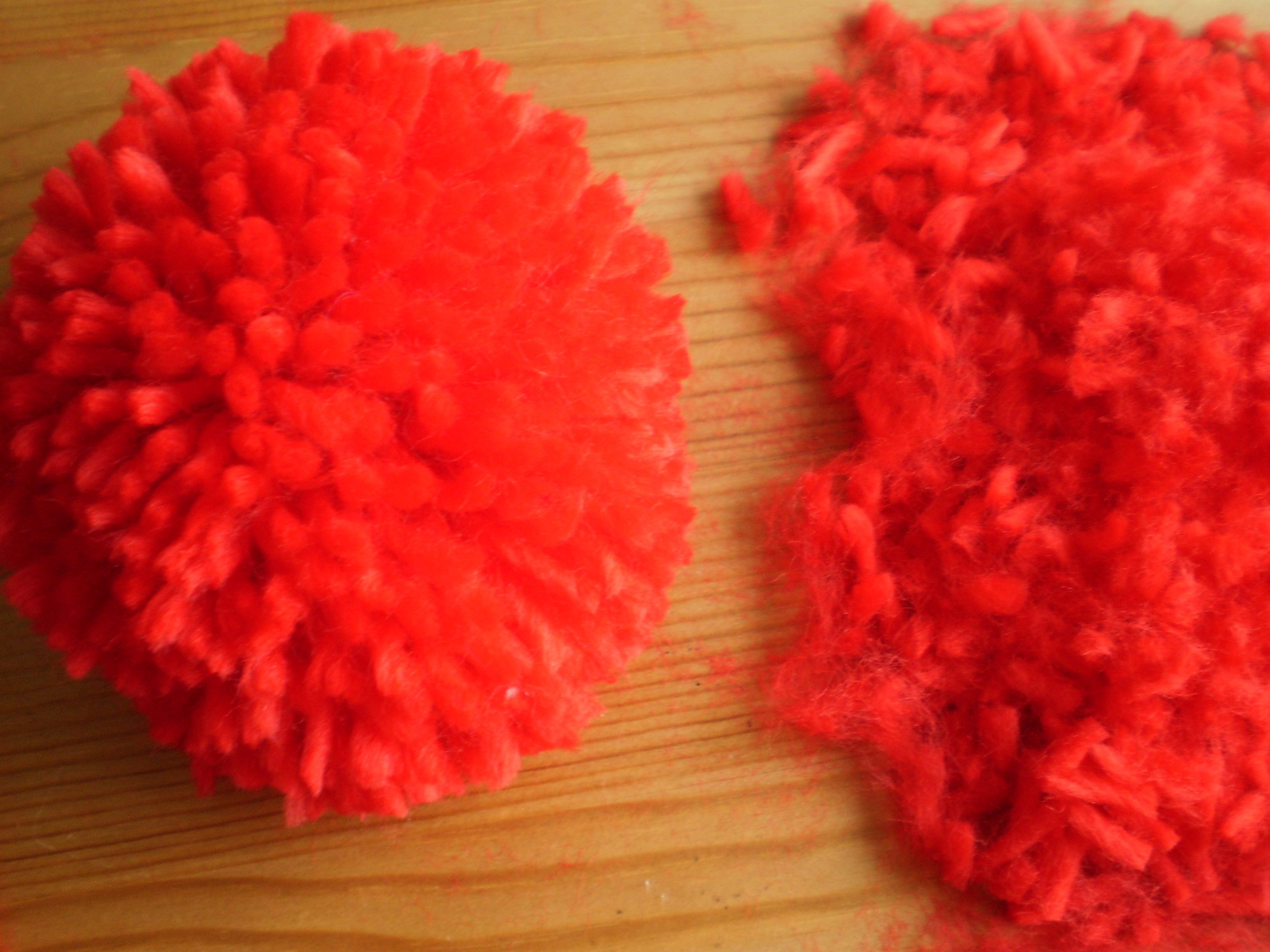
OLYMPUS DIGITAL CAMERAStep 6: Attach the pompom to your hat.  Use a tapestry needle to pull the long tail ends of your pompom through the crown of your hat, right at the top.  I like to just tie the ends together using a bow or other removable knot, so that if I’m having a pompom-ish day, I can wear my pompom hat, but if I’m having a curmudgeonly day, I can remove the pompom and wear the hat plain.  But today, is totally a pompom day!

OLYMPUS DIGITAL CAMERA

Sit Up Straight!

My back has been a little achy lately.  It’s possible that it’s from work (where I’ve been schlepping around 40-pound bags of clay), or it’s possible that it’s from my terrible, terrible posture.

So, this is just a little PSA (mostly to myself, because if I don’t write something down, I immediately forget it) to remember proper posture while you knit.  Sit up straight, with your feet firmly planted on the ground, elbows in and comfortable.  Your back and shoulders will thank you.

Although, who am I kidding?  This is how I usually knit:

bad-posture-cat[1]

Getting to the Point, Part 2

(Can I just say how ridiculous this title is?  I didn’t come up with the title until I had written out this whole post as well as the last post.  Anyway.  Dorky me and my wordiness.)

Even once you have decided on the kind of needle material you want, you still have to figure out the type of needle you are going to use.  Here, again, you pretty much have three choices.

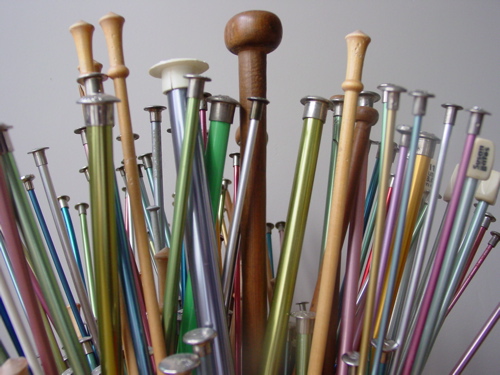
straight-needles[1]“Straights” or “straight needles” are your grandmother’s knitting needles.  They’re they kind that you imagine when you hear the words “knitting needles.”  They’re straight (obviously), usually longish (12+ inches), and have a point on one end and a nubbin on the other.  The nubbin stops your stitches from falling off the end.  They are great for learning on, and are good for knitting flat things.  However, if you knit big projects (like blankets or sweaters), you might want to avoid using straights, because the weight can cause wrist/hand problems.

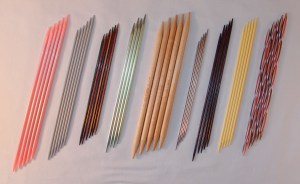
OLYMPUS DIGITAL CAMERAThe second type of needle are Double Point Needles (or DPNs).  DPNs are usually shortish (in the 5-8 inch range), and, as the name implies, have points on each end.  They’re sold in sets of 5 or so (depending on the brand).  They’re used to knit up small projects in the round.  If you’re making mittens, socks or sleeves, you might make the whole project on DPNs.  Or, you could make the top of a hat on DPNs.  They’re a little scary to use the first time, since you use so many at the same time, but they’re really the best/only way to make certain projects.

circular-needles[1]The last type of needle is the circular needle.  These are two short needles (usually about 3-8 inches, depending on the brand) connected by a long cord.  These are my absolute favorites.  They’re versatile, allowing you to knit flat (like with straight needles) or work large projects in the round.  The fact that the project hangs more or less evenly between your hands means that there is less chance of arm/hand fatigue.  Also, if you knit in public/on the bus/on a couch next to people, circulars are nice and compact so you won’t keep poking your neighbors. But, one drawback of circular needles is that they are fairly specific to the project you want to make.  For example, even though they’re both knit on size 8 needles, you will need a long circular needle to make a sweater in the round, but a short circular needle to make a hat.  (But, that’s a pretty minor complaint in my biased opinion.)  Also, poorly made circular needles can snag where the needle joins the cord, which can be a huge pain in the butt when you are cruising along a project.  This means that when I buy circular knitting needles, I almost always go for the super fancy ones (like Addi Turbos), which cost way too much.  But, I think it’s worth it to not hate my knitting.

They type of needle you use is pretty much determined by the project you’re making, but still you’ll develop preferences.  If you hate DPNs, you could end up buying a whole bunch of tiny little circular needles, so you never have to break out the DPNs on a sleeve.  Maybe you love circulars, so you end up knitting everything on circulars and never touch straights again.  It’s really all up to you and your personal preference.  What do you prefer?

Getting to the Point, Part 1

knitting-needlesTechnically, all you need to knit is a skein of yarn and a couple sticks.  That’s it.  We talk about yarn weight, fiber content, dying, blah, blah, blah, all the time.  Often we forget about the knitting needles.  They’re probably feeling all left out.  So, let’s talk needles.

Historically, knitting needles have been made from just about anything you can think of (bone, horn, wood, metal etc.), but most needles you can find at your local knitting store are made from one of three materials, metal, wood (or bamboo), or plastic.  Whatever your needles are made of, they all perform essentially the same function, i.e. they hold your stitches as you knit.  But, as with everything in knitting, there are just about as many opinions on needles as there are knitters.

Metal needles are very rigid (because they’re made from metal… duh), but are really slippery and can be made with really pointy points, which makes them good for fuzzy or snaggy yarns or for really complex projects (like lace, or other textured patterns).

Wood and bamboo needles are much lighter than metal needles and slightly bendy, which makes them more comfortable if you have hand or wrist pain issues.  But, because  wood and bamboo are softer than metal (again… duh), the tips of these needles are usually more blunt than metal needles, which makes them a little harder to use when you’re doing fancy-pants lace work.  Supposedly, bamboo needles are supposed to be stronger, and more durable than wooden ones, but they seem about the same to me.

Most commercially available needles are metal or wood, but sometimes you’ll run across plastic ones, too.  They are usually somewhere between metal and wood on the bendiness/heaviness scale, and they come in fancy colors (sometimes with glitter!).  But (and maybe this is just my limited experience) they seem a little cheap to me.  I’ve had a couple pairs of plastic needles, one broke in half, and the tips of the other got beat up to the point where they looked like I had been chewing on them.  Not ideal, in my opinion.  But, if you love plastic needles, let me know! I like being proved wrong.

So, try knitting with different types of needles and see what you like the best.  I love me some metal needles when I’m using straights or circulars.  But, when I’m working with DPNs (making socks or mittens etc.), I like my bamboo needles.

What do you like best?

So that’s what you’re working on

I showed you the sweater I’m working on.  (Which I’m now pretty sure that I have to frog.  My gauge seems to be off more than I thought it was.  I don’t want to undo all that work, so for the time being, my sweater is sitting in time-out. *pout*)

Anyhoo, it looks like you guys are having much more success in the knitting department than I am.

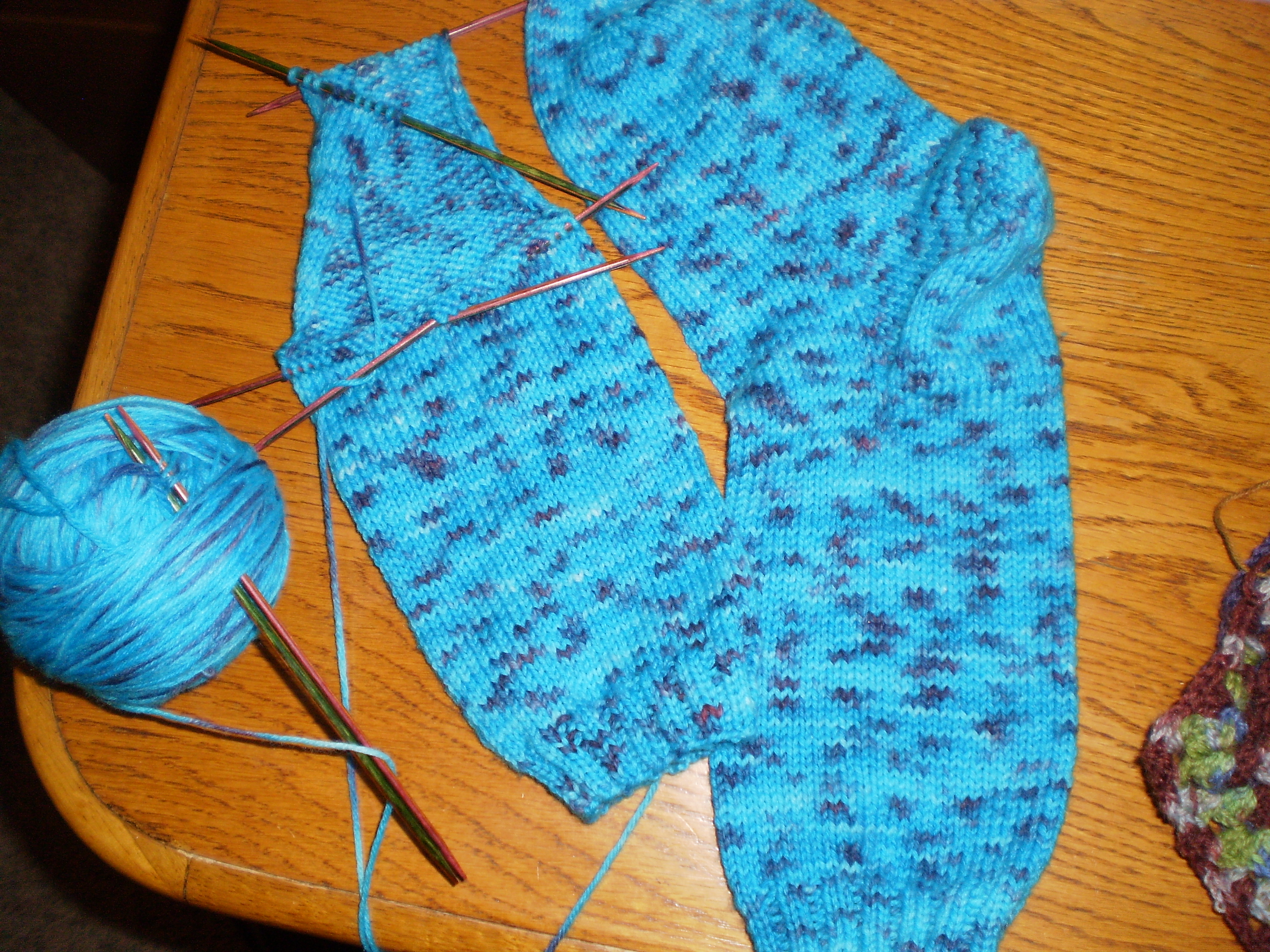
My mom (Hi Mom!) is making a pretty snazzy pair of socks from yarn that she dyed herself using food coloring.  Beautiful! (That shade of robin’s-egg blue is one of my favorite colors.)

OLYMPUS DIGITAL CAMERA

And, she’s making a whole pile of granny squares.  I love me some granny squares.  They’re one of my favorite things to do when I don’t have any specific project in mind, or a pile of little yarn bits to use up.  (I was digging through my stash the other day, and found that I have approximately 5 gallons of balls of worsted weight yarns.  And no more than a half-skein of any one color.  I might have to make another super-ugly…er… I mean eclectic blanket.  Mom’s squares are much better color-coordinated.)

OLYMPUS DIGITAL CAMERAMy friend Jenny had some free time to finish up her gorgeous crocheted shawl.  We play board games once a week, and she brings her crochet and I bring my knitting.  It’s awesome to see her shawl finished up so nicely!photo[1]

What’s On Your Needles?

So, whatcha working on?  I’m curious.

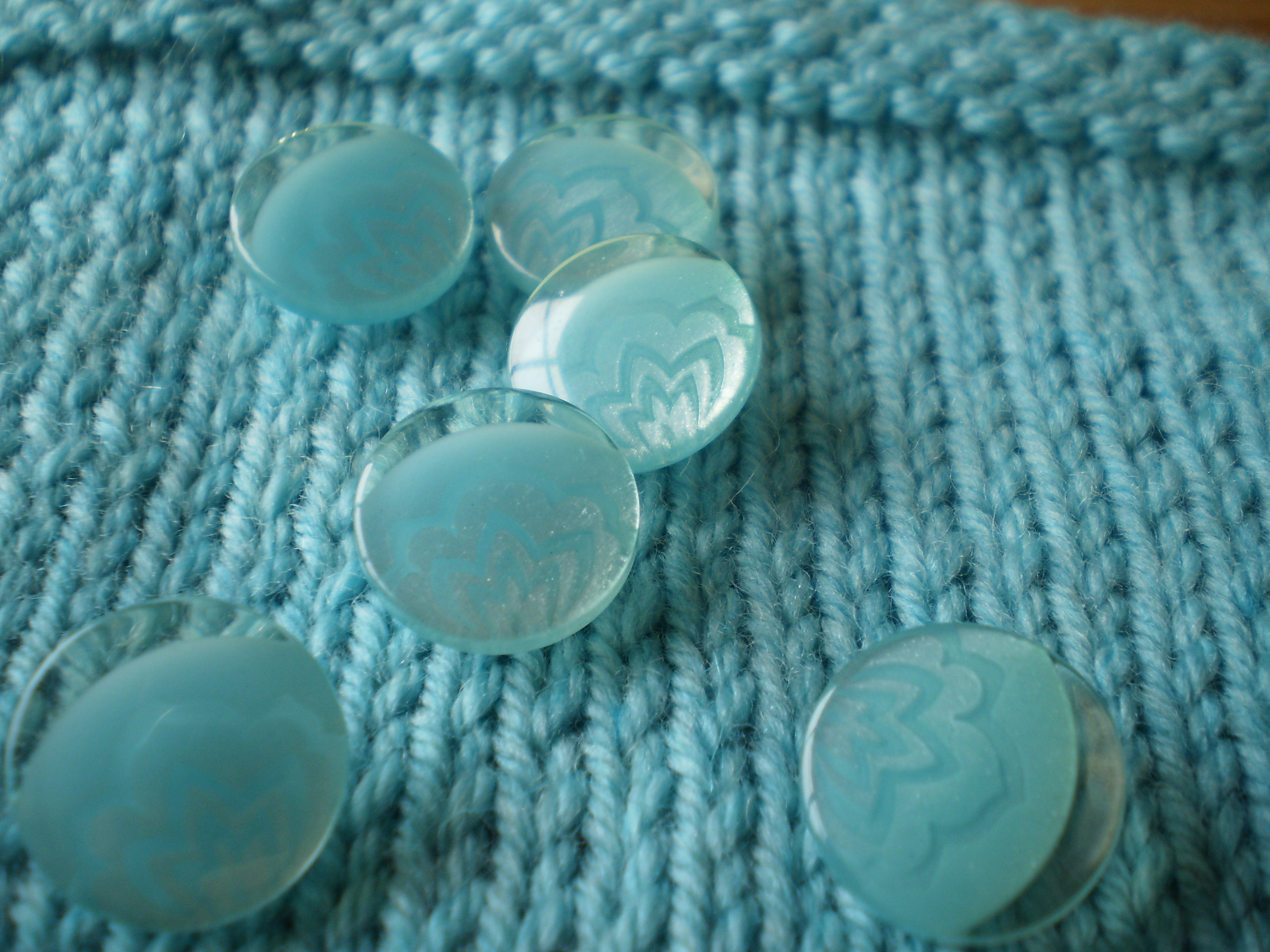
I’m making a Peggy Sue cardigan.  It’s (hopefully) going to be pretty cute.OLYMPUS DIGITAL CAMERAOn a trip to visit my brother in San Francisco, I came across the coolest fabric store I’ve ever seen.  I’ve now forgotten its name and its location, which is super helpful for all of you (and me, if I ever go back).  But, it had a gigantic wall of approximately 1 billion beautiful buttons.  I didn’t have a project going at the time, but I still bought some buttons to use for a future sweater.   Aren’t they the best?

OLYMPUS DIGITAL CAMERA

Ooh!  Aah!

Anyhoo, that’s what’s on my needles.  Let me know what’s on your needles (or hook).  If you send me a picture, I’ll even put it up on the blog.

Lots of Lots

Like I mentioned in my dying posts, it’s really really ridiculously hard to dye two skeins of yarn separately and end up with the same color finished product.  Even for companies who do nothing but dye yarn all day.  Point in case:

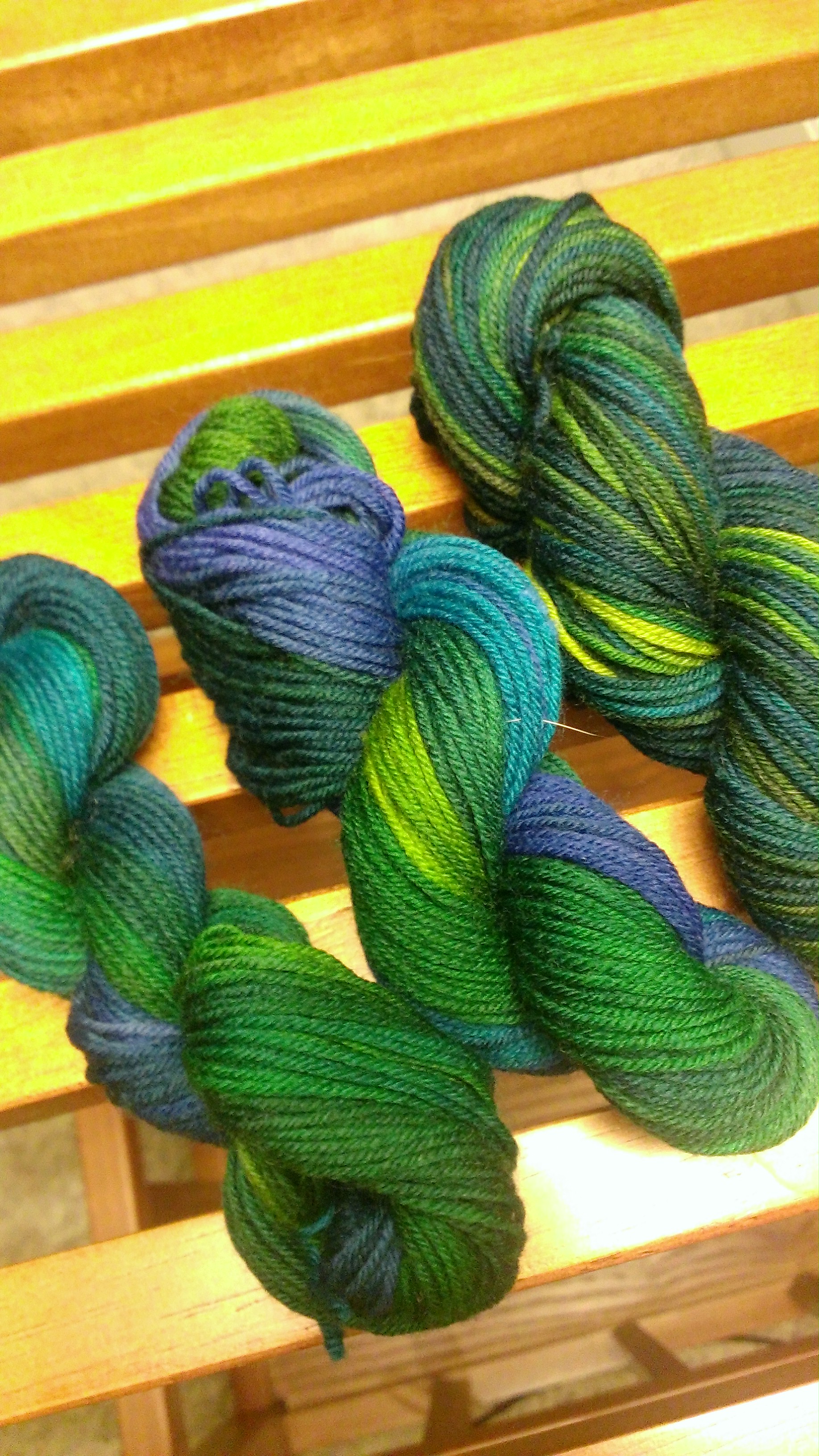
WP_20130802_009(Pardon the cell phone pic.  I had to start knitting, so there wasn’t time for finding my camera…waiting for the sun to come out.  Don’t judge me.  I know I have a problem.)

I actually bought these three nano-skeins as a single mini skein. They were the ends of a couple different batches (aka. dye lots) of yarn, supposedly dyed the same way.  See how the one on the right is more olive-y?  See how the left one is greener?  And the one in the middle has a lot more blue in it?  When you buy hand-dyed yarn, you have to expect there will be a bit of variation in dye pattern between dye lots.  (Even mass-produced yarn has some variation between dye lots.)  Sometimes it’s subtle, but sometimes it’s super obvious.

How do you avoid this?  You’ve got two options:

Option 1:  Buy all your yarn from the same dye lot.  Look on the label, and you’ll see information about the color.  The colorway (the color the yarn is supposed to be) will be indicated.  Usually the colorway has a descriptive name (like Heather Gray, or Sunshine Yellow, or whatever), but sometimes it’s a serial number.  It depends on the company.  The dye lot will be indicated by a number.  It’ll be written “Lot:###” or “Dye Lot:###.”  Usually yarn stores will stock mostly one dye lot at a time, but check anyway, just to be sure.

If you can’t find enough skeins of yarn from the same dye lot, you can move on to Option 2:

Stripes.  Lots of stripes.  If you mix your yarn together (changing the yarn you work with every row or two), changes between the dye lots will blend together and become unnoticeable.  If you’re working in the round, think about using my spiral technique from Friday.

This option takes approximately another metric ton of extra work, but if you’re talking about the difference between making a sweater that you will wear for the next ten years, or a sweater you’ll leave sitting in the bottom of your closet, it might be worth it.  Just sayin’.


Chummy’s Afghan Redux

This is a totally selfish post, with really very little value to you as a reader.  But I’m very excited about finishing my Call The Midwife-inspired afghan! (If you don’t remember what I am talking about, you can catch up here, here and here.)

OLYMPUS DIGITAL CAMERA

I used up almost all my leftover yarn from my many years of making socks.  It’s nothing more than a simple granny square blanket, whip stitched together.  I added a tiny single crochet edging to give the blanket a little more strength, since I plan on using it all the time as soon as the temperature drops out of the 60s (the 60s are “Summer Weather” out here in Seattle.  I was wearing shorts the other day, and my husband and I were going out to do some errands when he asked if I needed a jacket or something.  I said “No, I’m good.  It’s still plenty warm. It’s not supposed to get below 65 today.”  This is still weird to me, coming most recently from Austin, where if the temperature dropped to the 60s, you broke out the sweaters.  But I digress.)

Anyhoo, the blanket is kind of hideous, but I love it.  It’s mostly wool, so it’s really cozy, despite being fairly thin.  It’s just about the right size to fit over your lap when you’re sitting on the couch watching TV.  And I think it’s pretty delightful.

OLYMPUS DIGITAL CAMERA

The Long and the Short of It

Just a quick post today, with a really awkward photo.  Because that’s how I roll.

When you do a long-tail cast-on, like this, sometimes it’s yard to figure out how long to make your tail.  If the tail is too long, you end up wasting yarn.  If the tail is too short, you have to rip out your cast-on, and try again (which is a very inauspicious way to start a project).

So, here’s my rule of thumb:  Estimate the length of your finished knit object, and multiply that by four.  So, for example, imagine you’re making a wash cloth.  You want the wash cloth to be 9 inches across.  So, you multiply 9 inches x4, to get 36 inches.  So, you want a 36 inch tail for your long-tail cast-on.  Easy!

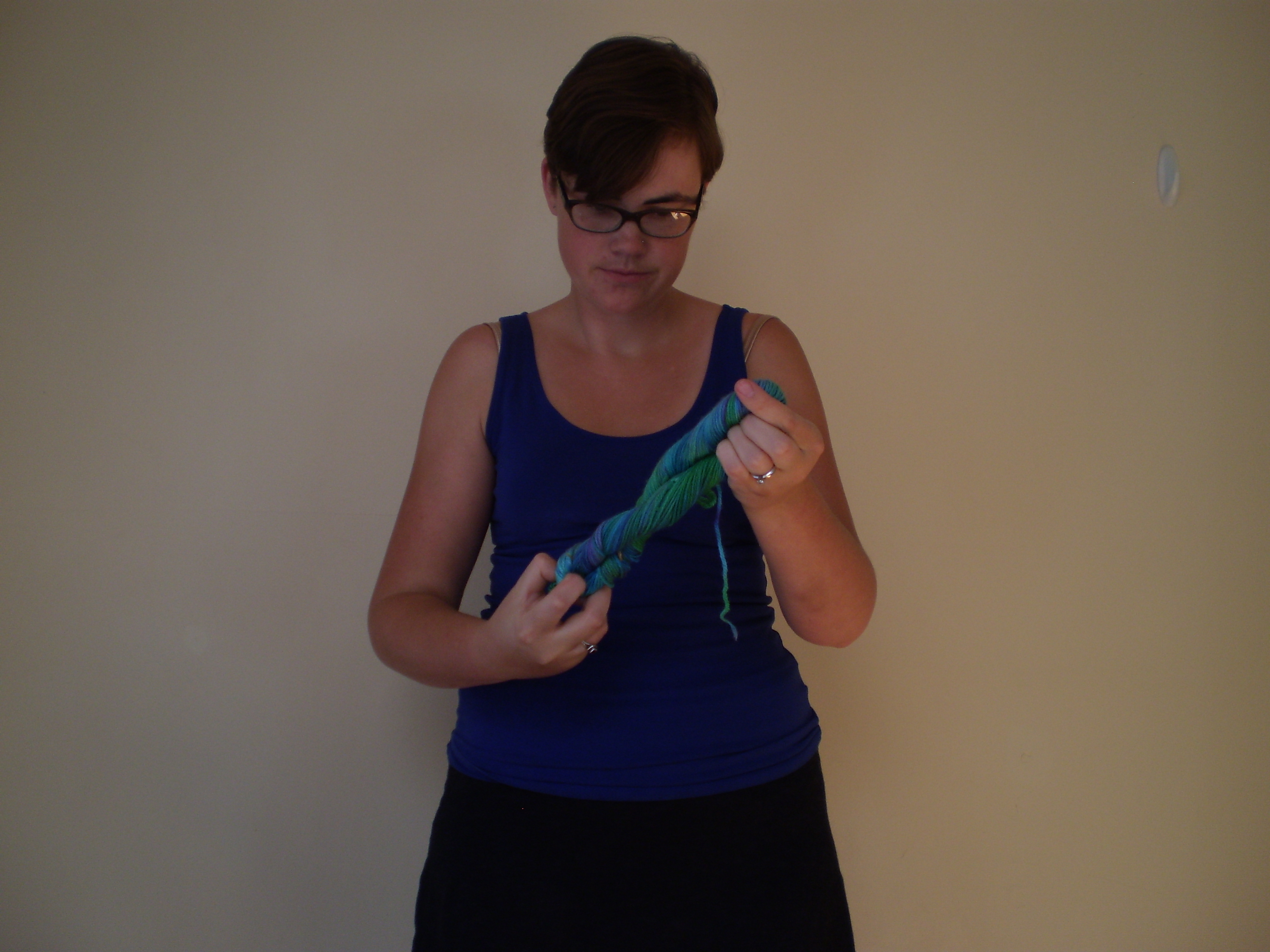
Or, if you want to do it the slacker way (which I totally do), just estimate.  If I’m making a hat, I’ll just wrap the yarn around my head a few times.

Here’s the awkward picture:

OLYMPUS DIGITAL CAMERA

You’re welcome.

So Twisted

So,  you’ve got your pretty yarn all died and dry.  It’s in a big skein, but the threat of tangles still looms.  What’s a girl to do?

OLYMPUS DIGITAL CAMERA

Here’s what to do to get your yarn into a pretty little twist.  It’s not terribly practical, but it’ll keep your yarn tangle-free until you get a chance to ball it up.  (Also, skeined yarn looks pretty, so if you’re giving your yarn away as a gift, this might be the way to go.)

Step 1:  Loop the yarn around your hands.OLYMPUS DIGITAL CAMERAStep 2: Twist, twist, twist.  Twist until you can’t any more.

OLYMPUS DIGITAL CAMERAStep 3: Fold the yarn in half.  I either hold the middle of the yarn in my mouth or under my chin. Don’t gag.  Ew.

OLYMPUS DIGITAL CAMERAStep 4: Tuck one end of the skein through loop at the other end.

OLYMPUS DIGITAL CAMERAStep 5: Futz with the skein to even out the twists.

OLYMPUS DIGITAL CAMERAStep 6: Success!

OLYMPUS DIGITAL CAMERA